Queen of the Castle
Alumna Lisa Ingram proves that tradition, innovation and fun can thrive side by side at White Castle, the country’s original fast-food chain.
Lisa Ingram ’00 MBA calls this her happy place.
The White Castle CEO is at one of her restaurants, in the center of the action, commanding two grills in the kitchen. It’s the lunch rush at the Hilliard location west of Columbus, and orders are coming in fast and furiously. In seconds, Ingram spreads 30 square beef patties on a bed of onions, then places buns on top to soak up the savory flavor.
She slows down just once, when a team member helps her tighten a loose apron string. “Thank you,” Ingram says with warm appreciation.
That apron is emblazoned with Ingram’s preferred title, “Slider Queen,” also written on her T-shirt. The moniker fits—and not just because Ingram is fast-food royalty, the fourth generation of her family to run White Castle, the iconic, 105-year-old, Columbus-based chain. It also speaks to her majestic griddle skills, as she shows on this March afternoon. With lightning speed and practiced precision, Ingram executes White Castle’s signature steam-grilling process, sliding patties and buns off the grill, adding pickles, mustard and ketchup, and packing sandwiches into tiny cardboard boxes.
“Did you see that? She actually knows how to do things we do.”


After the lunch rush ends, Ingram settles in with her favorite White Castle meal: a double cheese slider with extra pickles, served “bottoms up” (two bottom buns, steamier flavor). In between bites, she explains what she loves about working in the kitchen: the energy, the camaraderie, the opportunity to learn from those closest to customers.
That belief extends throughout the company. Every May during National Hamburger Month, home-office employees work a shift at a White Castle restaurant, bakery, meat-processing plant or frozen-food operation. “This helps them figure out how we can do things better—or, if nothing else, have more appreciation for the team members who work so hard, often working weekends and nights,” Ingram says.
This practice typifies her leadership. With deep respect for the past and admiration for all the people behind White Castle’s success, she constantly searches for ways to “do things better.” In the Hilliard kitchen, two new technologies highlight the culture of innovation and experimentation cultivated by Ingram. A worker loads frozen french fries and chicken rings into Flippy, a robotic fry station assistant, while other employees keep an eye on drive-thru orders coming through an AI chatbot. To stay relevant to future generations, Ingram recognizes White Castle must pull off a tightrope walk: welcoming new ideas while staying true to what makes it an American original.
So how do you do that? Ingram points to the back of an empty slider box. Printed there is the story of two Detroit hockey fans who brought an unusual guest, the Stanley Cup, to their local Castle. The trophy was making a tour of the Motor City following the Red Wings’ NHL championship in 1997 when John Schrage and Marty McMillan learned that its handler, Paul Oke, had never been to White Castle. They decided to change that—efforts that earned them induction into White Castle’s Cravers Hall of Fame.
Ingram defines the company’s core mission as “creating memorable moments every day.”
White Castle will continue to thrive, she says, as long as it keeps turning meals into memories. “Our brand is built on stories like these,” she says.
An American original
It’s not hyperbole to say that White Castle changed how Americans eat. In the 1920s, the chain created the modern fast-food model, combining speed, affordability and consistency. And through shrewd marketing and enhanced cleanliness, it also transformed the hamburger from a public health pariah (think Upton Sinclair’s The Jungle) to a mainstay of the American diet.
Today, White Castle occupies a more specialized niche than publicly traded, franchised giants like McDonald’s. But its influence far outweighs its size. “Sliders are unlike anything you can get elsewhere,” says former Jeni’s Splendid Ice Creams CEO John Lowe ’98 JD, a member of White Castle’s board. “They have a unique taste. And it’s a unique brand. Who else is crazy enough to be family-owned and family-operated and stay true to what has made them special for years?”
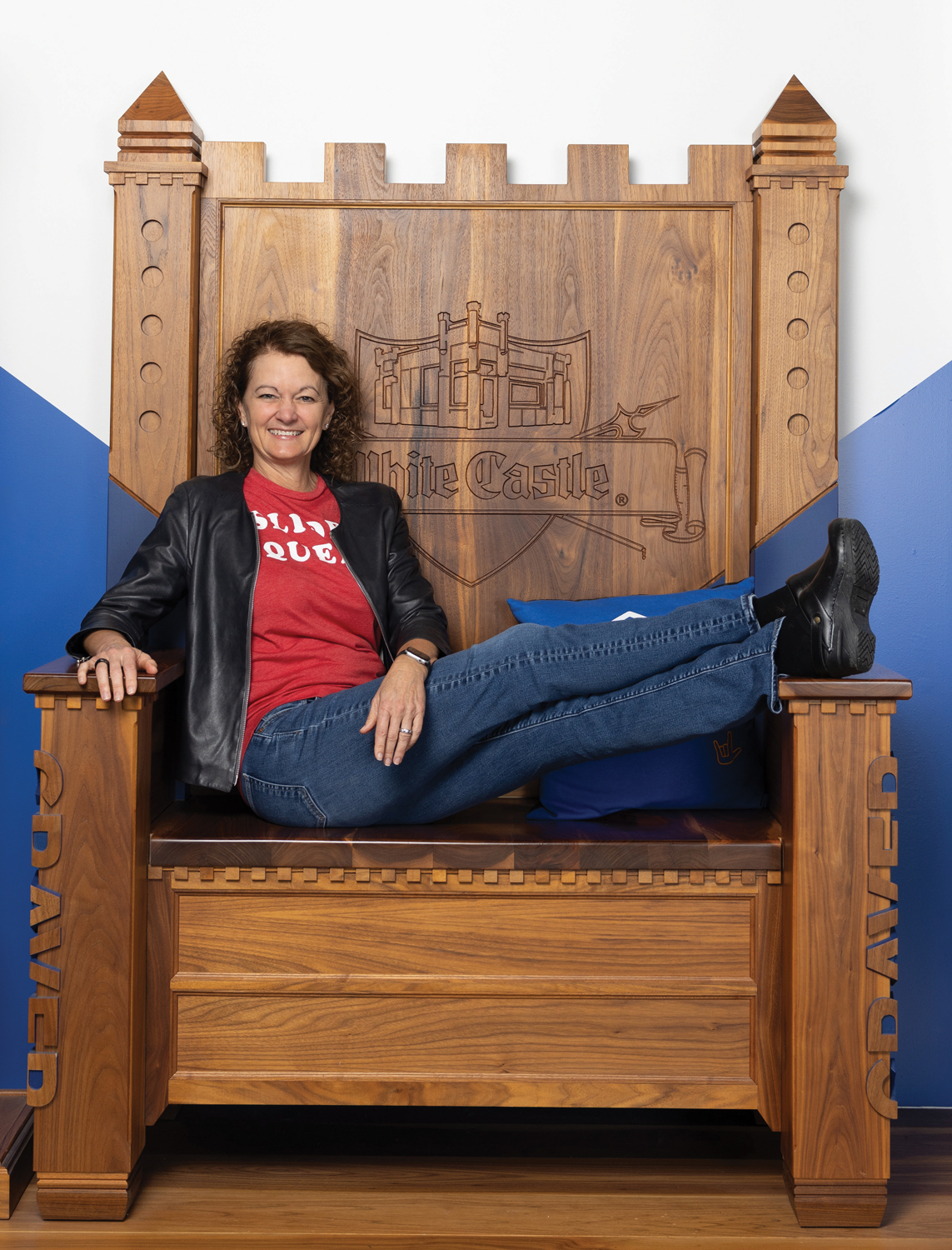
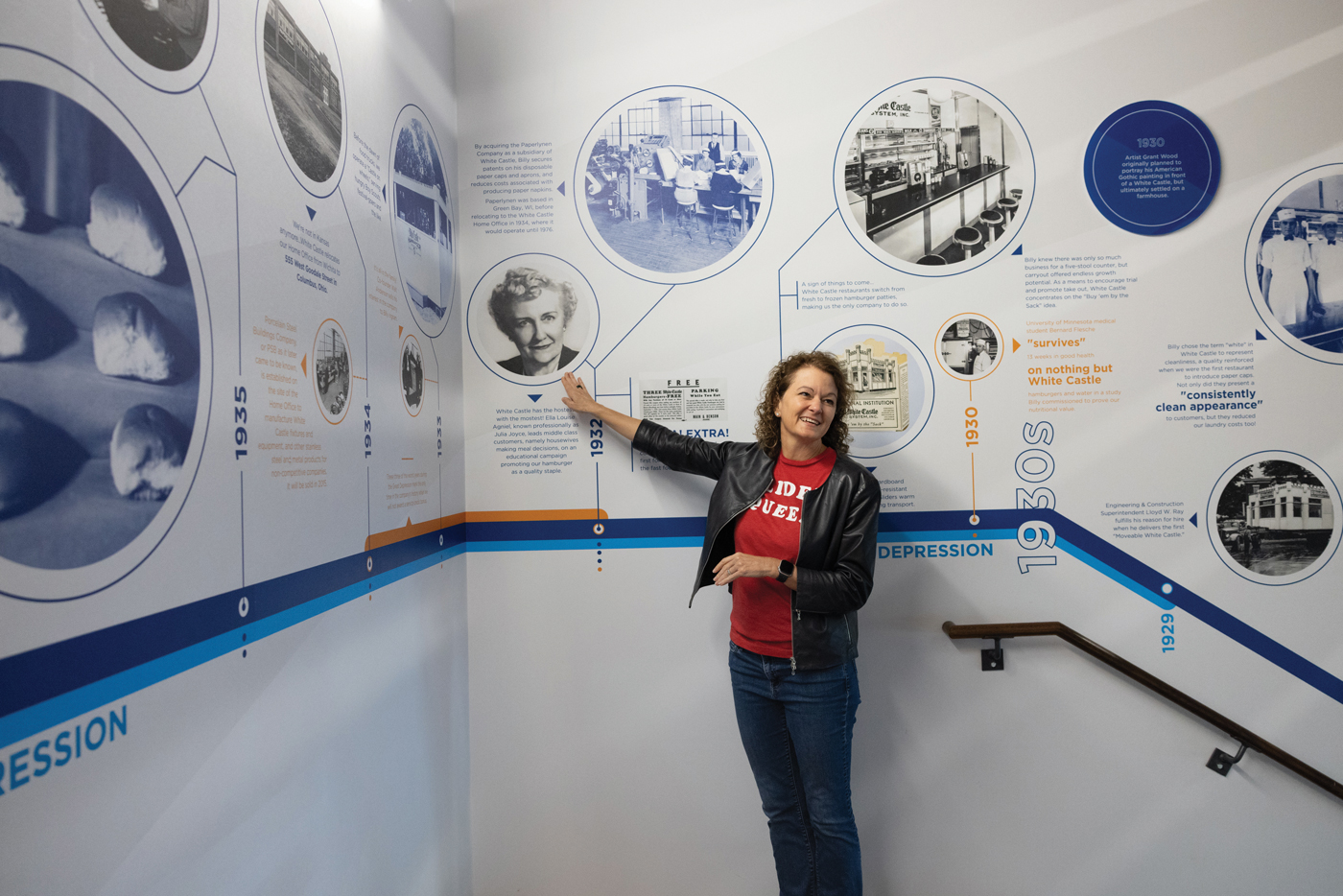
That spirit comes through at White Castle’s home office, which opened three years after Ingram began as CEO in 2016. The sleek modern building is both a corporate HQ and a fast-food mecca. Ground-floor exhibits trace the company’s colorful history, while “cravers,” as White Castle superfans are known, can purchase a variety of branded goodies on display, from T-shirts and windbreakers to leather notebooks and sleeping bags. They can even snap selfies of themselves sitting on a wooden White Castle throne, with the Latin phrases “panes calidi vaporei” (hot steamy buns) and “desideres ego ergo sum” (I crave, therefore I am) etched on each arm.
“Every castle has to have a throne, obviously,” says Ingram, giving a March tour of the building.
This sense of fun has long been a White Castle trademark. It’s the chain that’s open late, that’s kind of quirky, that doesn’t take itself too seriously. This attitude—and its big presence in taste-making urban centers, such as Chicago and New York City—has given White Castle wide cultural impact, beyond what you might expect of a regional chain.
Consider its roster of celebrity cravers: comic book legend Stan Lee, shock rocker Alice Cooper, model Chrissy Teigen, fashion designer Telfar Clemens. The Beastie Boys, Nelly and The Smithereens have namechecked it in their songs, John Travolta ate at one in “Saturday Night Fever,” and “Harold & Kumar Go to White Castle” gave the chain unprecedented cinematic exposure. The latter pop cultural moment was especially big for White Castle, which pays tribute to the hit 2004 stoner comedy in a video display at its headquarters.
“I still get asked about it,” Ingram says. “It’s sort of a cult classic. And it certainly helped elevate our brand’s recognition across the country.”
White Castle: 105 years of steaming ahead
From Wichita to Columbus, the family-run chain shaped fast food with bold ideas, loyal fans and steam-grilled icons.
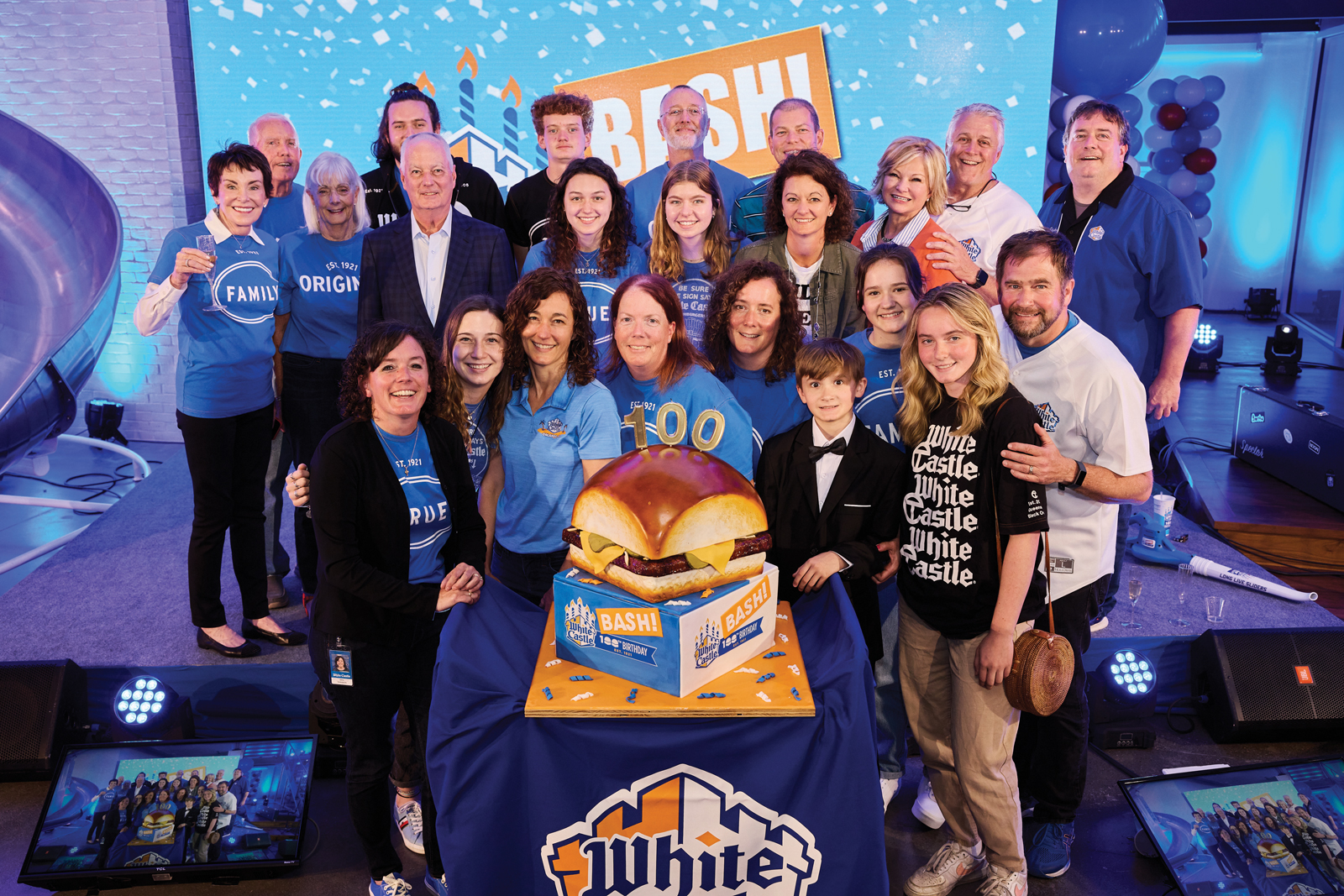
But perhaps what’s most remarkable about White Castle is the family behind it. More than a century since the chain’s founding, the Ingrams continue to own and operate it. Just 3–5 percent of family businesses reach the fourth-generation threshold that White Castle has. Today, Ingram works alongside six relatives of her generation who lead such areas as marketing, human resources, corporate relations and manufacturing.
Unquestionably, Ingram has brought a fresh perspective to White Castle. The mother of four is the first woman to lead the company—and the first CEO not named Edgar Waldo Ingram—and she’s shown a willingness to challenge the status quo. Her predecessors—father Bill, grandfather Edgar and great-grandfather Billy—all used the same ornate mahogany desk. Today, that desk is a museum piece, part of an exhibit at the new HQ, the most visible example of Ingram’s transformation of the company.
But those who know her best also see similarities with her forebears. Like them, she leads with humility, foresight and a commitment to people.
“She’s a well-rounded version of all three,” says Dave Rife ’86, White Castle’s chief manufacturing officer and Ingram’s cousin. “She’s very much in love with this company, and you can tell.”
People-focused progress
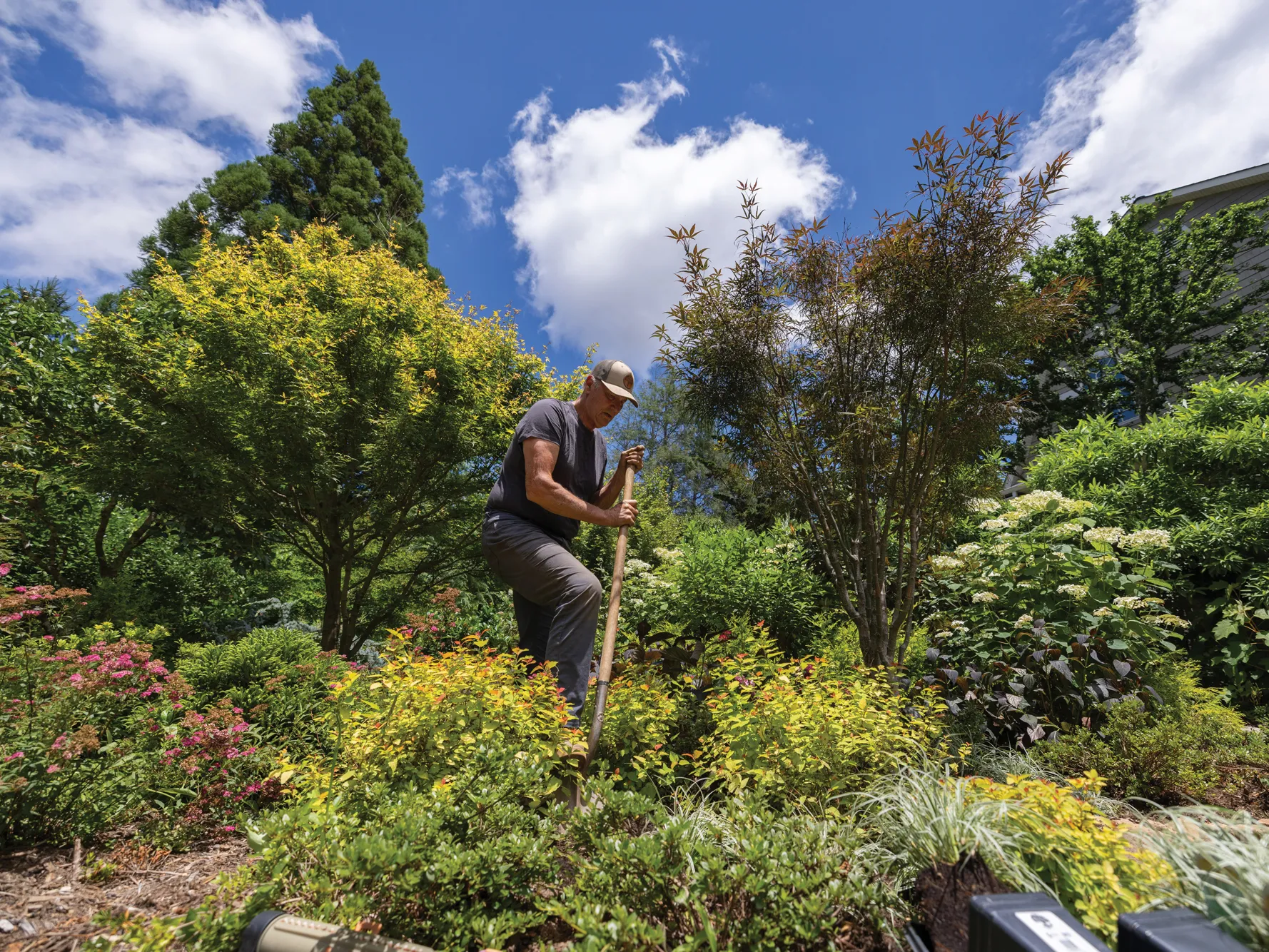
Ingram didn’t always envision a future at White Castle. She contemplated law school (until discovering she was better with numbers than words), spent a summer interning with U.S. Sen. John Glenn ’84 HON and worked for five years at a Texas computer supply company.
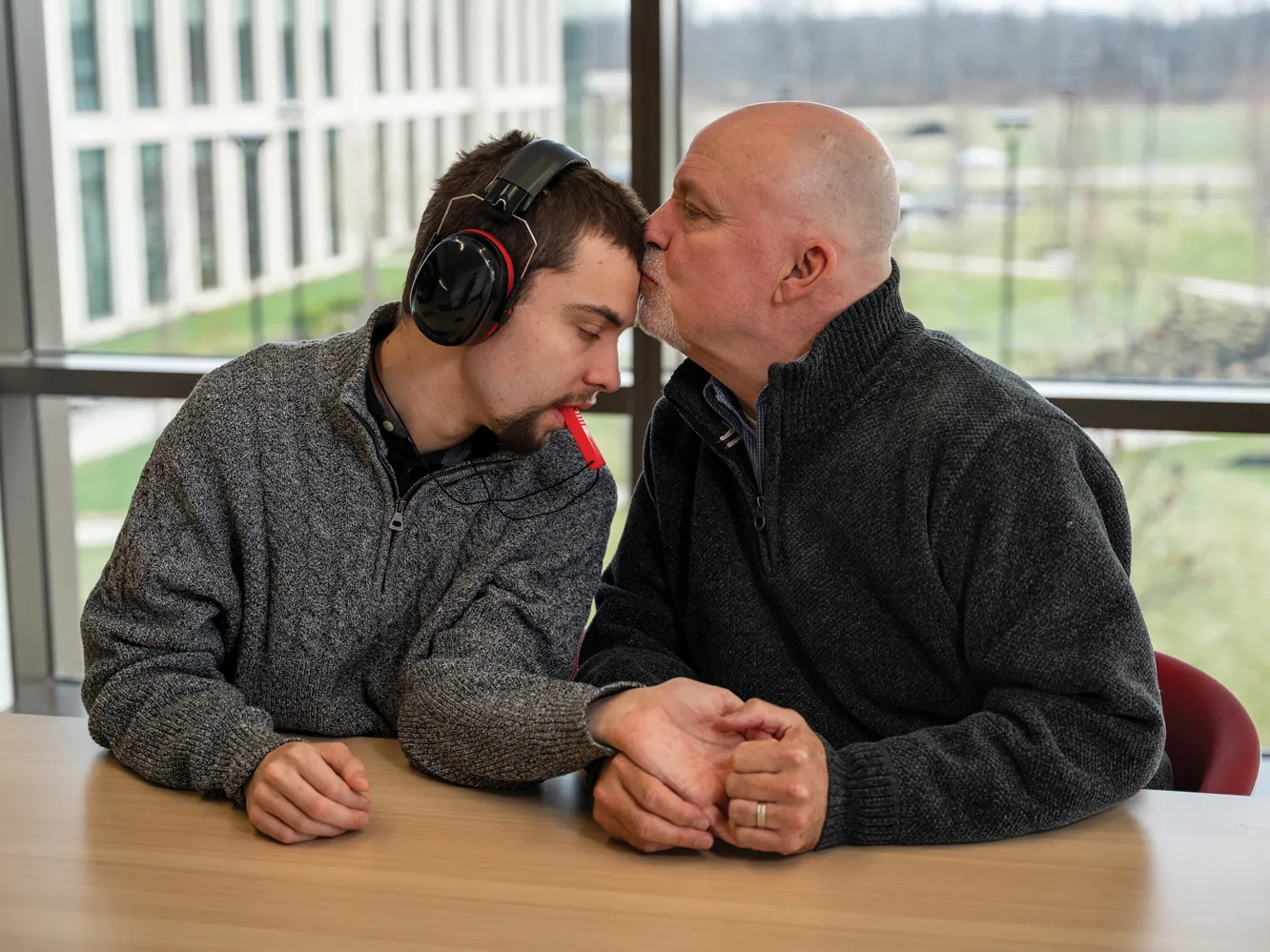
Throughout this period, her father gave her space to discover what she wanted. “I didn’t push her one way or another,” Bill Ingram says. “I don’t think it’s a good policy to push somebody to do something if they don’t want to do it.”
Eventually, Ingram chose to give the family business a try. Then, after about two years in White Castle marketing, she decided to pursue an MBA at the Fisher College of Business. Her Ohio State experience was transformative. She gained valuable experience from a Hewlett-Packard internship and learned how to lead, motivate people and think strategically.
“It’s more than 20 years ago, but I still remember Professor Roy Lewicki and his negotiations class, which I still use today.”
After earning her MBA, Ingram returned to White Castle, taking a job in operations. She had grown up around the restaurants but never worked in one. So she fixed that. Every Friday afternoon for the next two years, she worked the lunch rush at a White Castle. “It gave me a little bit of street cred,” Ingram says. “It made me empathize with and relate to the team members and general managers in the Castles.”

Ingram credits her education at Fisher College of Business for helping her learn to better motivate people and think strategically. (Photo by Jodi Miller)
It also deepened her affection for the business. She fell in love with life on the grill, a skill she still puts to use when visiting locations and opening new restaurants. “I cannot do the register,” she says. “If they put me on the fryer, that’s a little dangerous. But I can still add some value on the grill.”
When Ingram returned to White Castle, she also brought with her a list. During a three-week bus tour around France after earning her MBA, she began to develop an improvement plan for White Castle. Working alongside her father, she started to implement some of those ideas, an effort that accelerated in 2016 when she succeeded him as CEO.
What then followed was a decade of transformation. White Castle grew its frozen food grocery business. It expanded its restaurant footprint into Florida and Arizona (and announced plans to open three Texas restaurants). It broadened its leadership ranks, recruiting talented executives from outside the organization and encouraging current employees to take on opportunities in new cities. It added new menu items, including chicken, fish, breakfast and vegetarian offerings. “We truly understand that innovation is going to be the secret to our success in the future,” Rife says.
Yet this innovation is grounded in White Castle’s traditional values. Consider “Julia,” the AI drive-thru assistant that 46 of White Castle’s roughly 340 restaurants use. White Castle President Anthony Joseph says the company has spent the past six years developing the technology, which is named after Julia Joyce, a historic White Castle brand ambassador.
The approach differs from the rushed AI rollouts of White Castle’s competitors. “This is an example of where Lisa has taken a long view, and I’d say a deliberate view,” Joseph says.
Despite all the change, Ingram has remained focused on people. Her father, grandfather and great-grandfather were all known for treating employees well, and that has continued under Ingram. Based on employee surveys, White Castle has been named a Great Place to Work for six consecutive years, an unusual honor in the fast-food business. Employee satisfaction also is reflected in the longevity of its workforce: Restaurant general managers average about 20 years with the company, a remarkable figure in an industry known for constant turnover.
At the Hilliard Castle, Baker, the general manager, and Theresa Kaszubski, a regional director, explain why they’ve stayed so long. Each started as teenagers and never left, rising through the ranks.

Even the new headquarters is an investment with people in mind. While the LEED-certified building helped modernize White Castle’s image, the project also opened up space for a mixed-use redevelopment on the increasingly valuable land White Castle had owned since the 1930s. The additional apartments and offices created new revenue streams, which help support employee benefits, including healthcare and retirement programs, both longstanding White Castle priorities.
When Ingram created her White Castle wish list more than two decades ago, a new HQ was near the top. She’s happy to check off that item, as well as several other big tasks. But she also looks back at that list with a bit of bemusement.
“As I’ve matured, I’ve realized that there are so many things about White Castle I would never want to change.”
The heart of the Castle
Every summer, the Ingrams come together for an annual multiday family meeting. The gathering gives family members—whether they’re actively involved with White Castle or not—a chance to learn about current operations, new initiatives, emerging challenges and more. It’s a space for education, family bonding and open communication.
In a session called “Board Unplugged,” outside directors answer questions from family members, with nothing off limits. “I think it’s been great for the family to have that transparency,” says Lowe, the former Jeni’s CEO and White Castle board member. “It’s a testament to Lisa’s leadership that she saw the opportunity to be more open and direct.”
Some attendees now belong to the fifth generation. Like her father before her, Ingram resists pushing them toward White Castle. “Our philosophy is that they should be involved because they want to be, not because they feel like they have to be,” she says. Still, interest is growing: Eight “G5s,” as they’re called, participated in a White Castle internship program this summer.
The family meeting also emphasizes another longstanding Ingram value: service. Family members participate in a community service project, which in the past has benefited such organizations as Seeds of Caring and LifeCare Alliance. But that philanthropic spirit extends beyond the annual gathering. Like many Ingrams before her, Lisa has assumed significant community leadership roles despite the demands of running a company and raising a family. She chaired the United Way of Central Ohio board during a period of major change.
“She didn’t back down in recognizing what the threats were to our business model and gave us permission to talk about those threats and develop strategies to address them,” says United Way of Central Ohio CEO Lisa Courtice.
Today, Ingram chairs the OhioHealth board and serves on the Governing Committee of The Columbus Foundation, which has a long history with the Ingrams. The Ingram-White Castle Foundation, started by Billy Ingram in 1949 as a private charitable fund, has operated through The Columbus Foundation for the past four decades. Over that period, it has distributed $60.6 million, including more than 1,000 scholarships to White Castle employees and their dependents.
Columbus Foundation CEO Doug Kridler praises Ingram for her discernment, patience and values-based judgment—all of which he says are needed to work through complex community problems. For the Ingrams, giving back is a way of life. “It’s part of their DNA,” says Ingram’s husband, Greg Guy ’03 MBA.
Now in her second decade as CEO, Ingram finds deeper meaning in White Castle’s unique rituals. There’s the annual Valentine’s Day Dinner, when the restaurants become candlelit destinations for couples. There’s the Cravers Hall of Fame, where devoted customers share stories that range from heartfelt to delightfully eccentric. And then there’s the 25-Year Club, perhaps the tradition that means the most inside the company.
For 80 years, White Castle has celebrated employees who reach the quarter-century milestone. They’re flown in from all over the country and put up in a fancy hotel. They have lunch with Ingram’s father, Bill, and stepmother, Marci, at their New Albany home, and Ingram presents each honoree with an engraved gold watch at a gala dinner.
In spite of rising costs for transportation and lodging—and even more people being inducted—Ingram’s support of this milestone event has never faltered. “Lisa talks about the impact it has on those team members and how it’s those team members who create memorable moments,” Rife says.
Ingram can now speak from experience. Last year, she joined the club herself, alongside 70 other employees, with her father coming out of retirement to present her with her watch.
The queen of the castle earned a memorable moment all her own.