A place for peace
Welcome to the garden Chuck Hutchison spent 13 years making, all to get his hands dirty and find himself.
From the 1968 national championship team to pro football and two decades of business success, Hutchison spent a lifetime pushing forward. Then came retirement when, as he puts it, he “crashed and burned.” Here, from his home in Asheville, North Carolina, he shares how he found purpose while single-handedly turning his 1.75 acres into a garden so spectacular, it’s listed in the Smithsonian Institution’s Archives of American Gardens.
x
I love sunrises.
I enjoy watching the day awake, seeing things come alive in this garden, particularly on mornings like this. It’s still, beautiful, calm. I’m reminded that today starts out as a blank page, and you can make it whatever you want it to be.
Just like how nothing was here and now everything is here. More than 2,500 plants of 375 varieties. Thirty-seven raised beds. Water features sounding like mountain streams. Retaining walls. Stone walkways. I did probably 95 percent of everything you see here, and that’s why it has taken 13 years.
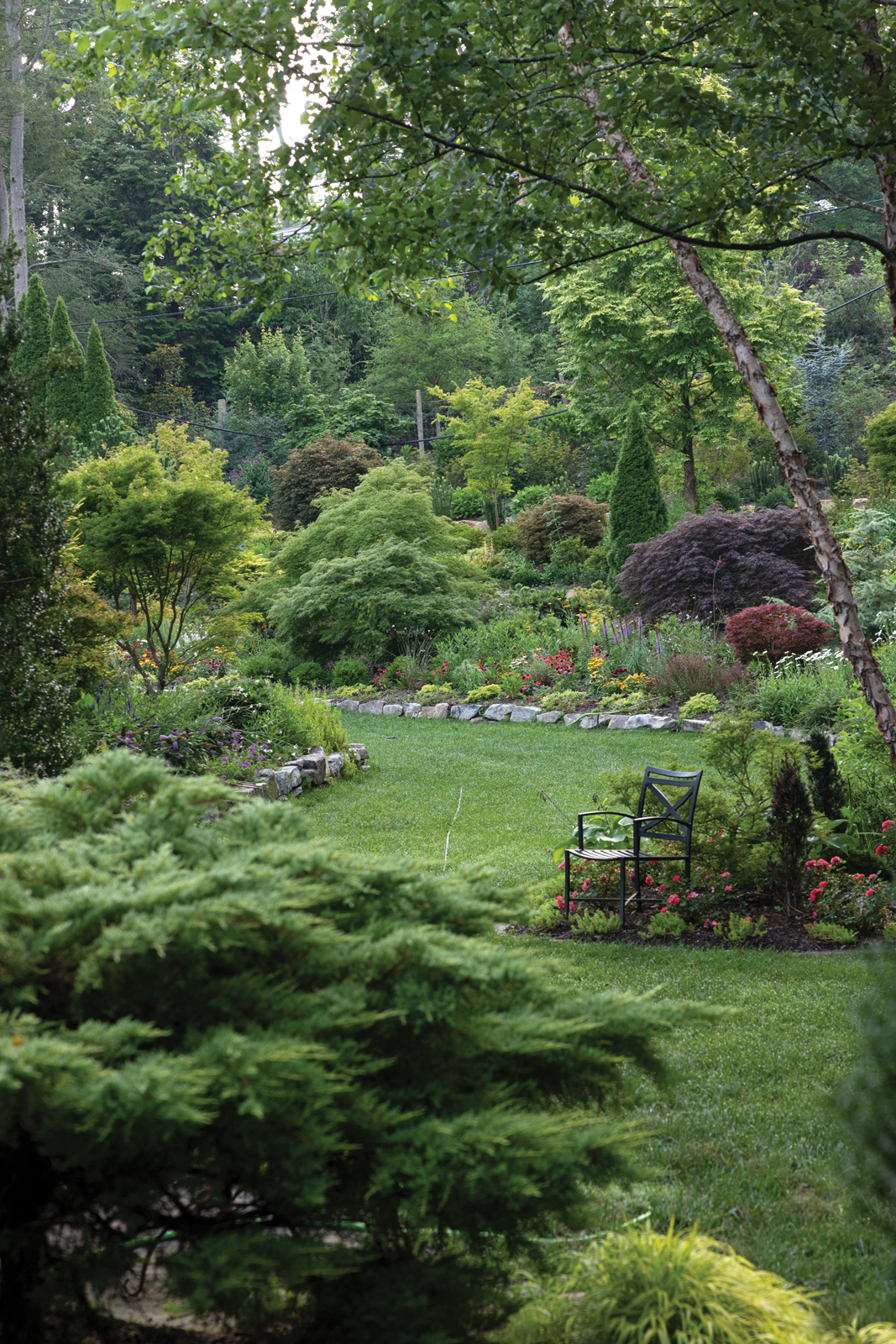
A designer and installation crew could have done this in eight months, but it wouldn’t have been anything like what I’m looking at today, and it clearly wouldn’t have done for me, my soul and my whole mental approach to life what I got from making it happen.
Before I started, I knew nothing about plants, landscaping or creating a garden other than how to dig holes and which end of the plant goes in the ground. When you start at the bottom, that’s when you really learn.
And I’ve learned a lot about myself that I had never experienced before from creating the garden. It has probably been the most giving and rewarding experience I’ve had.
x


Path to healing
Mental health is the foundation to everything and such a huge issue for all of us. Mine crashed and burned after retiring in 2009 at age 60. Like everybody else, I had dreams of what I was going to do in retirement. Golf. Community service. Business mentorship. Well, I failed miserably at all those. Three years in, I was left with absolutely no purpose. It was terrifying.
I gravitated into a very dark, empty place. Nothing gratified, satisfied or fulfilled me, and I couldn’t figure out how to fill that void. I was unhappy in my own skin, didn’t want to be around anybody. I put stress on our marriage and friendships.
After a year of struggling, I finally knew I needed professional help. In early 2014, I voluntarily underwent a 30-day program of mental health evaluation and treatment at the Menninger Clinic in Houston. I was diagnosed with having some deep-seated anxieties all through my life.
Quite frankly, anxiety was a positive in my career because it drove me to do better and better things. I fed off it. That was fine as long as I had things to work toward, but then when I didn’t, it started to work against me.


x

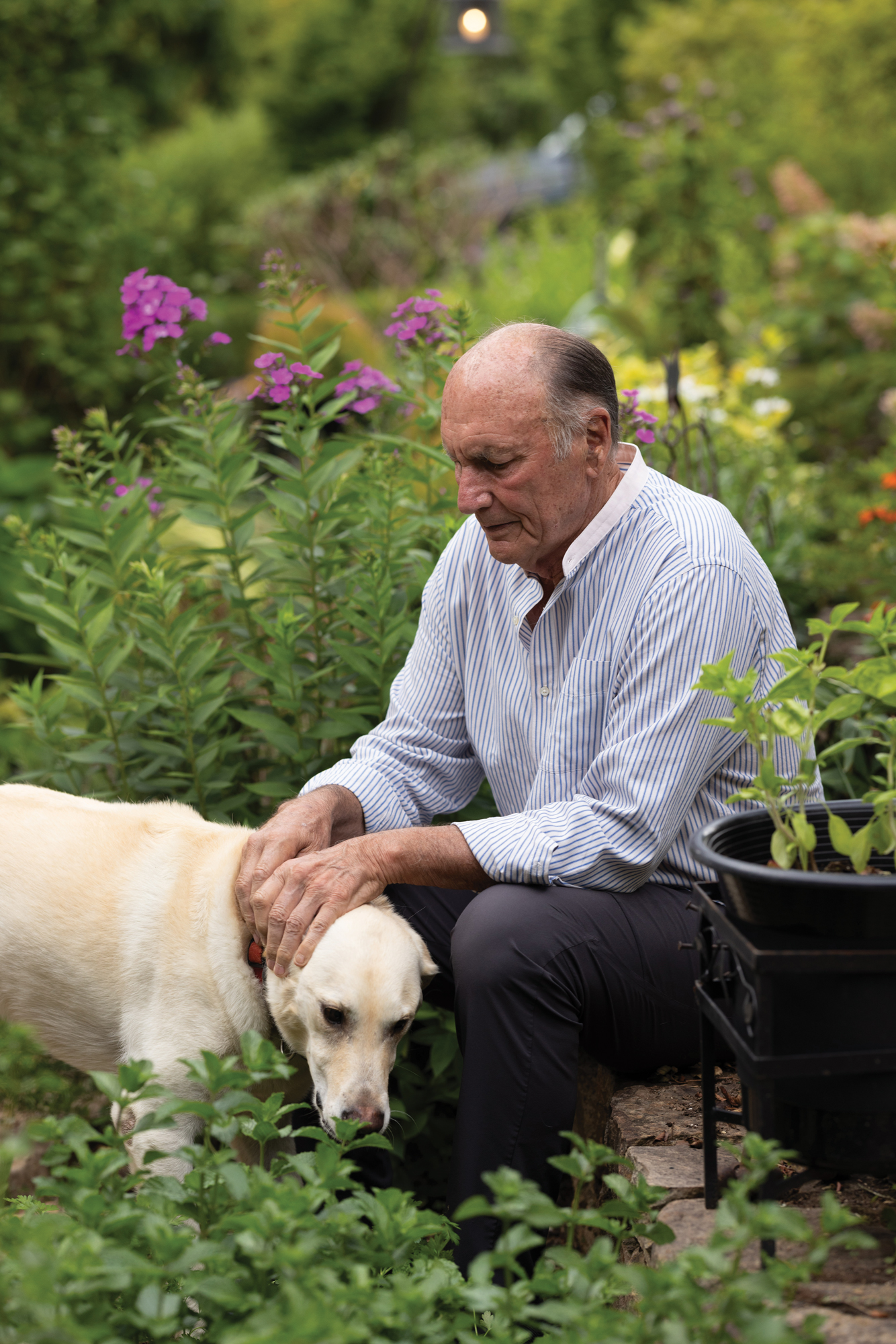
Hutchison lives in the charming home at the center of the garden with his wife of 40 years, Eileen Brown Hutchison ’73, and their Labrador, Baron. They moved to Asheville after both retired and have built a community of friends and fellow gardeners. His sons bring their families to visit every summer.
Trial and learn
When we bought our house in 2010, the property hadn’t been tended to for 20 years. I spent some time clearing the land, mostly to hide myself, but the nearly 2 acres was still an overgrown jungle when I got back from Houston.
Once again, I took to it with axes, chippers and chainsaws. Instead of results and outcomes, I focused only on what was in front of me that day. Three years later, the land’s ugliness was gone. I had a blank canvas and started thinking: What can this be?
I wanted a garden that would elicit feeling, emotion, a calmness and peacefulness that comes from understanding who you are and accepting that.
Video: How Chuck Hutchison built his garden
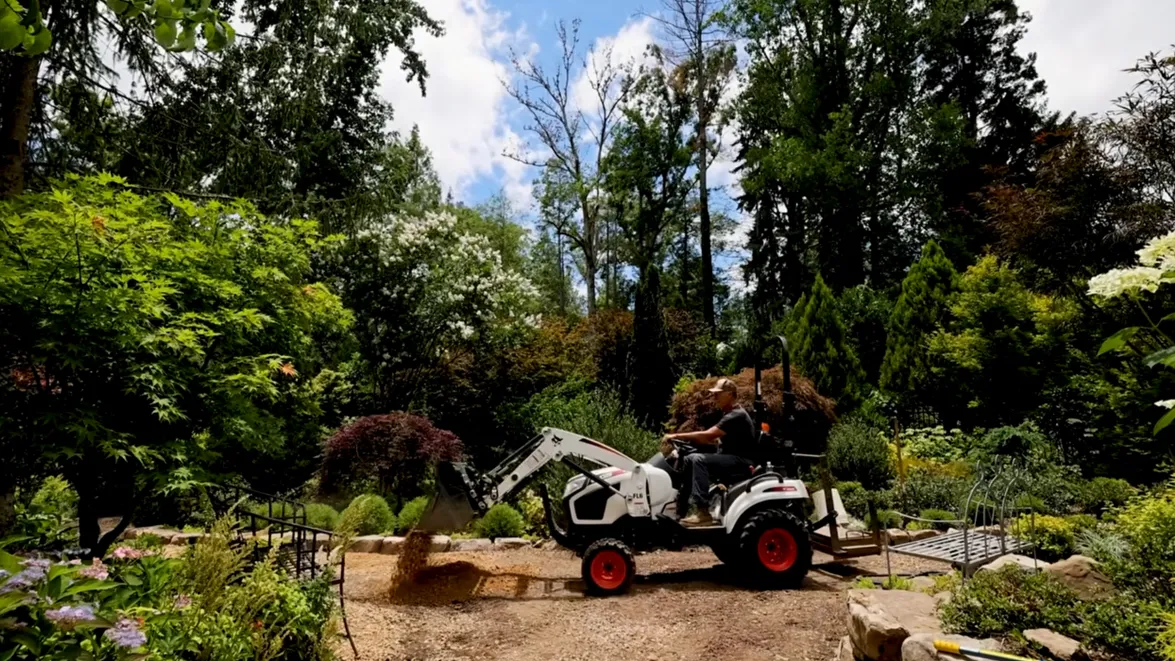
Most people know Chuck Hutchison as a 1968 Ohio State football champion and former NFL player. After retiring as a successful business executive, he became something else entirely: a devoted gardener. At his Asheville, North Carolina, home, he transformed curiosity and persistence into an extraordinary landscape through what he calls not “trial and error” but “trial and learn.” Run time: 4 minutes, 5 seconds
Well, I had no idea how to create it. None. I can’t draw a stick person, much less sketch anything that has dimension or scale. And I didn’t research or ask for formal designs. To me, I had to do the work, experience it, see it, feel it.
I embraced possibilities. This would be trial and learn, and I was willing to accept a lot of mistakes and a lot of change. My aptitude, work ethic and physical capabilities were made for an ongoing process.
Each day for years, I learned from options, making choices and fine-tuning decisions. I’d pick out plants at a nursery based purely on whether I liked the scale and texture. Then I’d find a home for them in the garden, and that might mean planting them and then moving them. I might realize three or four plants in another bed would look better with this one, so I’d move them all. Sometimes I’d put 100 plants in the ground one afternoon and by the next morning, they’d be in different locations. Workers at local nurseries all thought about what they were going to do with their bonus checks every time I walked in.


I’ve moved probably one-third of the garden’s 375 varieties of plants at least once, many of them five times. Some weighed 2,500 pounds with root balls 5 feet in diameter and 4 feet deep.
The project never seemed overwhelming because it was therapy. You can really free your mind when you do mundane, meathead labor.
Through forming beds, I learned what soil to use, the nutrients to add, the preparation needed for a particular plant. I began to realize that a bed’s shapes and curves, the facing and color of stone in retaining walls, the texture, structure, height and scale of the plants, all have huge impact on your emotions and how you feel when looking at it.
I saw how the garden looks different every day with changes in light and climate elements. Seeing all that change around me has been a reminder that life is all about change. How we react is what matters.
x
Finding peace
Over the years, my wife, Eileen, and friends would ask if I was done with the garden, and I’d say I’m closer to being done today than I was yesterday.
Now, I’m done with the hard stuff. I putter in the garden every day. Trim. Prune. Add soil. Spread bags of mulch. Rake the beds. Clean pathways. I’m in maintenance mode and feel as though I’m a steward of the garden for others to enjoy. I’m grateful for the opportunity to share my experiences because I feel a responsibility to help others.
Maybe I can help somebody realize what’s going on within themselves without having to go through the mental health trouble I went through. Maybe show people they’re not alone, that everybody has issues, and that the worst thing you can do is just internalize them. The healthiest thing is to meet them head-on.


When you retire, your own life comes into bigger focus. You no longer have anybody from your job relying on you. You don’t have any place you have to go. It can feel very lonely, scary. I strongly recommend taking stock of what is it that makes you who you are. That’s what you want to continue to use and apply to some endeavor in retirement.
What you practice every day is what grows.
You don’t have to create a garden. All it needs to be is something that fulfills you, puts you in a reflective mindset, allows you to learn more about yourself. This garden has allowed me to really understand who I wanted to be. I can now walk through the garden and not look at it with a discerning eye and find details that need to be tended to. I could do it differently, but not any better.
Last year, I finally sat on a bench in the garden for a while and just looked around, took it all in. I sat in reverence. It was the first time that I’d ever really done that. I was overwhelmed by the beauty, by good thoughts, emotions and feelings.
Said to myself: Now I get it.