When you can, you do: A legacy of autism care
Inspired by their son’s journey, Marci and Bill Ingram helped launch a model serving families across Ohio today.
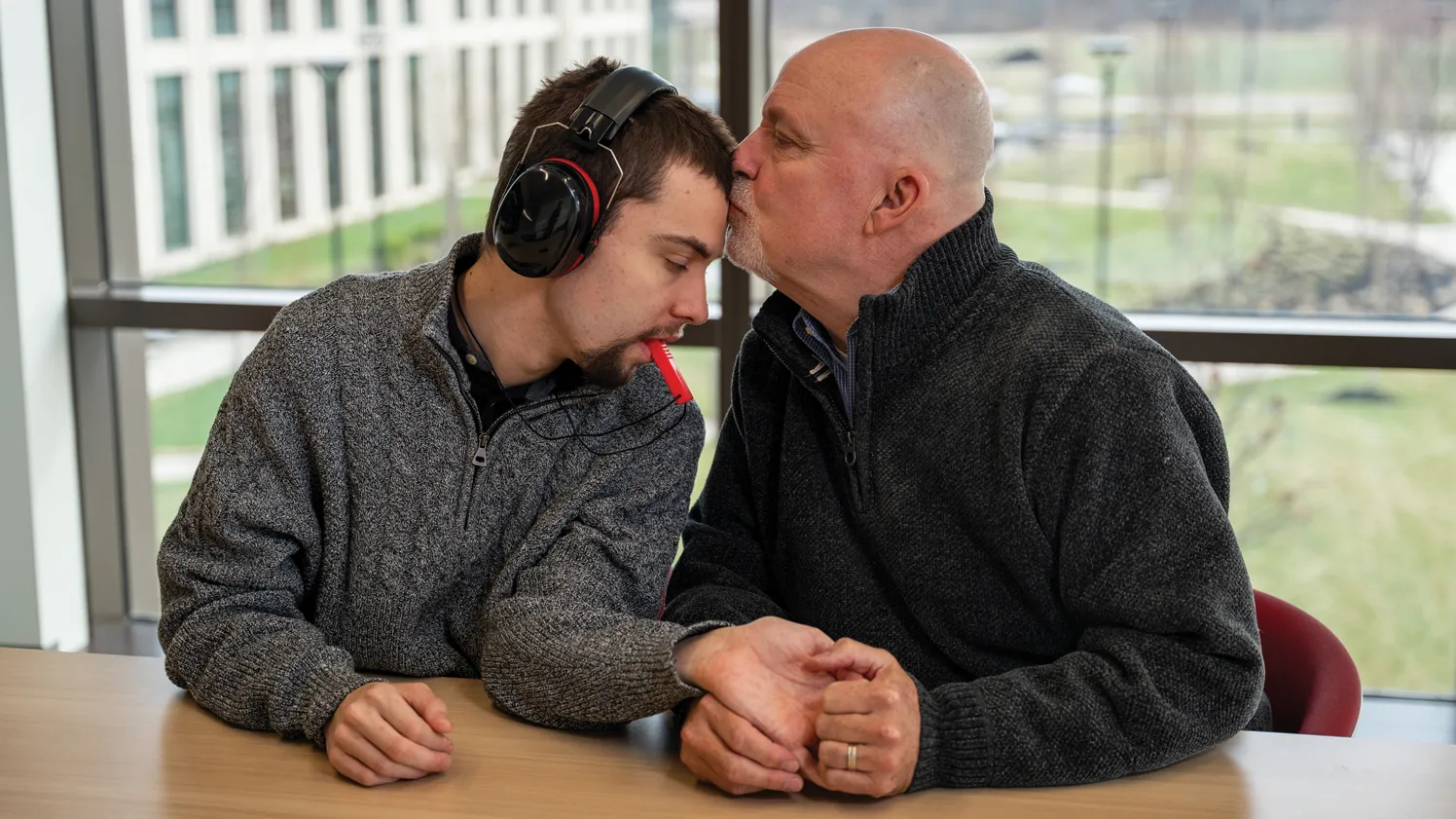
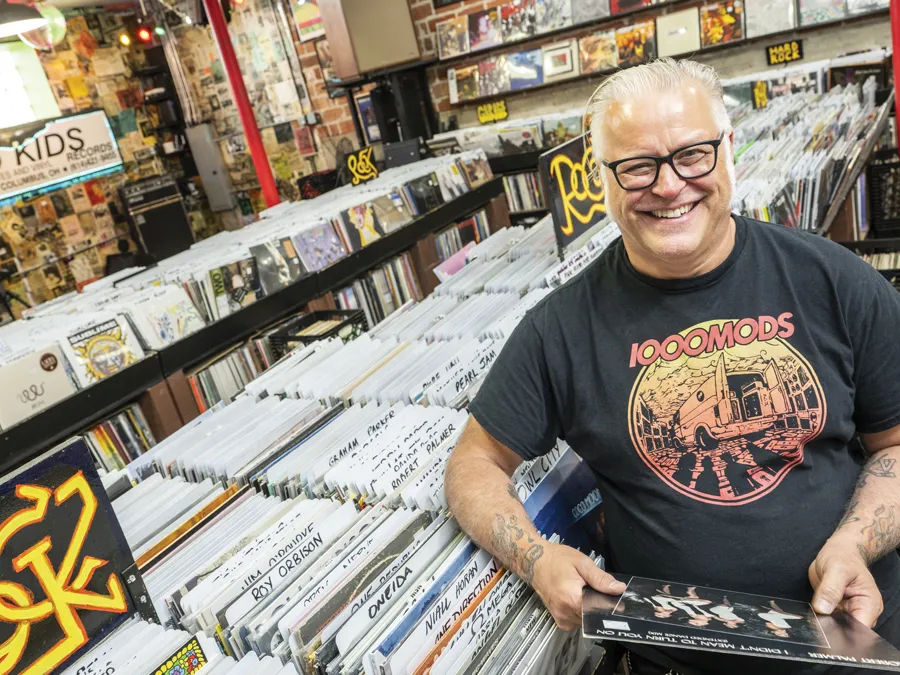
Stephen Lilly, with his son Andrew, says, “I feel like we hit the lottery when we found CAST.” (Photo by David Holm)
Marci Ingram brings her hand to her heart and taps lightly when asked about the impact of the Center for Autism Services and Transition (CAST) at The Ohio State University Wexner Medical Center. She and her husband, Bill, and the Ingram-White Castle Foundation established the center in 2014 through a $10 million gift.
CAST provides long term, specialized primary care to patients on the autism spectrum who are transitioning from pediatric to adult healthcare. The center is the only one of its kind in Central Ohio—and one of only a few in the nation. “When I hear from CAST patients and families, I realize that what we intended to do, to make sure they have a place to go, we did it,” Marci says. “One family at a time.”
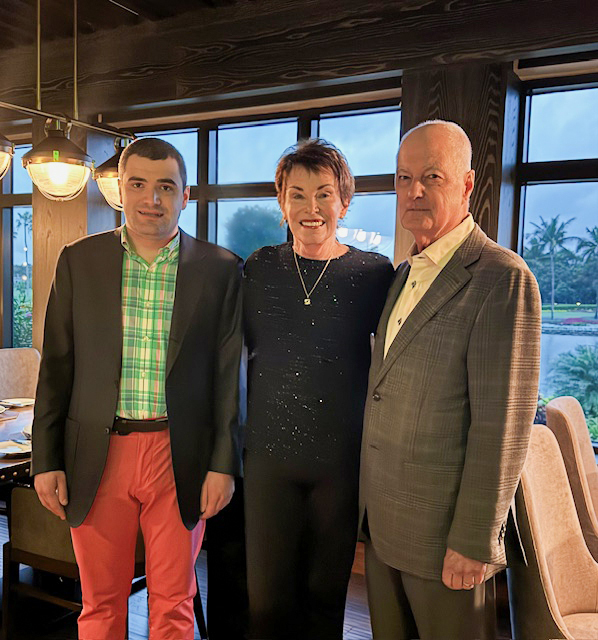
Marci and Bill’s son, Chris, was diagnosed with autism spectrum disorder at age 4. They realized quickly that information on the condition and resources were scarce. “We didn’t know anybody else who had a child with autism,” Marci says. So she set out on “a quest for knowledge.”
Their persistence and efforts paid off. Chris, now 34, lives on his own, drives and has been working full time at Huntington Bank for 12 years. “He’s doing it all himself,” says Bill, the former CEO of White Castle whose daughter Lisa now leads the company.
But helping their son was not enough, and Marci remembers a friend’s frantic call making this all too clear. Her friend’s 18-year-old son, who had autism and was nonverbal, was having a seizure, and the squad said they had to take him to an adult hospital due to his age.
Marci says the incident revealed a gap in the continuity of care available for young adults with autism who were aging out of pediatric hospital settings. “We wanted families going through an autism diagnosis and the challenges it brings to have a place to go,” she says.
Enter CAST. With four locations and a dozen primary care physicians, psychotherapist, care coordinator and community outreach program manager, all specialized in caring for individuals with autism spectrum disorder, CAST saw 724 patients last year.
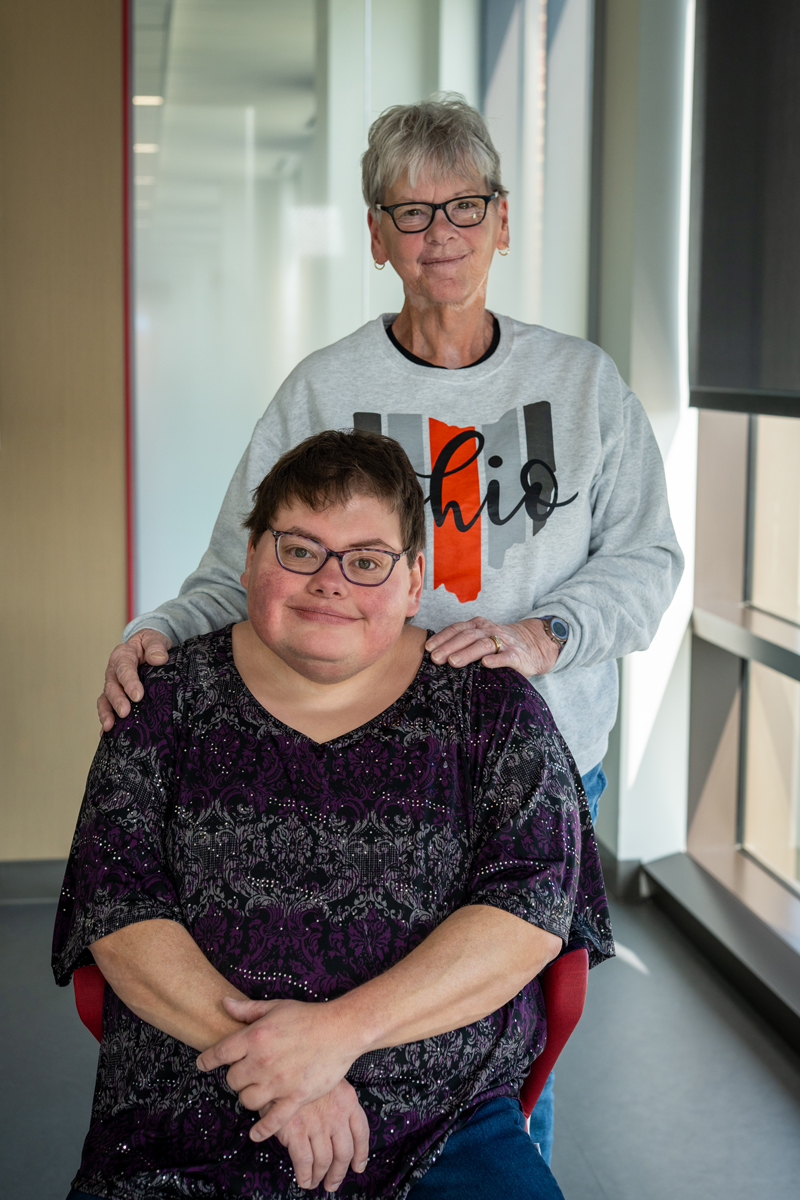
Beth Miller, 42, was among them. She was diagnosed with autism at age 6. “Doctors have their own language, and it’s not easy for me to always understand that language,” she says. “[CAST providers] put it down to a level where I feel comfortable asking questions so I’m able to step up and take control of my own health needs.”
Beth’s mother, Lori, says her family struggled to find services when they had to transition from pediatric to adult healthcare. Her research led her to CAST, where Beth has been a patient since the center opened. Twice every week, the Millers drive an hour from their home in Pickaway County for appointments, which Lori says is entirely worth it. “Beth’s care is all within a group that works together,” she says. “Having that communication between physicians is very, very valuable.”
CAST’s associate director, Dr. Kristin Cooper ’18 MD, is Beth’s primary care physician. “Our CAST primary care program has demonstrated meaningful improvements in outcomes for adults with autism spectrum disorder,” she says. Much of this progress is grounded in relatively simple but powerful principles, including meeting patients where they are and taking the time to understand their individual needs, preferences and lived experiences.
“This work offers the opportunity to build meaningful, lasting relationships both with patients and their families,” Cooper says. “Getting to know individuals like Beth and seeing them thrive over time is incredibly rewarding.”
As Marci and Bill learned after their son’s diagnosis, autism is a spectrum in more than one way. The disorder varies in severity and entails a vast array of care needs—more than half of people with autism have four or more co-occurring conditions, such as epilepsy, gastrointestinal conditions and obsessive-compulsive disorder.
This is why Stephen Lilly is thankful to have found a place like CAST to care for his son Andrew, 22, who was diagnosed with autism spectrum disorder at age 2. Andrew is nonverbal and under parental guardianship.
“I feel like we hit the lottery when we found CAST,” Stephen says. “As an aging parent, as we think about life for Andrew after us, CAST is a magnificent gateway to a continuum of care throughout his life that involves all the resources Ohio State provides. And they are experts at not just providing the medical care, but treating the human being with empathy, compassion and expertise that only someone familiar with autistic adults can do.”
These are the kind of stories that leave Marci at a loss for words, except to say that establishing CAST was a family decision. The Ingram family has a long history of paying forward in Columbus and beyond, and she credits Bill for teaching her an important lesson: When you can, you do.