Why redesigning classrooms keeps STEM students here
Ohio State is scaling active-learning spaces to boost connection, grades and confidence in early science courses today.
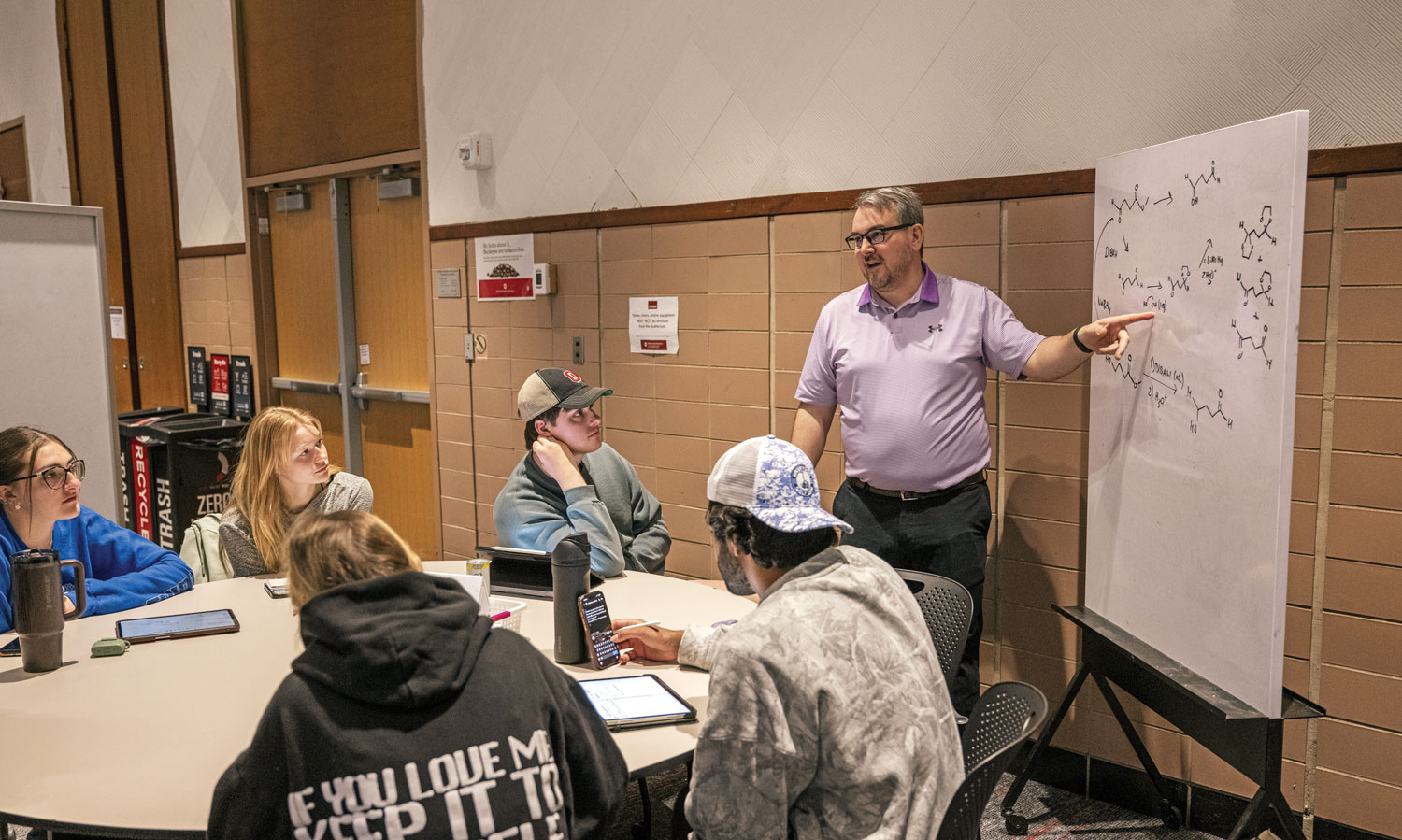
Like heated molecules moving in kinetic fashion, energy vibrates rapidly among 100-plus Ohio State students as they attempt to solve problems during a second-year organic chemistry class in spring semester.
“I’ve given them the puzzle pieces,” Chem 2520 instructor Daniel Turner ’12 PhD says. “Now they have to make the puzzle.”
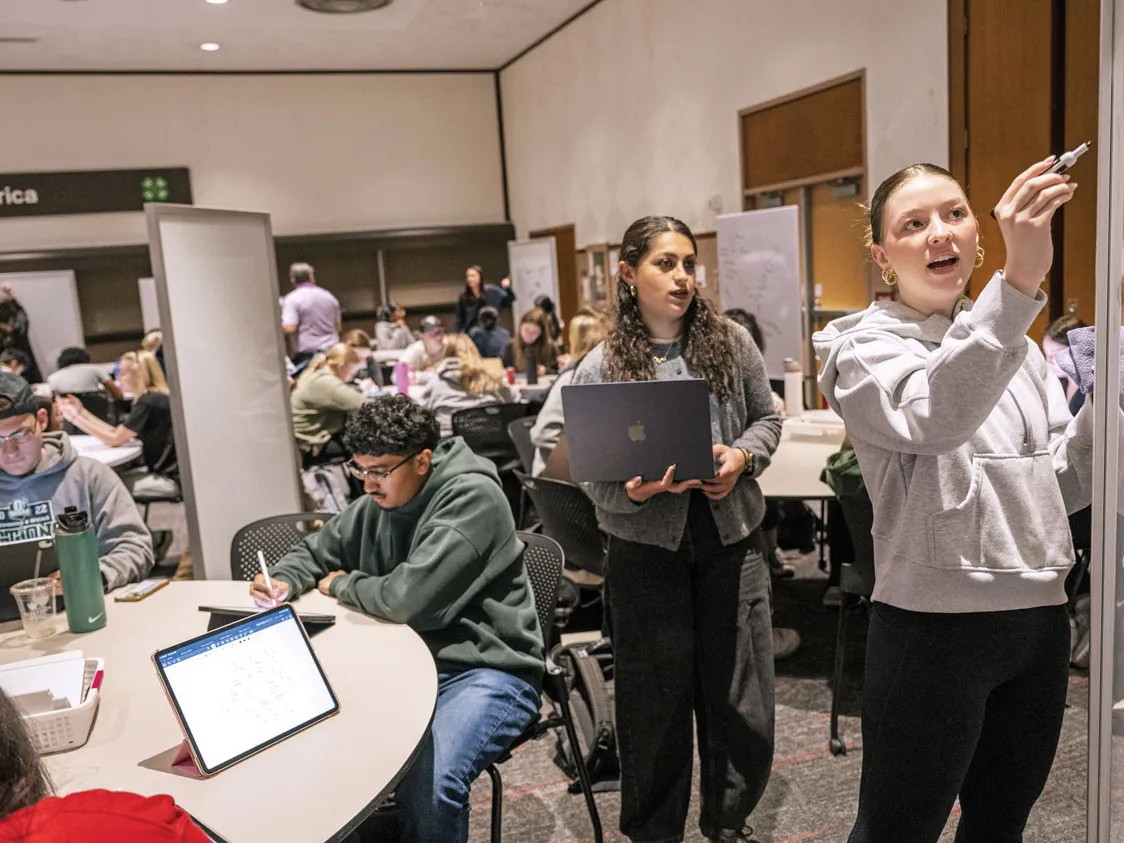
Instead of working alone in a traditional lecture hall’s tiered stadium-seating, the students sit as groups of six to eight, each team at small tables spread throughout the Agricultural Administration Building’s first-floor auditorium. Turner wanders the flat 4,757-square-foot space, stopping to check in with students, helping those who feel uncertain or stuck as they scribble diagrams of chemical reactions on their group’s white board. His teaching assistant and four undergraduate learning assistants do the same.
“The environment of the room makes it feel small,” Turner says. “I’m able to easily get to all students very quickly, and I get to know them pretty well. In this style of class, it’s easy for me to know if a student is struggling, and I can really make sure I’m dedicating time so they can get assistance both inside and outside the classroom.”
The auditorium’s tables, technology and open space allow for active-learning methods of instruction—credited in higher education research for increasing student engagement, but more commonly used in small classrooms, where design is more conducive for group-based activities.
“In a big lecture hall, you don’t feel like you’re in a classroom,” says Renika Sathish Kumar, a second-year biology major. “When you’re at tables in a space like this, it’s so easy to interact with your classmates. You build connections so you can get the support you need. It’s also so much easier to ask for help from a professor or a TA when you’re in a group.
“Those are some of the most important resources you can have in these hard chemistry classes. Being able to take chemistry in this space has made me very comfortable with chemistry, and I think that’s a big part of being able to stay in my major. I feel like, ‘Oh, I got this. Chemistry isn’t going to make me drop out.’”
Ohio State has received similar positive feedback from nearly all students surveyed after taking introductory classes for STEM—science, technology, engineering and math—in the Agricultural Administration Building’s auditorium the past two academic years.
Teachers report students recalling material better, which has doubled A-level grade performance and dramatically lowered the percentage of students who don’t pass the courses.
Encouraging, instead of rejecting
“We don’t want to be weeding out anybody,” says Susan Olesik, Distinguished University Professor and dean of natural and mathematical sciences. “We want to be supportive and help these students survive and do well. If we retain those students, we will generate many more STEM graduates, and that’s a success, especially when the state of Ohio aspires to be a Midwest tech hub.”
Olesik’s division in the College of Arts and Sciences is changing introductory class curriculum and how it’s taught because only about 30 to 40 percent of Ohio State students who declare a STEM major end up graduating with a STEM degree, which is about the national average. Many of the rest are lost in the first year.
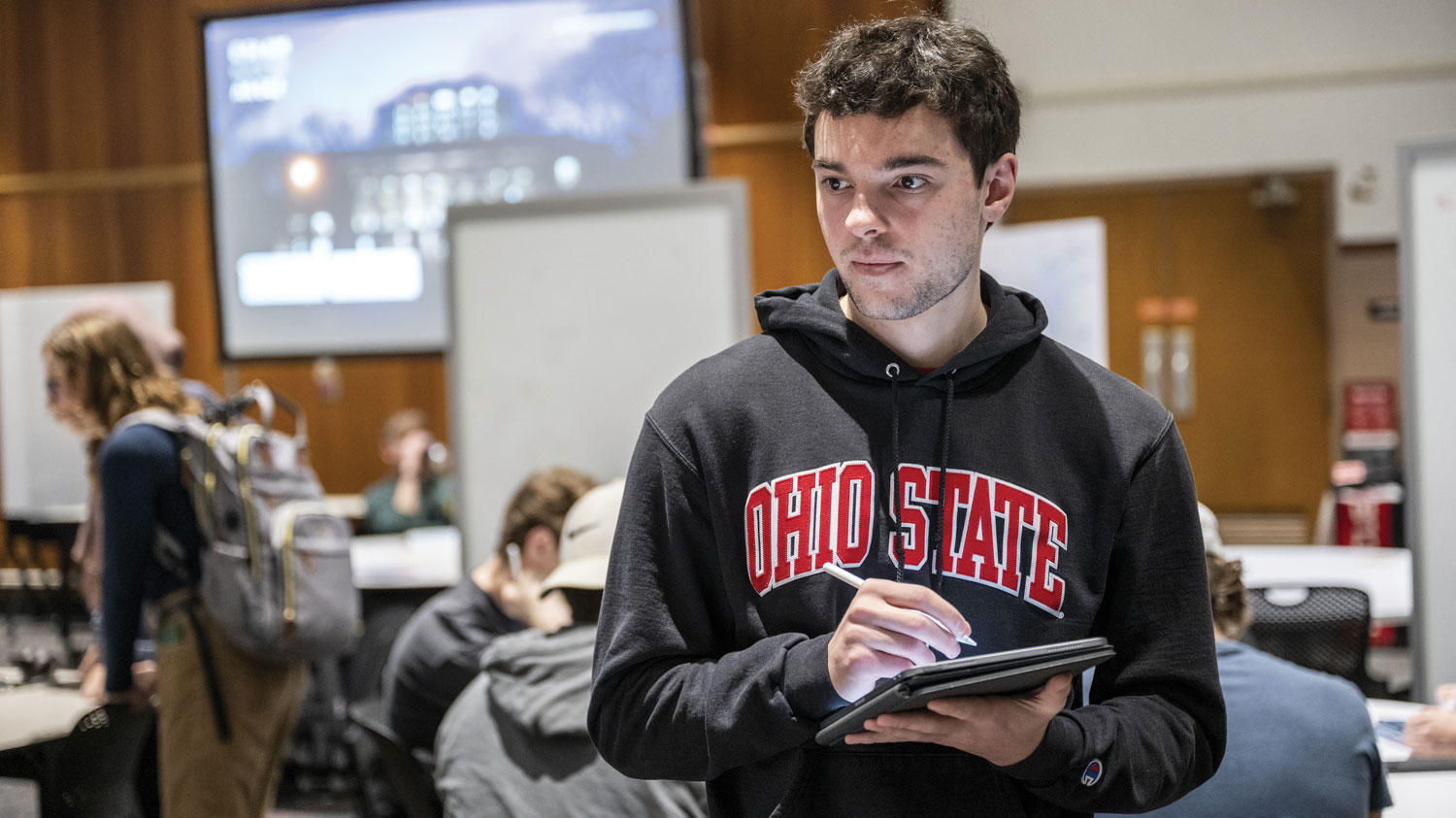
The effort is part of Ohio State’s Success in Science Initiative, a systemic program that began four years ago and includes faculty workshops, the Amgen STEM Learning Center (a high-tech tutoring facility opened in 2024), increased mentoring and scholarships, and a student leadership fellow program.
“We’re creating an ecosystem that thinks about STEM in a new sense to support the modern student,” says research scientist Raeshan Davis, the initiative’s program manager. “We’re thinking of the student individually, how to meet them where they are, give them things they need to feel connected. The active-learning classroom does that by giving students the resources they need to be successful in something that already challenges them.”
Analysis has shown Ohio State’s recent emphasis on teaching introductory STEM classes in an active-learning manner is most effective when paired with a classroom designed for those methods. “You need both,” Olesik says. “The challenge is in scaling up the space.”
Finding the space
That’s why Ohio State is building the Meta STEM Instruction Innovation Hub with $700,000 in grants from Meta’s New Albany Data Center. The new classroom in Ramseyer Hall will accommodate 150 students at a time and 1,200 math and chemistry students per semester. Ohio State is fundraising to fulfill plans for two additional large-scale teaching spaces (each about 4,000 square feet).
Two years ago, Olesik and her staff searched campuswide for classroom space large enough to accommodate active-learning teaching methods for introductory STEM classes, which sometimes have as many as 300-plus first-year students. They could find only one: the Agricultural Administration Building’s auditorium.
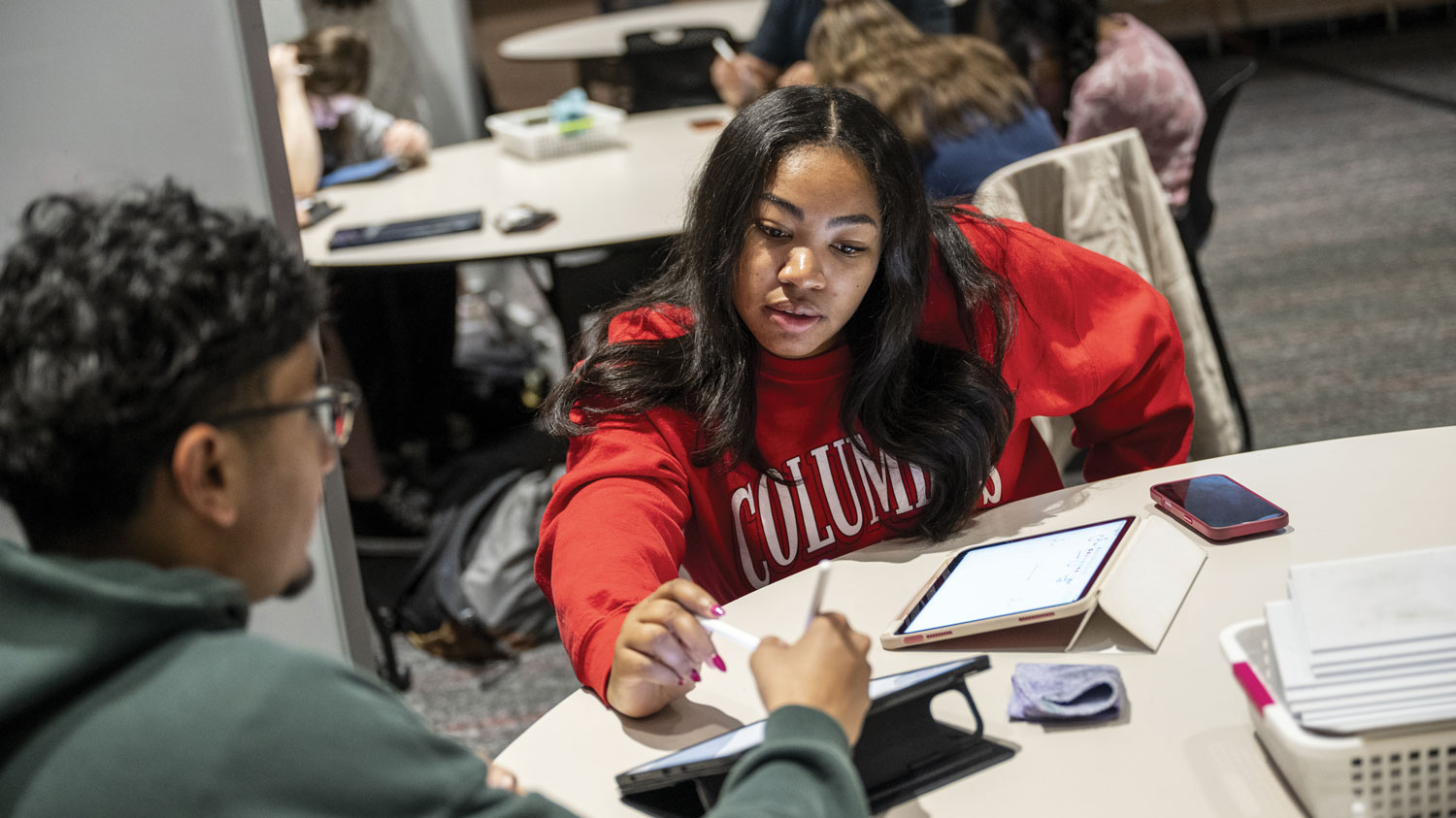
Although not ideal, the space has allowed Turner and other faculty to do more than just be a sage on a stage lecturing to a sea of STEM students, who can feel isolated and sometimes overwhelmed. (In an informal Ohio State Alumni Magazine survey a few years ago, graduates named intro organic chemistry, chemistry and calculus as the classes that had most scarred them.) “But this type of classroom drives more community, based on the interactions,” Turner says. “I just love the conversations. All these students are really engaged. For an 8 a.m. class, they’re ready to go, ready to learn.”
All 108 of Turner’s students were on time for the start of his early-morning spring class despite many having to take a bus to the West Campus location. Some arrived early to do extra work together, assisted by Turner and learning assistant Pia Delouri ’26. Some were even smiling.
“Students feel they’re getting something beneficial out of this class,” says Delouri, who majored in molecular genetics. “It’s a testament to how effective active learning is. I really wish I had taken organic chemistry in this environment because it just makes such a difference when you’re building relationships with your peers and working together on such a daunting subject.”