How an old-school arcade is helping students unplug
A campus psychologist donated pinball machines to spark presence, play and belonging at Mansfield’s Electric Playground. Read his game-play tips!
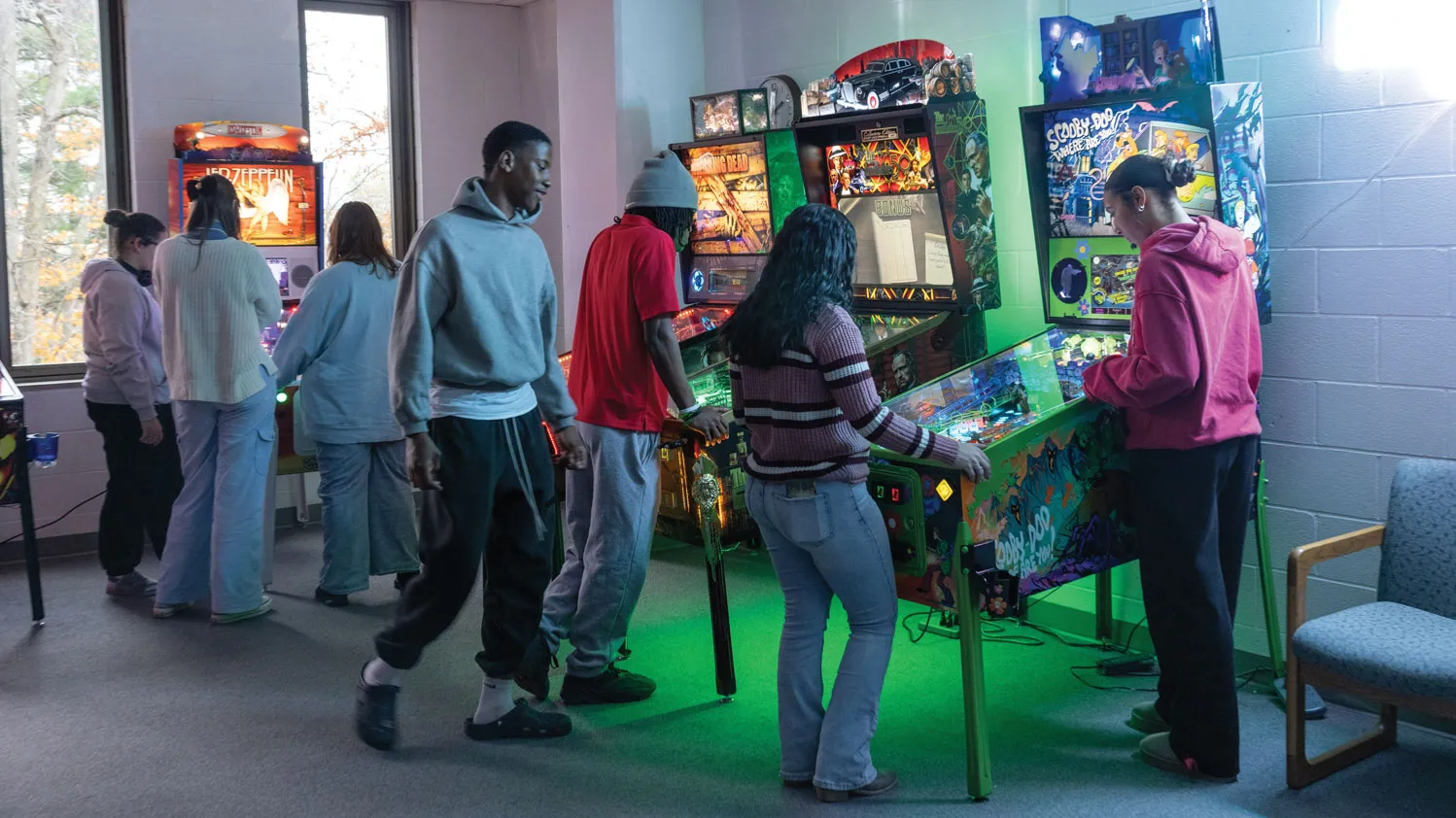
The Electric Playground opened last fall at the Eisenhower Student Union. (Photos by Jodi Miller)
Before cellphones came along, parents might have scoffed at the notion kids can improve their mental health by playing pinball down at the arcade. Clinical psychologist Blake Wagner wasn’t exactly an enthusiast at first, either, but for different reasons.
“When I was a kid in the ’70s, I thought it was a ripoff,” he remembers. “I’d use a quarter, which was a lot of money, and it seemed like the ball had drained right off.”

No quarters are required to play the eight pinball machines at Ohio State Mansfield’s Electric Playground, which opened in the fall. Wagner, who became a pinball aficionado later in life, donated the machines to give students a refreshing break from their digital devices and help them better connect with one another.
Wagner has seen anxiety and depression rise dramatically since he became a campus psychologist more than 20 years ago—even though more mental health staff are putting in more hours to work with students. Doomscrolling through angry social media and gloomy news, or even just constant digital engagement, is a contributing factor, he thinks.
To proactively counter some of these negative trends, and build emotional resilience in students, Wagner and Jason Opal, dean at Mansfield, decided to try pinball.
“I call pinball ‘mindfulness with bumpers,’” Wagner says. Life is increasingly experienced through devices, but “with pinball, it’s tactile, it’s visceral, it’s alive.”
Playing gives students a chance to pull away from academic stress and focus on fun for a while, and Wagner touts “the fun, the challenge, the thrill and just standing up and interacting. And it kind of brings you into the present moment.”
The idea is grounded in behavioral science that embraces strategies like short mental breaks, physical engagement and shared play to increase a sense of belonging, Wagner says. “A lot of the protective factors that we try to address are actually touched upon through pinball, if you can believe it.”
Players are able to better process their thoughts and feelings, live in the moment and tune out distractions. At the same time, the Electric Playground isn’t open at all hours of the day. The university isn’t trying to re-create arcade-style obsession.
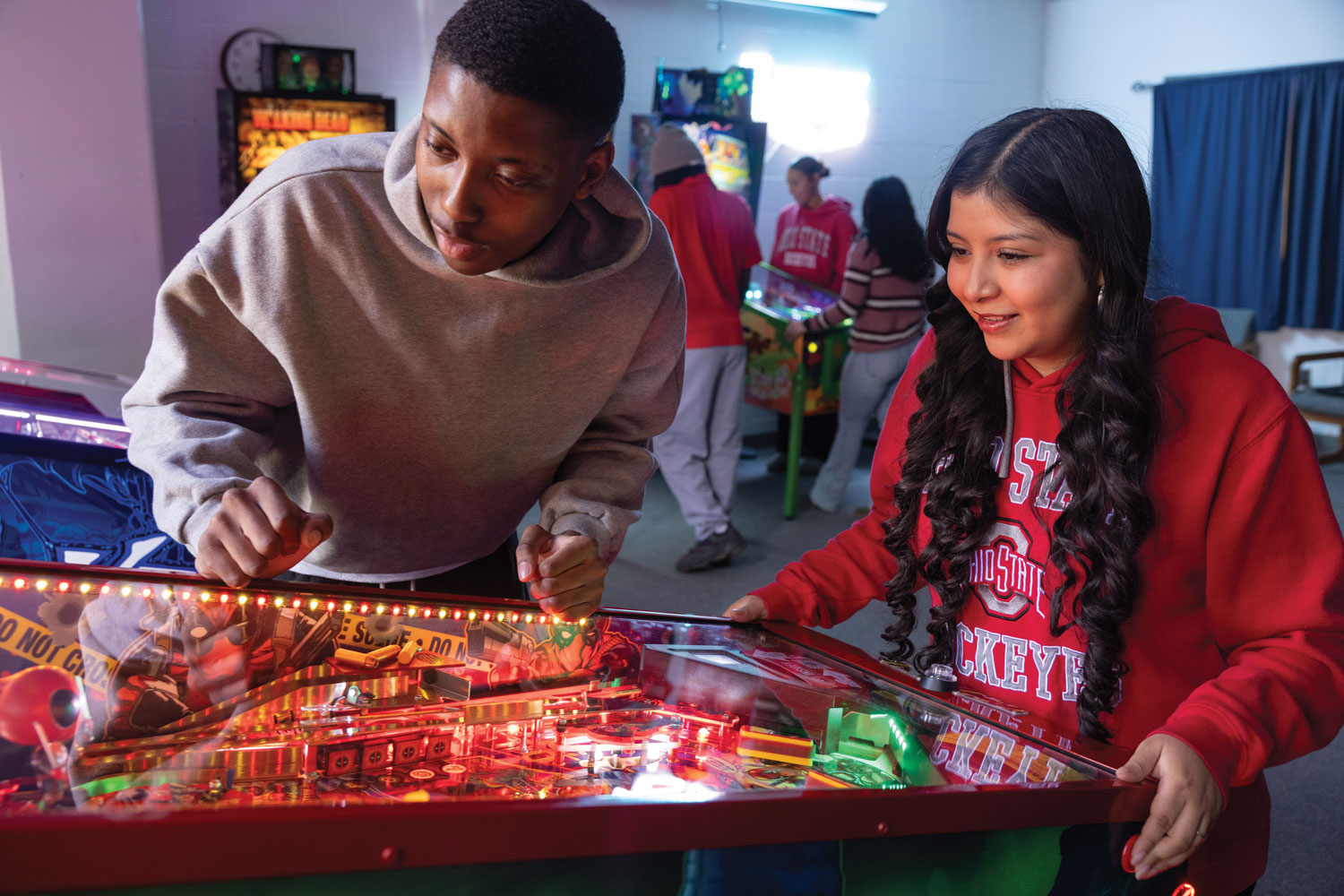
Wagner’s aha moment with pinball came years back when his wife was battling serious health issues. He and his children found some escape in refurbishing and playing an old pinball machine, and it was a hit. “Their friends would come over and line up to play.”
History major Jared Sims, a supervisor at the Student Union, noticed last year that the Union wasn’t very active, but this year, visitors ask about the Electric Playground. “It’s definitely been a big help to us. We see lots of students coming in and out.”
Wagner recalls one first-year who was standing alone, listening to headphones, when pinball players invited him into their game. Soon he was part of the group, playing to cheers from the others.
x
Quick tips: pinball basics
Pinball takes time to master, but Wagner suggests basic skills to hone:
- Post pass: Transferring the ball from one flipper to another. This increases your control over shot angles.
- Cradling: Trapping the ball with one flipper, giving you a chance to reset
- Live catch: Timing the flipper to absorb the ball’s energy and control it
- Nudging: Moving the machine slightly to influence the ball
- Shot aiming: Targeting specific ramps or modes instead of just keeping the ball alive
- Multiball control: Cradling one ball when multiple balls are in play, bringing more control to the chaos
Sims offers another basic approach fundamental to most sports: “I always just try to focus and keep my eye on the ball.”