An introvert’s leap from research to romance on TV
Glenn College Assistant Professor Victor St. John talks about finding love on Netflix’s reality dating show “Love Is Blind.”

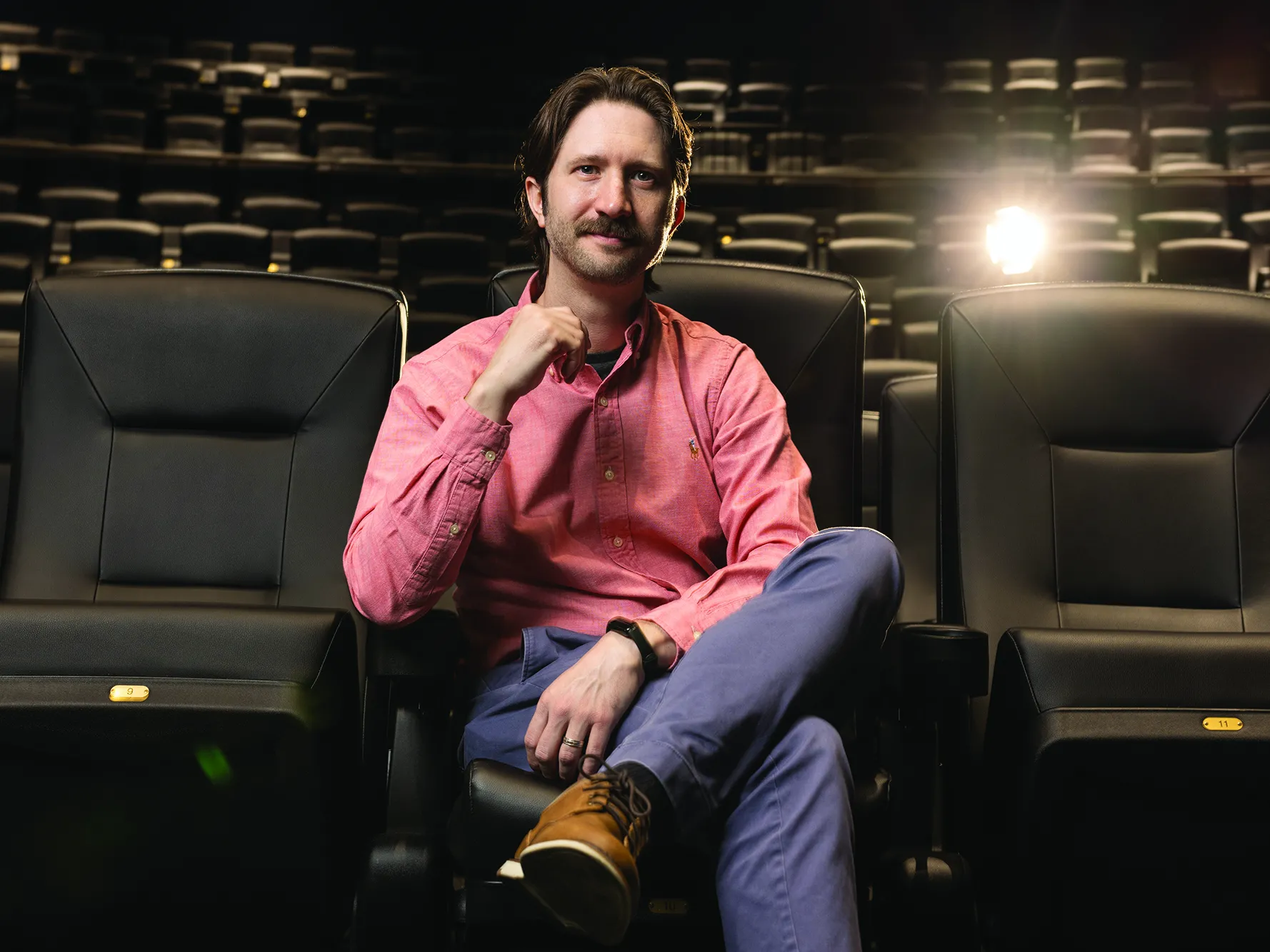
Victor St. John describes his marriage to Christine Hamilton, a speech pathologist, as beautiful, serious and surprisingly fun. (Photo from Tim Johnson-USA TODAY NETWORK via Imagn Images)
In the world of academia, Assistant Professor Victor St. John is known for his work in criminal justice and public policy. Thanks to his recent turn as a contestant on “Love Is Blind,” St. John is now known to a lot more people.
A self-proclaimed introvert, St. John quickly became a fan favorite on Season 10. In the Netflix reality dating show, single men and women date each other for 10 days without seeing what the other people look like. Once a couple gets engaged, they meet in person for the first time and continue to date for several more weeks. Inevitably, some couples break up. Only a few say “I do,” and an even smaller number stay together. From all seasons of the show, only nine couples are still married.
The latest couple to join the club is St. John and Christine Hamilton, a speech pathologist. In a season with no shortage of drama and men behaving badly, the two were a much-needed breath of fresh air—and the couple everyone was rooting for. Their chemistry was evident from the beginning, and viewers got to watch their love story unfold as they navigated discussions of family, faith and race with respect and grace. (St. John took a leave of absence from Ohio State to participate in the program.)
The popular faculty member in the John Glenn College of Public Affairs shared his experience on “Love is Blind” and what life looks like now that the cameras have stopped rolling.
-
Why did you decide to audition for “Love Is Blind”?
It kicked off because a friend of mine told me, “Hey, they’re coming to your city. I know your dating and relationship status, and I think you should just take a shot at it.” That’s kind of funny, because I’m very introverted, so part of me was like, “Uh no, I don’t think I want to do something like that, to be opened up to the world in that way.”
Regular dating just wasn’t working for me in general. I ended up looking at the application. The questions ask you some pretty deep things. I enjoyed being able to self-reflect through that long-form questionnaire. It was cathartic … going through it and really reflecting on, “What is it I’ve been looking for in this space? What are the areas where I’ve come up short as a person?”
All these different things actually spoke to that reflective aspect of me that exists. So I had fun with it, and before you knew it, I hit “submit.”
-
What were your first impressions of Christine?
Chill, calming spirit. Mature, faith-led woman. Funny, pragmatic, hard-working. Those things immediately came out. She is passionate about her job. All of that came through very quickly, and I’m like, “Oh, we’re clicking on all these different levels.”
-
You seem like a pragmatic person. Was there any point when you thought, “Is this crazy? Am I about to propose to someone I’ve known for a week?”
My bond with Christine allowed me to take a risk.
Faith plays a big role in settling the pragmatic, logical side of you. Not that faith is illogical, because there’s a lot of overlap there. When there are things your mind may not fully be able to put into boxes, the fact that you have faith in this—that you’re protected and you’re guided and what needs to come from this will come from this—it gives you an ease.
My heart felt the love. It was outside of the pragmatic course I would typically take, but I knew whatever is supposed to happen will happen.

St. John, an assistant professor in the John Glenn College of Public Affairs, specializes in criminal justice and public policy. He teaches courses related to data analysis, statistics and public policy analysis. (Photo by Logan Wallace)
-
Tell me about your field and what you focus on research-wise.
My research is in public policy and administration, and I particularly look at criminal justice systems and other intersecting areas. So sometimes it’s criminal justice and health, criminal justice and education, the system as a whole—whether it’s policing, corrections, the whole nine—and the ways in which we can strengthen these systems to better serve the public.
-
What drew you to the field?
I would say my personal upbringing in Brooklyn, New York, drew me into, first, criminology. I can think of occurrences of being 12 years old and having interactions with police officers. Stop-and-frisk was going on later in high school. You could come out of school, just minding your business and be pushed up against the wall and people were in your pockets. It was embarrassing.
All these interactions across time made me realize, “Something is off. Why is this happening? Why is it set up this way? And how can I be a part of some sort of change where this isn’t perpetuated?”
-
What’s been the reaction on campus to your “Love is Blind” role?
So I would say on campus, things have been pretty chill. I think at this point, my students, they see me so much. I think I’m just a regular face now to them. At first, there were some curiosity and questions. I think now they’re like, “Yeah, this is just my professor.”
-
You and Christine will celebrate your one-year anniversary in April. What’s surprised you the most in this first year of marriage?
How much fun it can be. I knew marriage was already a beautiful and serious thing, but it also is a very fun thing. I think it’s exciting and enjoyable to be able to spend time with her family, to see her with my family. It’s just been fun.
How St. John came to academia
“That evening I found myself thinking that having to physically restrain youth and young adults from my community as a part of my week-to-week is probably not the long-term path for me, and I would like to be a part of change in a different way,” he said, adding that a professor encouraged him to take the academic route.