Better than ChatGPT: Faculty-built bots help students
Leveraging deep curriculum expertise, these specialized AI assistants guide learners through complex material and sharpen understanding.
Put simply, a chatbot is a computer program that, when asked a question, consults a knowledge base and responds in a personlike way. With the deep pool of AI understanding at Ohio State, it’s no surprise that faculty have built their own. Here are two tools designed to make education better for students.

Chairside helper
Imagine being a third- or fourth-year dental student caring for some of your first patients. They present problems and complicating issues. You shuffle through your memories of years of lectures, readings, simulations, trying to pick out the important points while chairside to that real person. It’s tough, so the College of Dentistry developed a Point Of Care Chairside Academic Assistant (POCAA). The chatbot is superpowered by the entirety of the college’s own content—more than 100 courses, 450 lectures and 9,000 educational artifacts. Students enter a patient’s concerns and get back treatment recommendations, direct references and more. Talk about a confidence-booster. POCAA can be used only within Ohio State, but students already have asked for it to be made available for their post-graduation private practices.
Unintended benefits
Dentistry Dean Carroll Ann Trotman says the complete look at the college’s teachings has identified curriculum inconsistencies and areas students search most often. The latter pointed to topics that needed more attention in classes.
Supply Chain Brutus
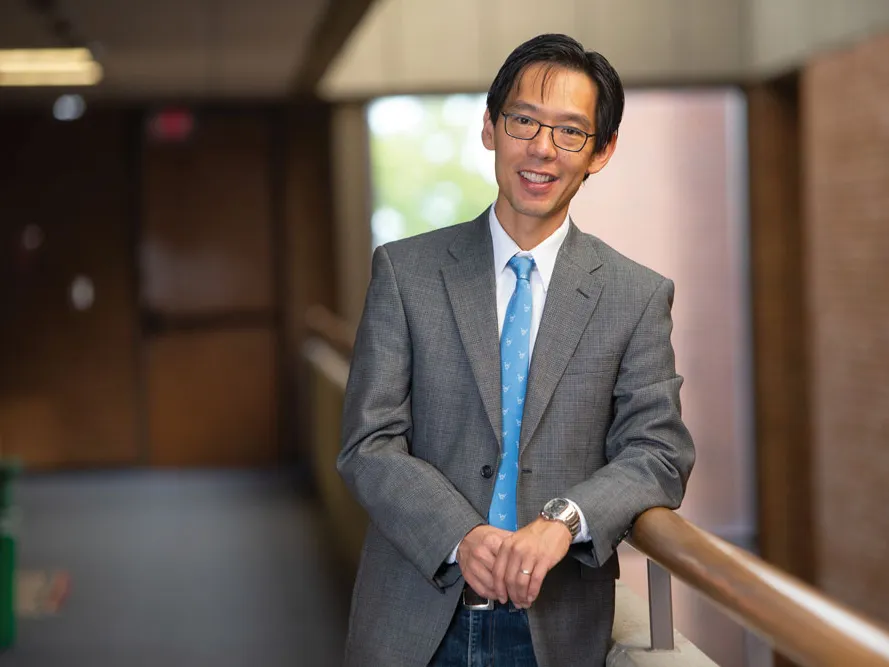
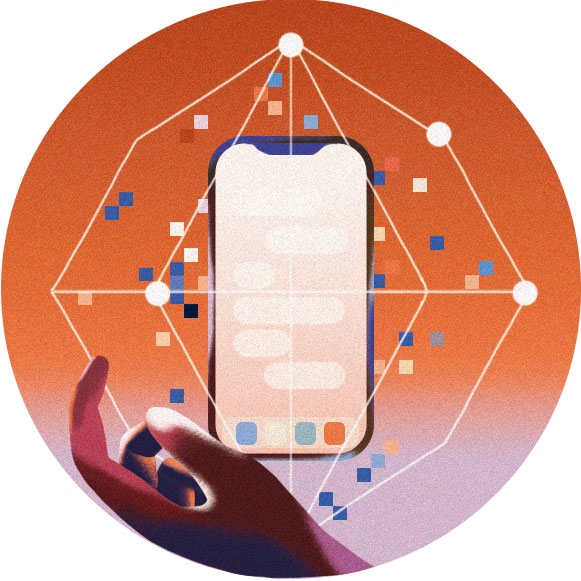
Vince Castillo, assistant professor of logistics in Fisher College of Business, got interested in generative AI when he caught onto the, ahem, shortcuts it afforded unscrupulous students. But he quickly discovered a world of possibility. Since jumping down the rabbit hole, Castillo has created Supply Chain Brutus (SupplyChainBrutus.com), a virtual mentor for students. Similar to the College of Dentistry’s, his chatbot features his own textbook and course materials. When students pose a question, Supply Chain Brutus answers with references to his teachings and textbook.
Alive in the classroom
In Castillo’s BUSML 4382 class, students learn tools to make good decisions about business operations. They usually have no programming experience, but the final assignment guides them through using descriptive analytics and chatbots to create interactive supply chain maps, turned in as HTML files. Students are proud when they finish. “I see now that AI lets people go beyond their technical capabilities. It’s like the calculator, where all the busy work is eliminated, but you still have to do the hard thinking on everything,” one said.