Your barbecue questions, answered at Ohio State
Michael Cressman ’09 MS, ’14 PhD shares tips on smoke, heat and tools that help cooks move from good meals to standouts.
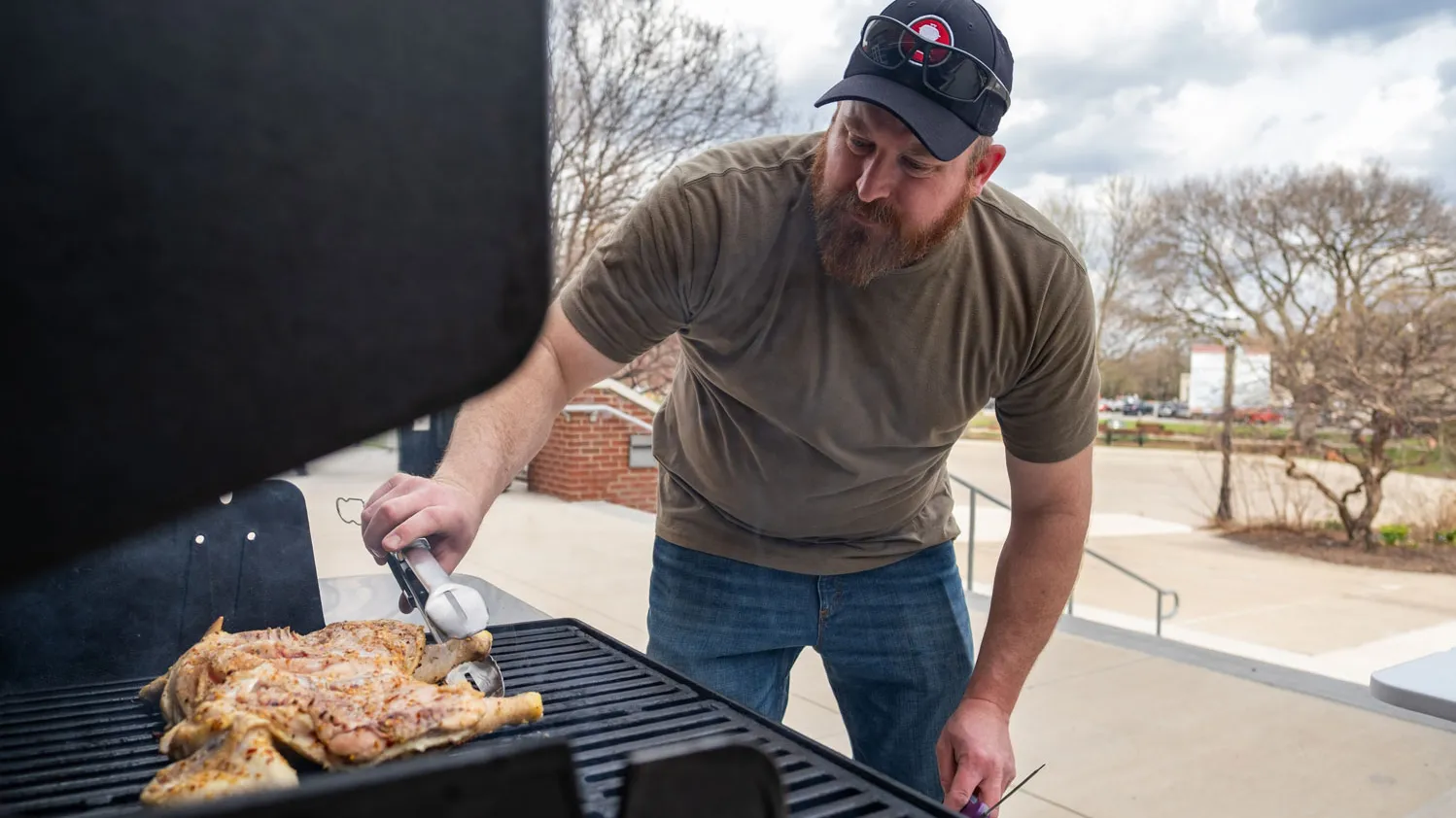
Among the classes Professional Practice Associate Professor Michael Cressman teaches: Bar-B-Que Science. He also coaches the Poultry Judging Team, a student group that competes across the nation.
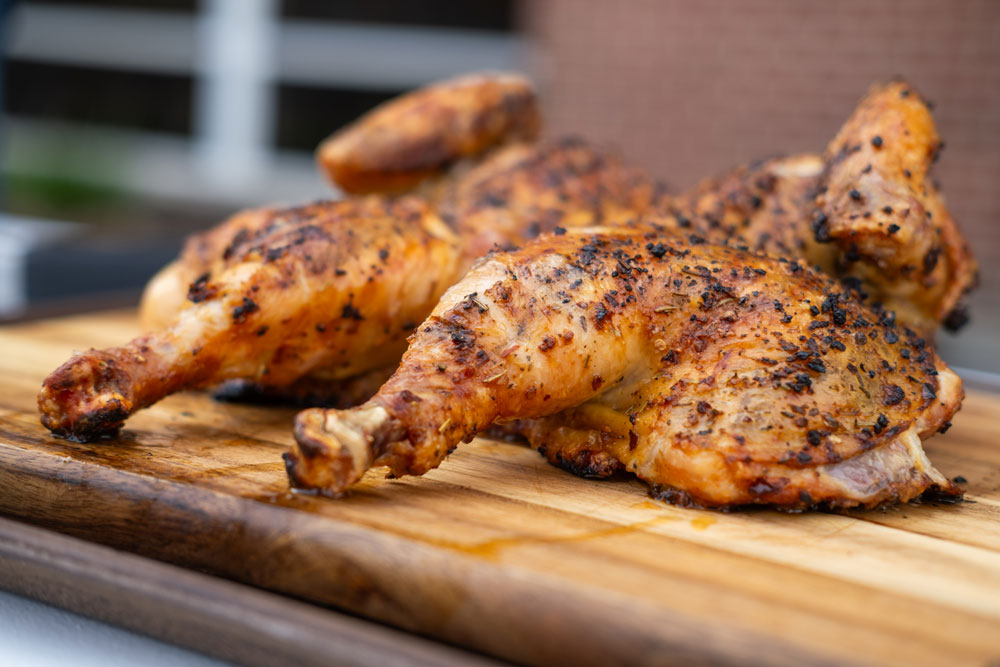
Barbecue is part science, part art, part tradition. And like anything worth doing well, it comes with plenty of myths, mistakes and strong opinions.
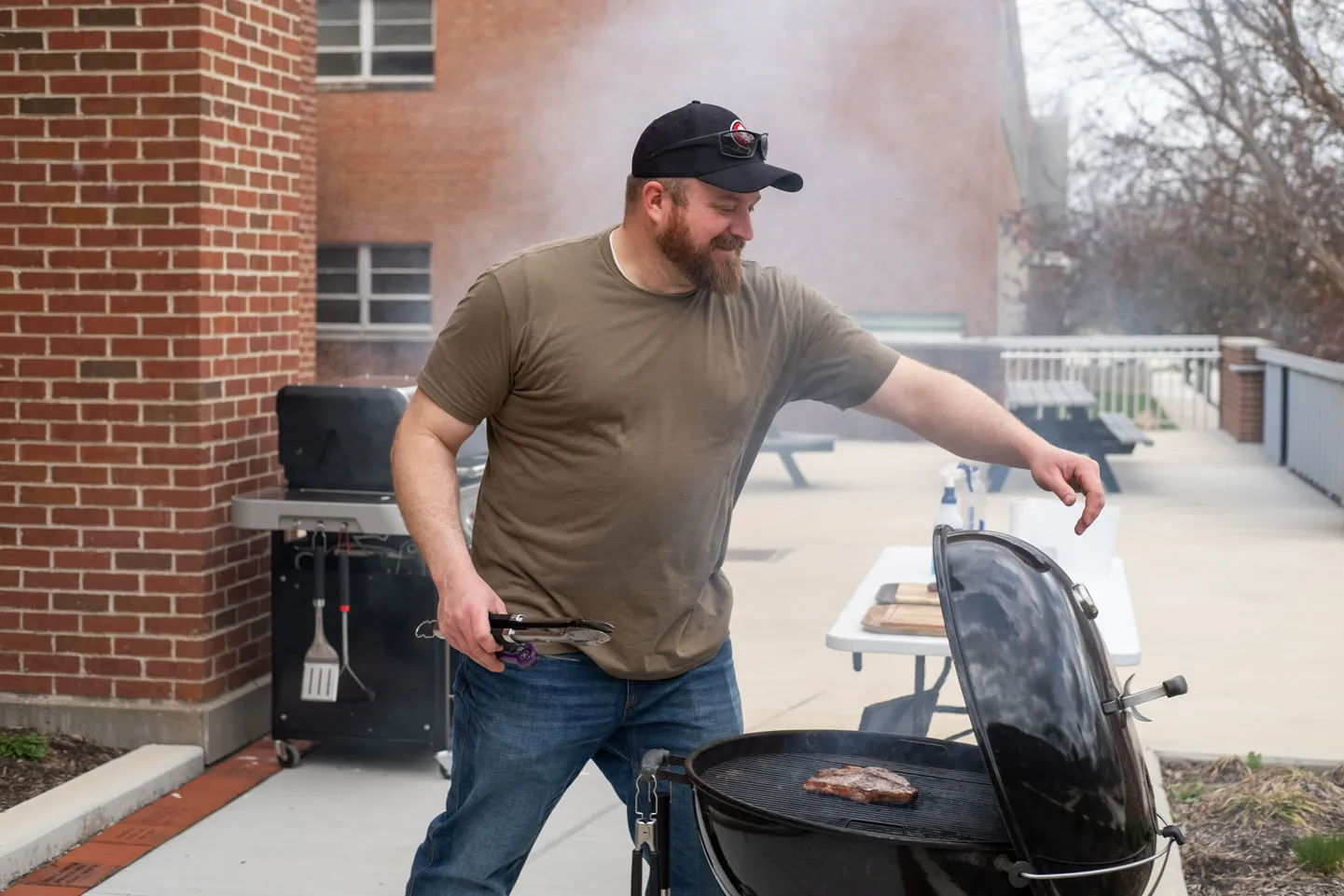
Michael Cressman ’09 MS, ’14 PhD is a barbecue expert, a professional practice associate professor in the Department of Animal Sciences who teaches BBQ science to Ohio State’s students. He has spent years mastering the craft of outdoor cooking: grilling, barbecuing, smoking and meat science in general.
His knowledge spans techniques, tools, flavor profiles and the small details that separate “good” grilling from unforgettable meals.
Recently, he answered your questions.
-
Which wood flavors complement which meats best? — Keith Culbertson ’97 MA, ’06 MA, ’06 CoS
Generally speaking, more robust, flavorful woods pair better with those meats that are also a bit more robust and flavorful. Hickory, mesquite and pecan pair very nicely with beef and lamb, while woods like apple and maple pair better with poultry and fish.
I find that oak and cherry pair nicely with all meats, while pork is versatile enough that you can pair it with just about any type of smoking wood. And if you’re trying to add wood smoke flavor to a chicken and all you have on hand are hickory woods chips, you don’t need to make a special run to the store. Just use less of those hickory wood chips than you would use for beef or lamb.
-
Does cooking over hot coals put pollutants or carcinogens in our food? — Thomas Hampton ’06
I will answer this question in two parts:
1. Charcoal briquettes use a binder (typically some type of starch) to hold the charcoal powder into a compressed shape. Additionally, some charcoal briquettes use an accelerant—this is sometimes indicated in the name of the product (such as “instant-light”), but might not be explicitly labeled elsewhere on the bag. Both the binder and accelerant require time to “burn off.” Therefore, it is very important to allow your charcoal to ignite and burn for the first 15–20 minutes, during which time the smoke will transition from very dark and gray (or “dirty”) to a thin white or light blue (or “clean”) smoke. Only once the smoke produced by your charcoal has transformed from “dirty” to “clean” can you be sure that the binders and accelerants have all burned off. Also, you can purchase lump (natural) charcoal instead of briquettes, which do not use binders or accelerants.
2. Regarding the concern over carcinogens, yes, grilling meats at temperatures greater than 300°F can produce carcinogenic compounds, specifically heterocyclic amines (HCAs) when proteins drip into the fire and polycyclic aromatic hydrocarbons (PAHs) when fats drip in. While this cannot altogether be avoided, it can be minimized by taking several approaches: marinate your meat; grill leaner (less fatty) cuts of meat; and grill indirectly, which is to say, not directly over the coals or burner of your grill, but to the side of the heat source.
-
What’s your favorite not-typical thing to grill? — Lindsay Shaw ’18
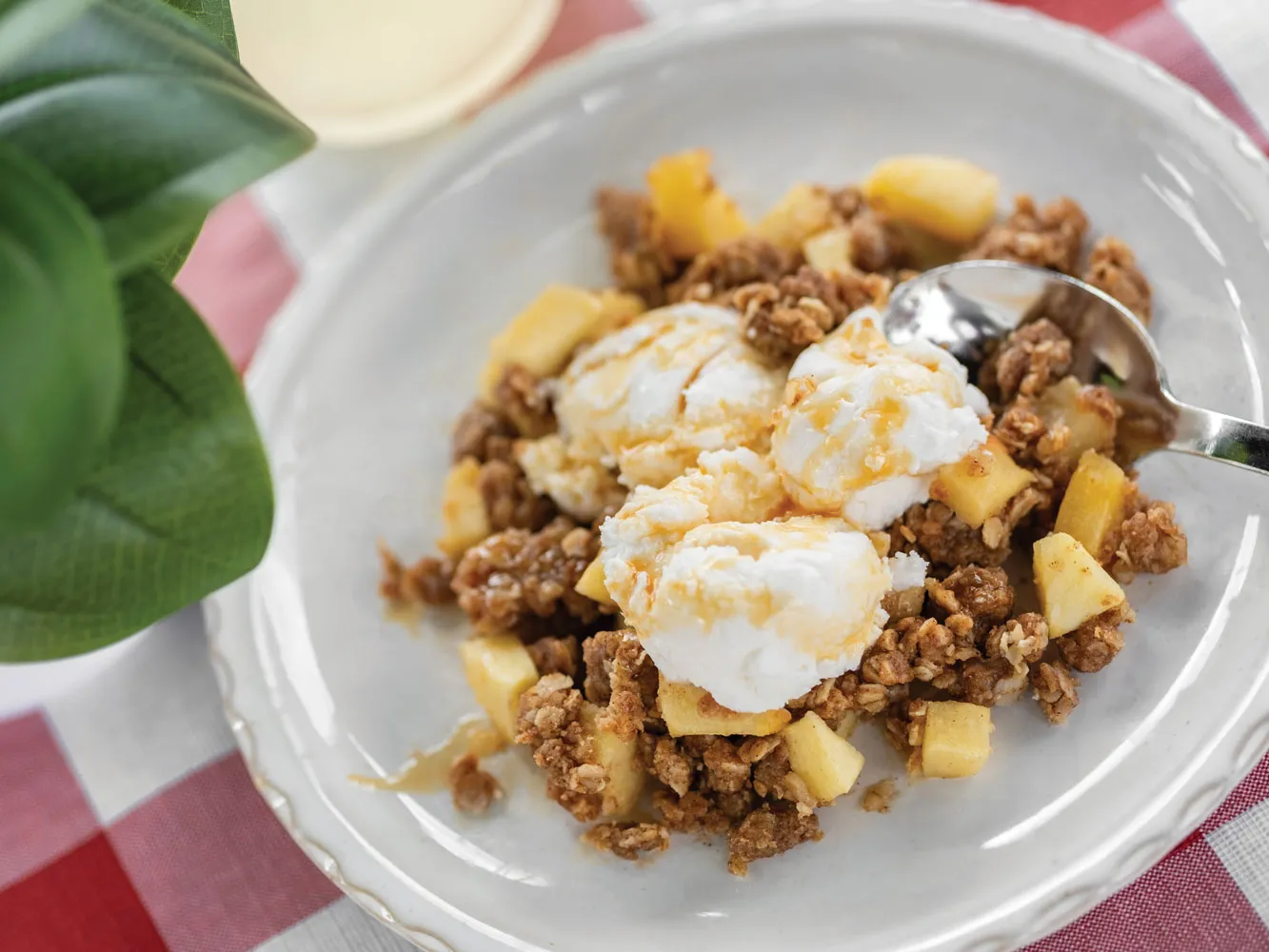
I enjoy grilling fruits, especially in summer. Grilled fruits are delicious. The heat from the grill softens and warms the fruit, while simultaneously caramelizing the natural sugars within. And they pair wonderfully with a scoop of ice cream or whipped cream; super simple but trust me, your friends and family will be impressed.
Just remember, when selecting fruits, those that are ripe but still firm will hold up better on the grill.
-
What method of grilling produces the most flavorful outcomes? — Philip Cline ’74
I think it is safe to say that with proper technique any grill will produce wonderfully flavored food. However, if you really want to enhance smoke flavor while grilling, I find that easiest to accomplish by adding small wood chunks to a well-lit bed of charcoal.
-
How do you get a smokey flavor using your gas grill only? — Kirk Montgomery ’88, ’90 MS
On a gas grill, you’ll need to use a smoker box that works with wood chips to achieve those wonderful smokey flavors on your food. A smoker box is nothing more than a small metal box with holes that, once filled with wood chips and placed inside your gas grill, will smolder and generate smoke. It’s a very cheap investment with great results.
-
What are your favorite vegetables or fruits to grill? — Jen Rudy ’08, ’10 DRP
Zucchini, Brussels sprouts, red potatoes, pineapple and peaches!
-
What is the best way to keep from burning or drying out food? — Colleen Oelker Rodriguez ’78, ’81 MA
Grill temperature. Cook time. And internal (meat) temperature. These three things are going to be different for every cut of meat.
First, at what temperature should your cut of meat be grilled? Should your grill read 300 degrees Fahrenheit, 400 degrees Fahrenheit or 500 degrees Fahrenheit? Second, how long should it take to grill? If it’s an anticipated 15-minute cook, don’t walk away from your grill for 20 minutes or lose track of time. Pay attention to the time and the temperature of your grill over that period. Lastly, to what internal temperature should your cut of meat be cooked? Medium-rare? Medium? Well-done? To cook with this level of precision, you will need to know your target internal temperature and also use a meat thermometer.
If you take your grilling and barbecuing seriously, please invest in a good instant-read digital meat thermometer.
-
My 13-year-old has taken an interest in cooking and grilling. He makes an amazing seared steak on a cast-iron skillet. He’s interested in using a smoker to make a brisket. How should I foster his interest in BBQ? — John Votino ’08
There’s plenty of content online about how to trim, season and smoke the perfect brisket. What I would encourage is that you develop your son’s skill with the smoker, before you let him attempt his first cook with a brisket.
Have him fire up the smoker and regulate its airflow to better learn how to achieve and maintain temperatures. Add different amounts/sizes of wood, until you produce a trail of smoke that is desirable (light white or thin blue smoke). Once he has developed those skills, then let him attempt smoking more affordable cuts, such as chicken and pork butts, before you invest in an expensive brisket.