3 ticks on the rise in Ohio and how to protect yourself
An Ohio State expert shares clothing, repellent and removal tips to lower exposure when spending time outdoors.
The bloodsuckers are booming.
Thanks to climate change, reforestation and other factors, tick populations are increasing across the country, including in the Buckeye State. “Ohio is on the front lines of tick expansion in the eastern half of the United States,” says Timothy McDermott ’96 DVM, an assistant professor of agriculture and natural resources in the Department of Extension at Ohio State University
To help protect Ohioans from these tiny parasites, the Ohio State Infectious Diseases Institute, in partnership with the College of Veterinary Medicine, launched the Buckeye Tick Test last year. The service analyzes ticks people find to determine if they’re carrying one of several transmittable diseases.
But knowledge also can protect you. McDermott says the best ways to prevent tick bites are to wear permethrin-treated clothing, light-colored long sleeves and pants; tuck your pants into your socks; apply tick repellent to exposed skin; and do a thorough tick check after being outdoors.
Be on the lookout for these three tick species that are associated with the most disease transmission.
And as with all these species, to remove them, use tweezers to gently grasp its head close to the skin. Pull up with steady pressure. Do not try to use heat. Ticks secrete a substance called cementum when they embed in a host and can only be released when removed with tweezers.
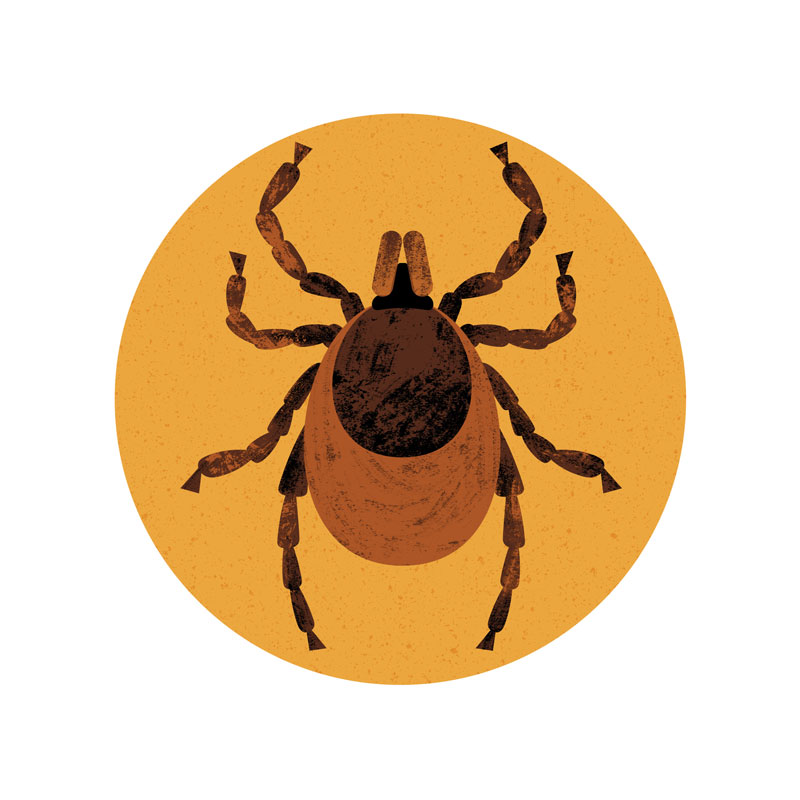
Blacklegged tick
Ohio’s most prevalent species (also known as the deer tick) can be found in wooded and brush areas throughout the state on white-tailed deer, mice, chipmunks and shrews. Their peak months of activity are May and June when the nymphs (baby ticks) look for hosts, and again in October and November when adult ticks look for hosts before the colder temperatures arrive. They can transmit Lyme disease, anaplasmosis, babesiosis and Powassan virus disease.
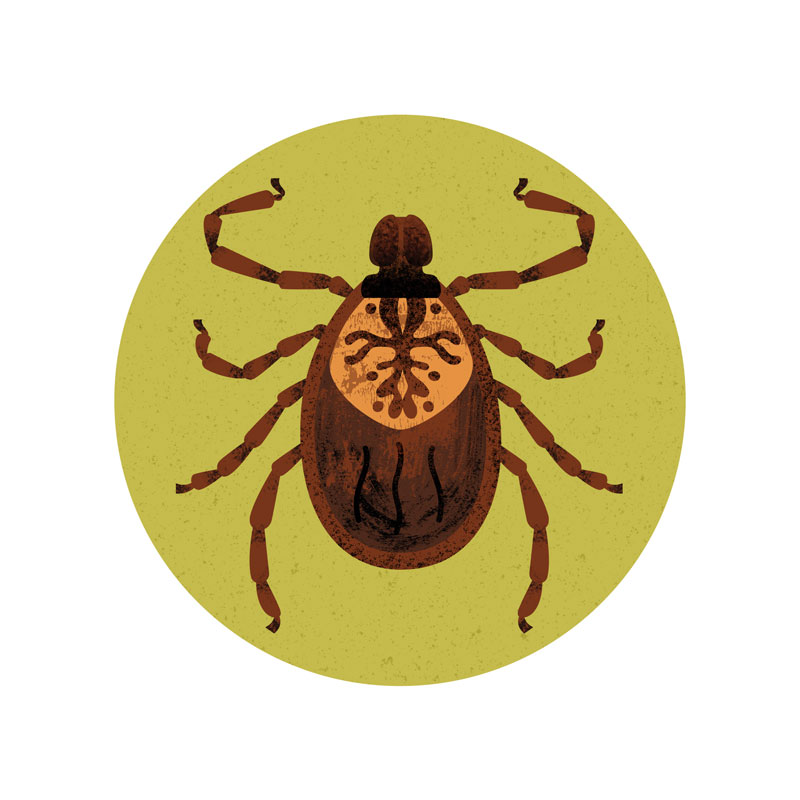
American dog tick
These ticks can tolerate a more open habitat, including pastures, meadows and lawn grass. They are most active from April to September and can transmit Rocky Mountain spotted fever and, in rare occasions, tularemia.
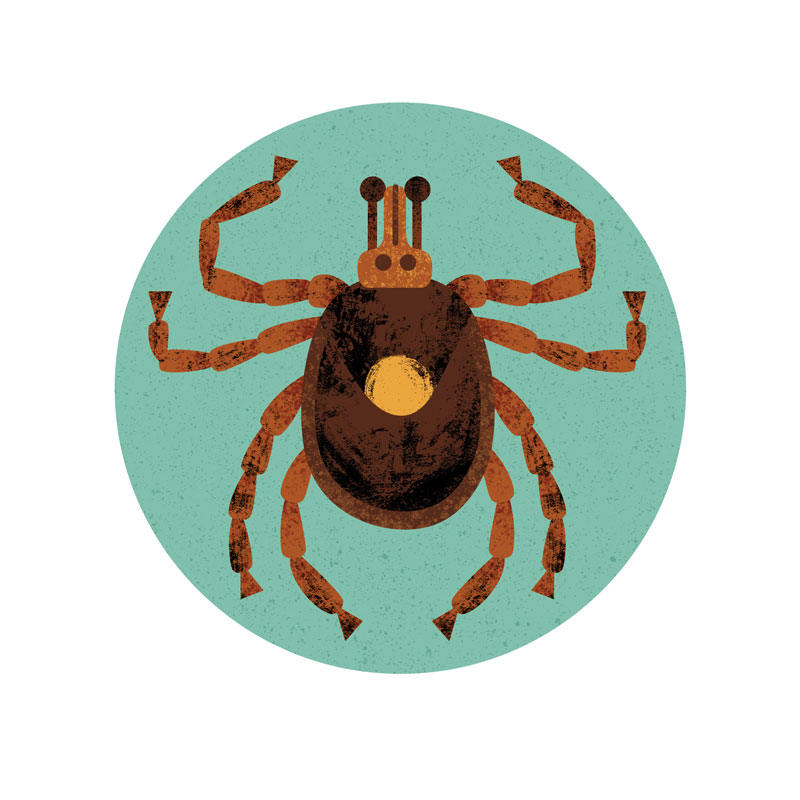
Lone Star tick
Aggressive feeders on multiple species in Ohio that prefer a more wooded habitat. They can be found in multiple Ohio counties but are most common in southern Ohio. These are one of the most aggressive ticks and are active from April to September. They can transmit ehrlichiosis, southern tick-associated rash illness (STARI) and are implicated in alpha-gal syndrome. A recent Ohio State study found that if the species hitchhikes inside a home, it can live an average of 15 days in long-pile carpet and a week on tile.
Sources: Timothy McDermott, Ohio Department of Health
Buckeye Tick Test
Submitting ticks for identification and testing can help with risk assessment, and Ohio State does that—with results ready within 72 hours.