Where healing hands met folk-rock imagination
Richard Prass ’73 blended medicine, music and invention, leaving a quiet legacy felt by patients, family and Buckeyes.
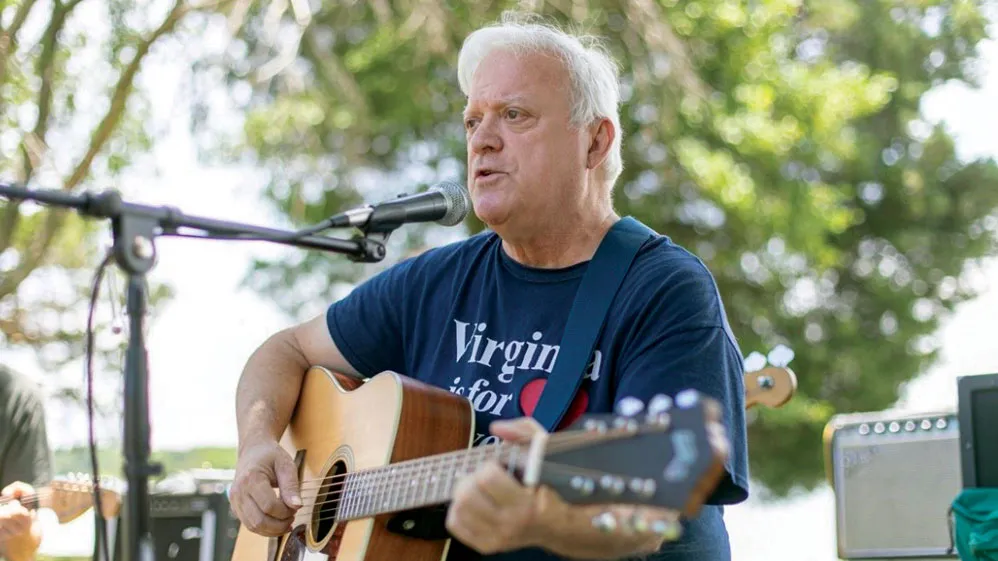
(Photo courtesy of the Prass family)
Natalie Prass describes her father as a creative force.
“From the delicate acts he performed in surgery, to his many surgical inventions and patents, from his master gardening, songwriting and guitar playing, his talents and interests spanned far and wide.”
Dr. Richard Prass ’73 died Nov. 20. He was 74.
Prass grew up near Dayton. He met the love of his life, Margaret Kearney, at Trotwood-Madison High. She followed him to Ohio State, and they eventually married and raised three children, Carrie, Brian and Natalie, in homes filled with music, love and laughter. Margaret Prass ’75 died in 2024.
While at Case Western Reserve University, where he earned an MD and PhD, Prass wrote “MD: A Folk Rock Opera.” It was performed at Case Western, and the proceeds were donated to the Cleveland Free Clinic.
The Cleveland Plain Dealer reported: “The hit production ‘M.D.,’ a folk-rock opera written and directed by Richard Prass … and performed by a group of medical and undergraduate students, is being airlifted this weekend to be the featured attraction at the Student American Medical Association meeting.”
The Medical University of Charleston also invited Prass and his troupe to perform in South Carolina.
Natalie Prass grew up listening to her father play the guitar and sing. She once asked him what song he was playing. Prass said he was making it up as he played. “From that moment on, I thought it was totally normal for people to make up songs for fun,” she says. “I started writing songs in first grade.”
Natalie Prass had a successful career as a touring and recording artist.
Richard Prass specialized in head and neck medicine, with a subspecialty in the space between the inner ear and the brain. “He treated people with Ménière’s disease and tumors that grew and impacted the nerves and hearing,” says Carrie Prass Schwickardt. “My father was a humble giant; he never talked about all his accomplishments.”
The “humble giant” patented nine surgical instruments that allowed surgeons to better see and monitor microscopic nerves during surgery. This led to safer surgical procedures and better outcomes for patients. Prass received special recognition from NASA for the Prass Probe, a precise electromechanical nerve stimulator.
“My father saw a gap—these things needed to exist to make surgery safer—and so he figured it out,” Schwickardt says.
Prass served as director of otology at Eastern Virginia Medical School in Norfolk, Virginia, then medical director and president of Atlantic Coast Ear Specialists in Virginia Beach. He worked as associate otologist at Nashville ENT Clinic before retiring.
Natalie Prass has listened to a recording of her father’s folk opera. “It’s really good, and I’m not just saying that because I’m his daughter,” she says. “If you listen closely, you can hear the joy in his voice.”