Fetch, Rover, fetch
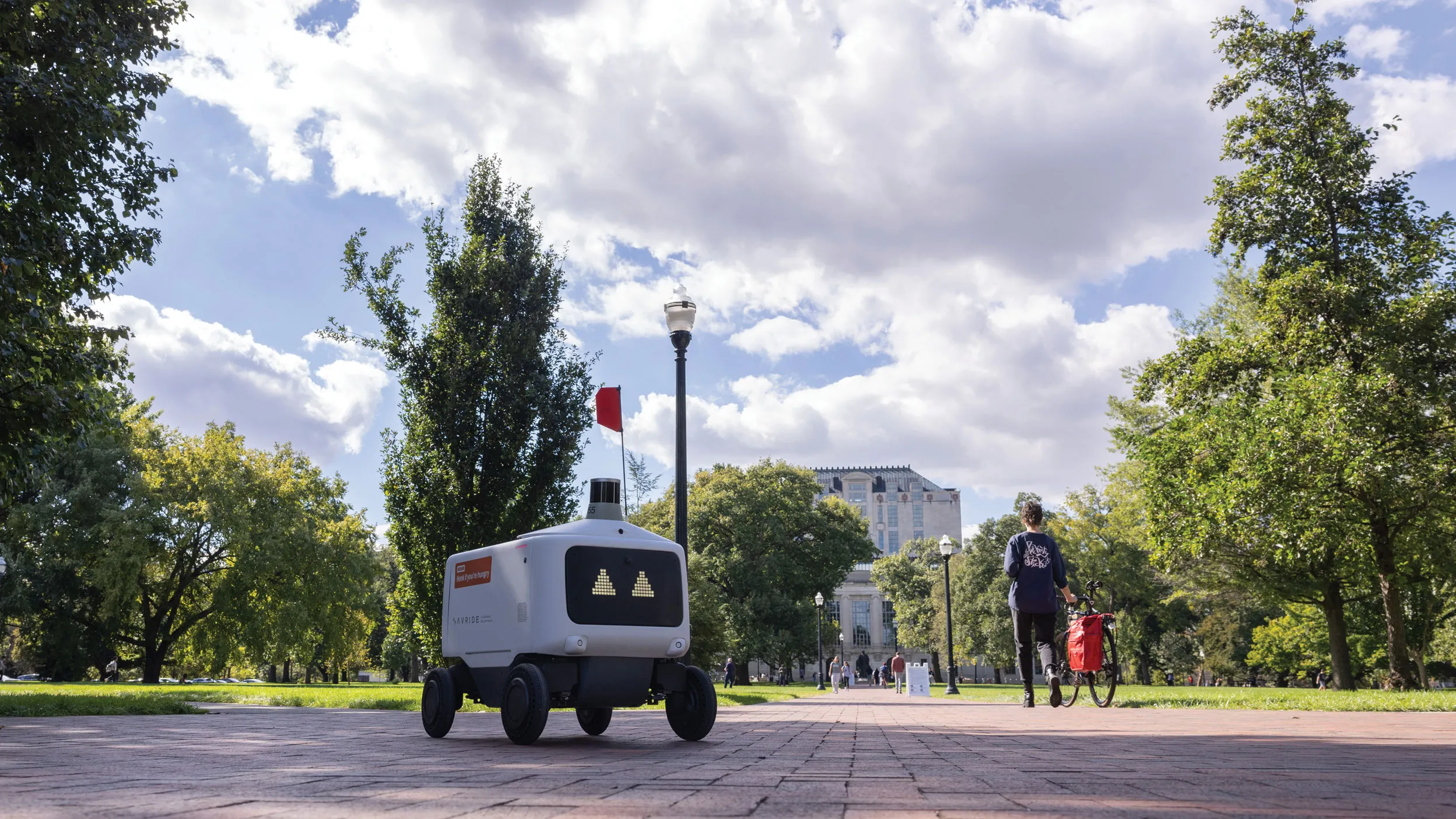
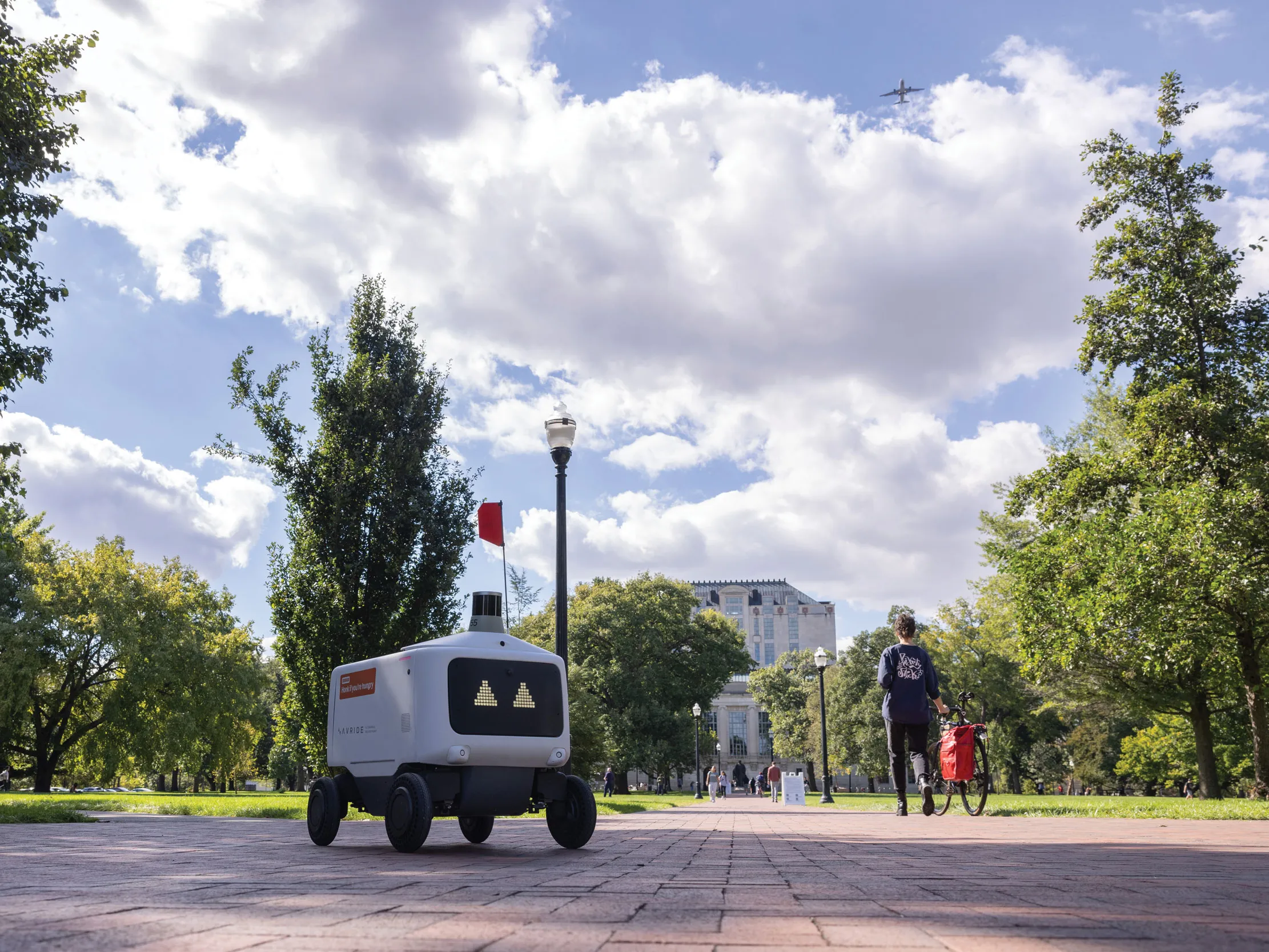
They don’t bark, but they do deliver. These pint-size robots have become campus regulars—dodging squirrels, hauling chicken fingers and occasionally sparking some play along the way.
New York City resident Carey Moore ’21 came back to campus in late summer to show her boyfriend around the place that had made such a big impact on her life. Walking past Orton Hall toward the Oval, they encountered a surprise—a food delivery robot rolling toward them. It wasn’t alone. “There were so many on the Oval, just weaving in and out of each other,” Moore says. “It was super funny.”
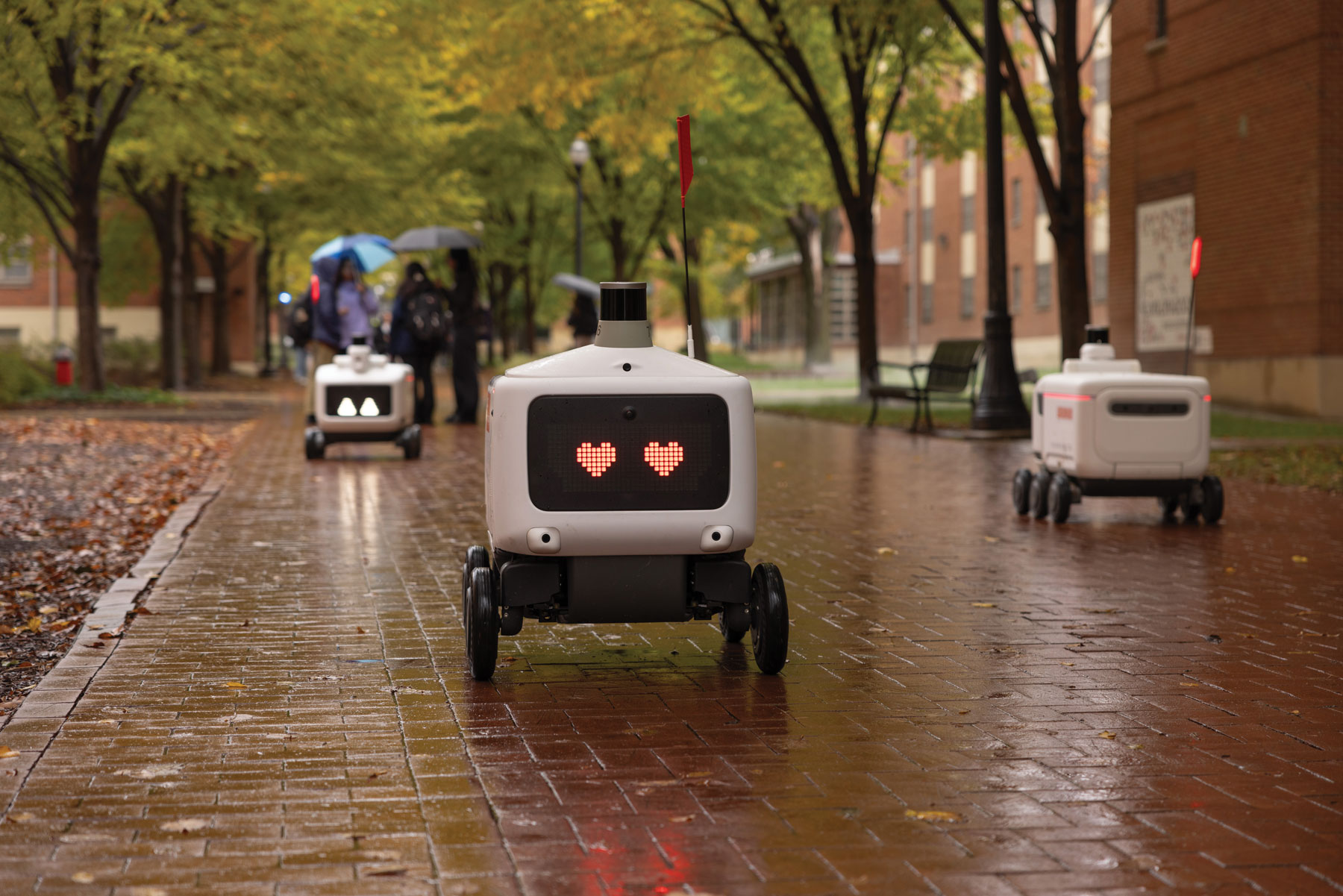
The couple did what many humans do when they first see the robots. They played. Moore didn’t touch the robot but stood resolutely in front of it. “They had those different emoting options, like it got sad eyes. It did the hard eyes.” Laughing, the couple laid down on the ground to see if the robot would go around them onto the grass. Instead, it—and its buddies who rolled up behind it—patiently waited. “I caused like a three-unit pileup,” Moore jokes. When they started wriggling back and forth, she freed them to go on their way, not wanting to delay people’s food too long. “It was definitely a highlight of our trip,” she says.
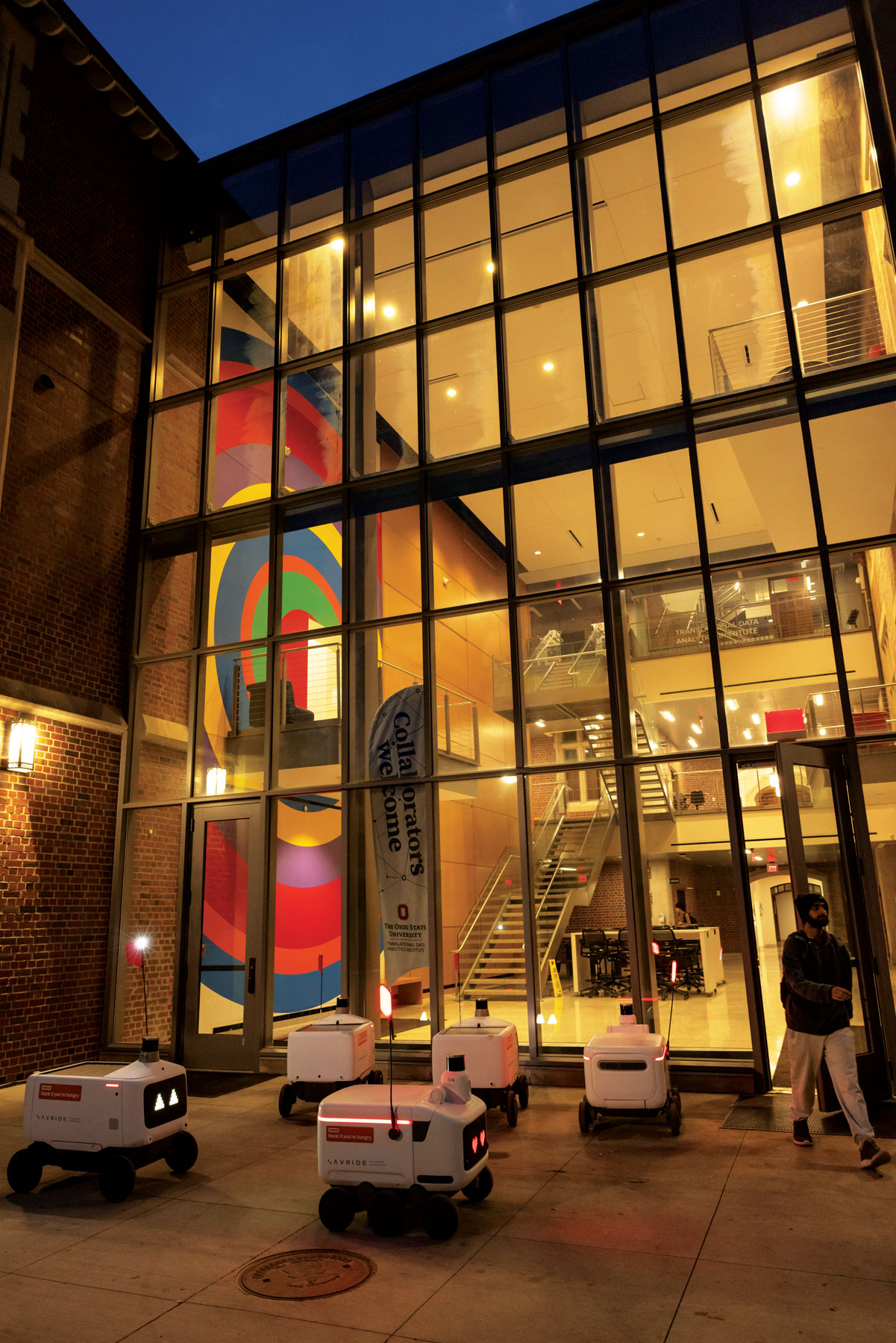
These cute little rovers—whose ultrasonic sensors help them stop short of students, dogs, squirrels, and Moore and her beau—have become ubiquitous on some parts of campus. The university has 127, owned by manufacturer Avride and operated by the food delivery app GrubHub, through which orders can be placed for a $2.50 delivery fee.
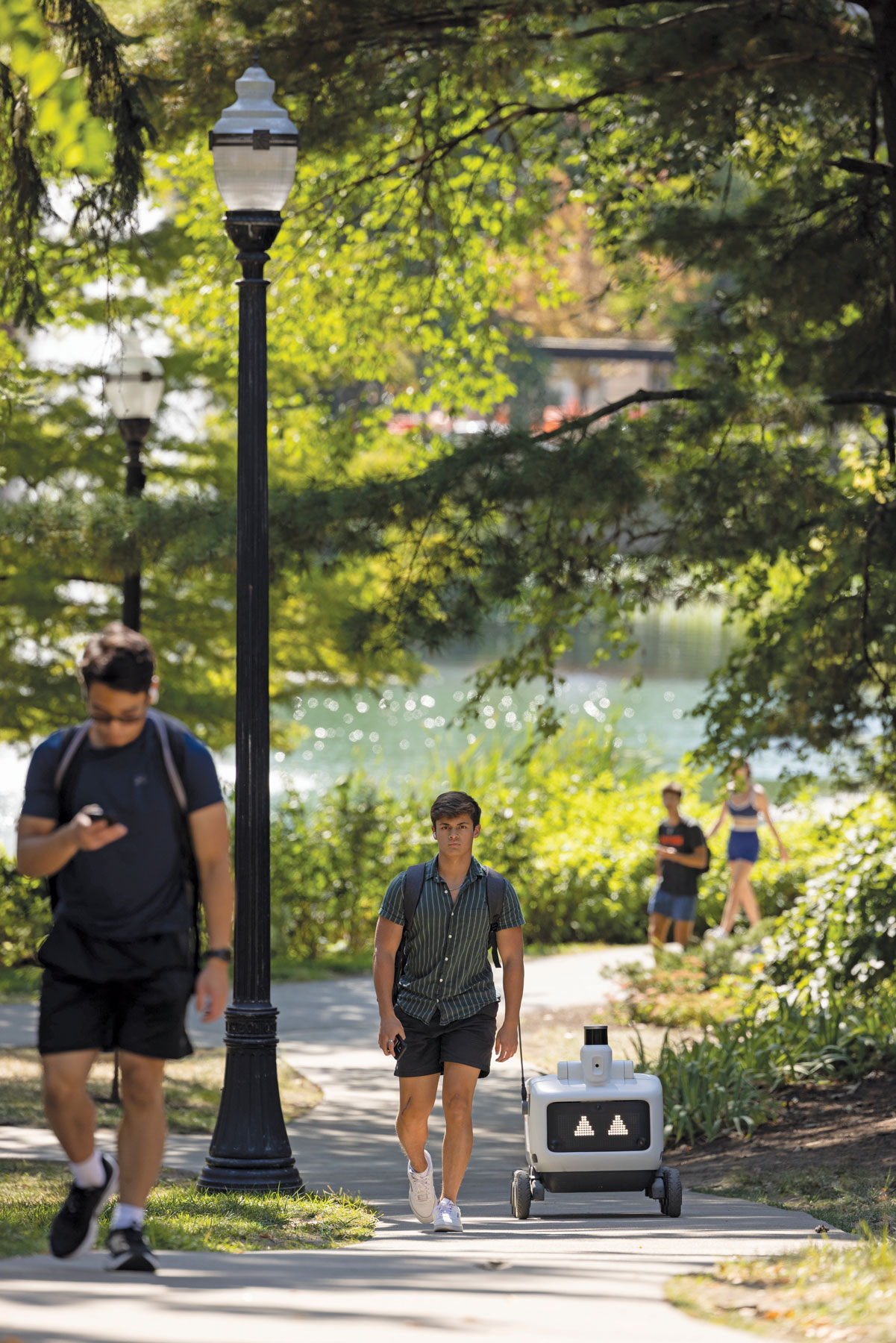
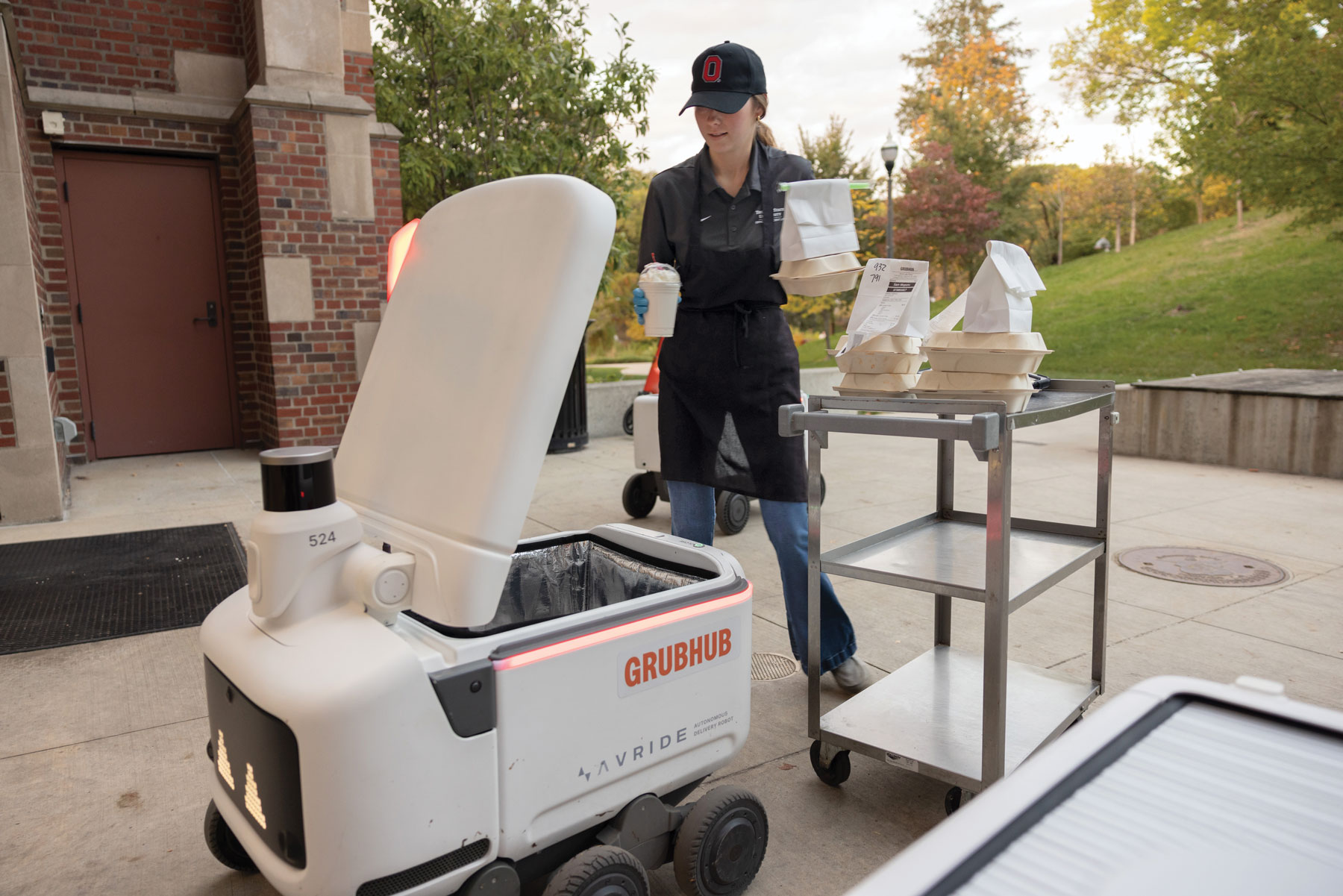
The robots are the only authorized food delivery on campus. “My favorite thing about them,” says Nathan Darder, the Dining Services leader in charge of the program, “is not having vehicles on campus delivering food. There’s a lot of safety issues with delivery drivers driving on sidewalks and driving where maybe they don’t really know where to go. The robots let us avoid all that.”
They pick up food and drinks from a dozen Ohio State dining halls, restaurants and coffee shops and deliver to all the residence halls and about 60 more buildings, including St. John Arena, Thompson Library, the Veterinary Medical Center and academic buildings like Orton Hall and the Biomedical Research Tower. Typically, a robot makes about 15 deliveries a day, taking about 15 minutes each, at an average speed of 4 mph. The record likely won’t last long, but the peak delivery day was Oct. 14. That was an exam day just before fall break, when 1,533 busy people ordered food.
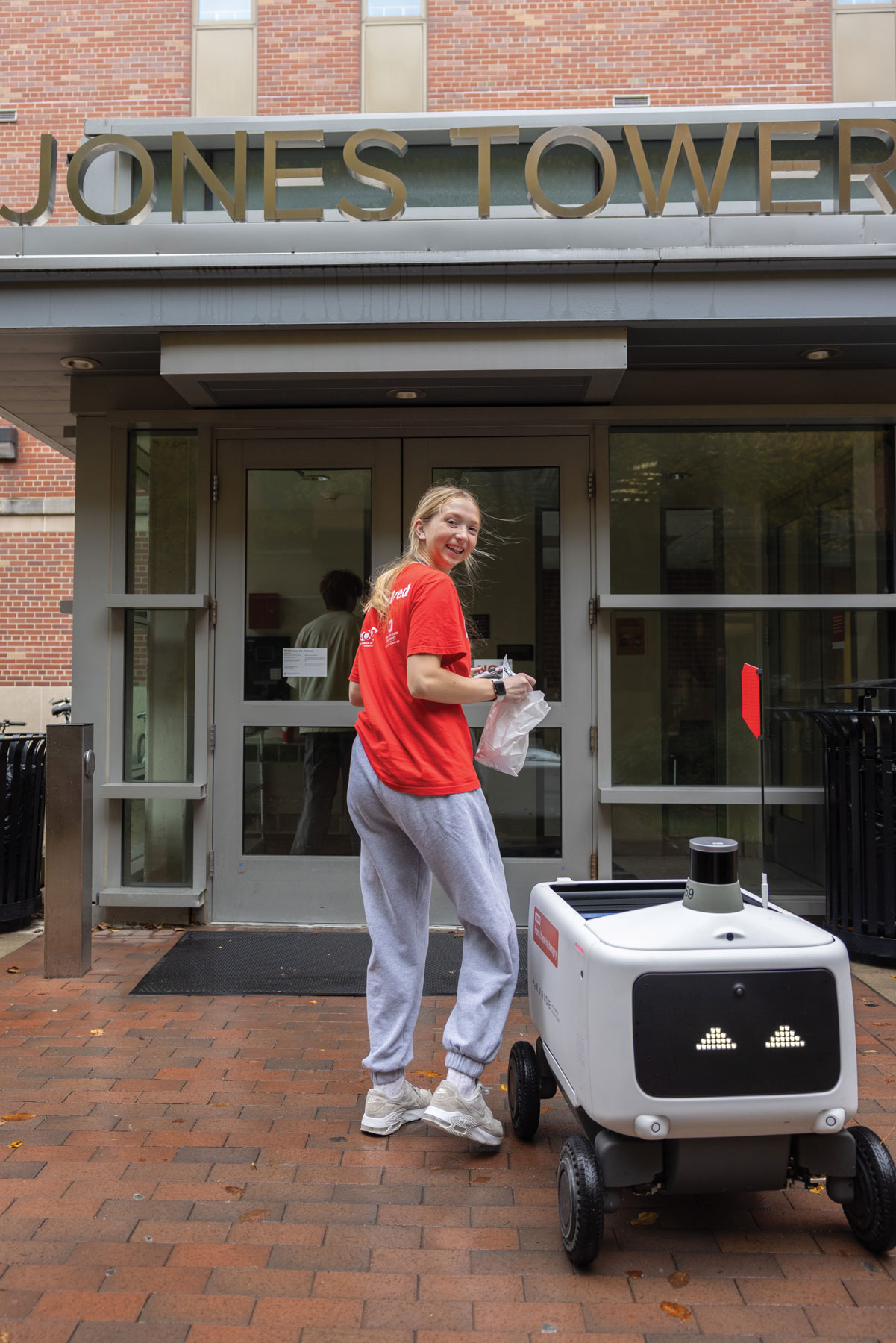
That’s the biggest advantage to Moore, who works at Runwise, a startup focused on sustainable buildings. “The robots feel like a way for people who are maybe incapable of leaving their dorm, or who don’t have the time, to outsource that. I think it makes eating more accessible to people on campus, and that’s always a great thing.”
The newest models can haul six medium pizzas plus five 1.5-liter bottles at the same time. They fit large pizzas, too. The most popular order is chicken fingers from Mirror Lake Eatery, and the most orders are placed from Morrill Tower, Park-Stradley Hall and Lincoln Tower, says Darder, associate director of administration and planning.
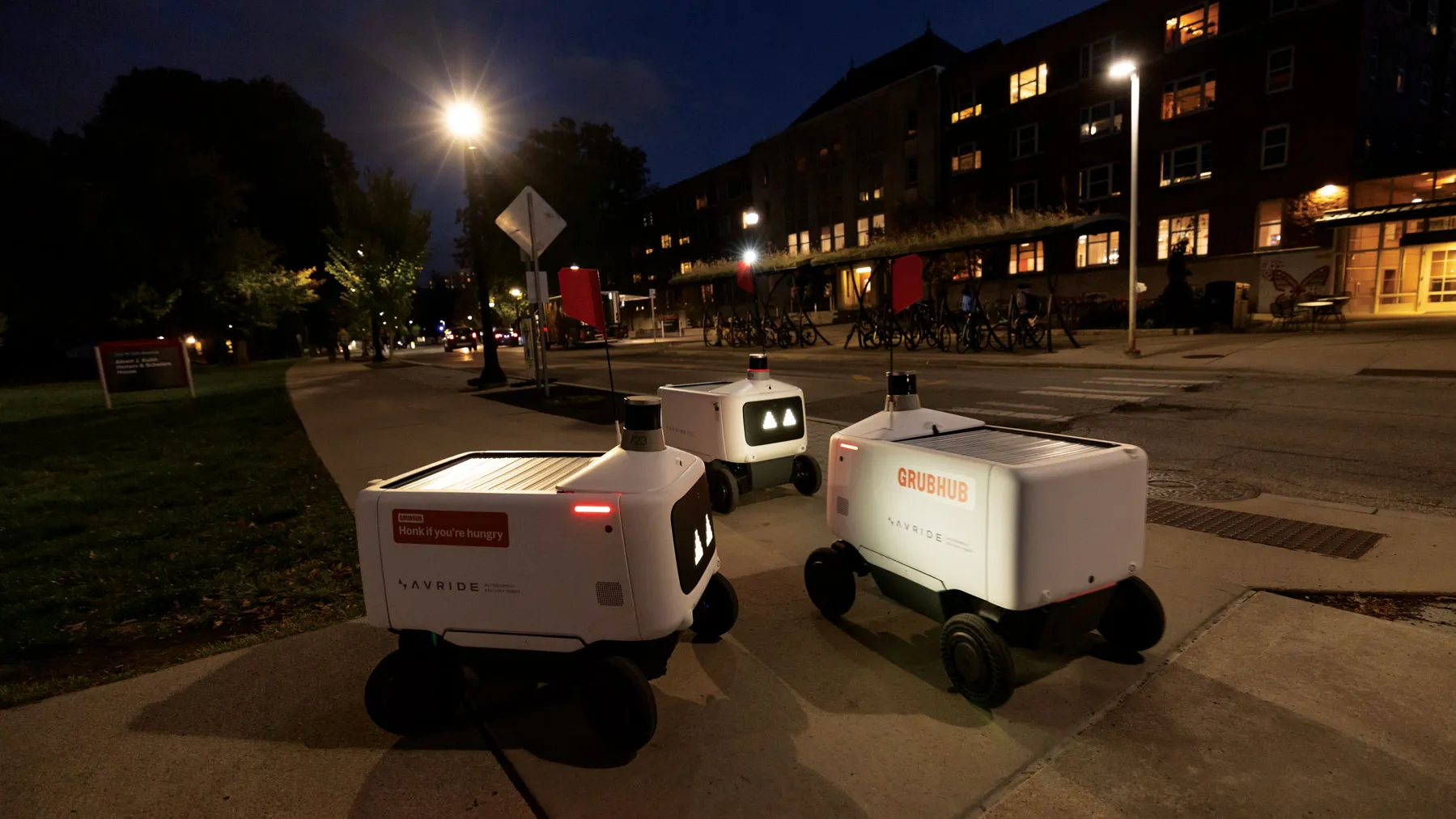
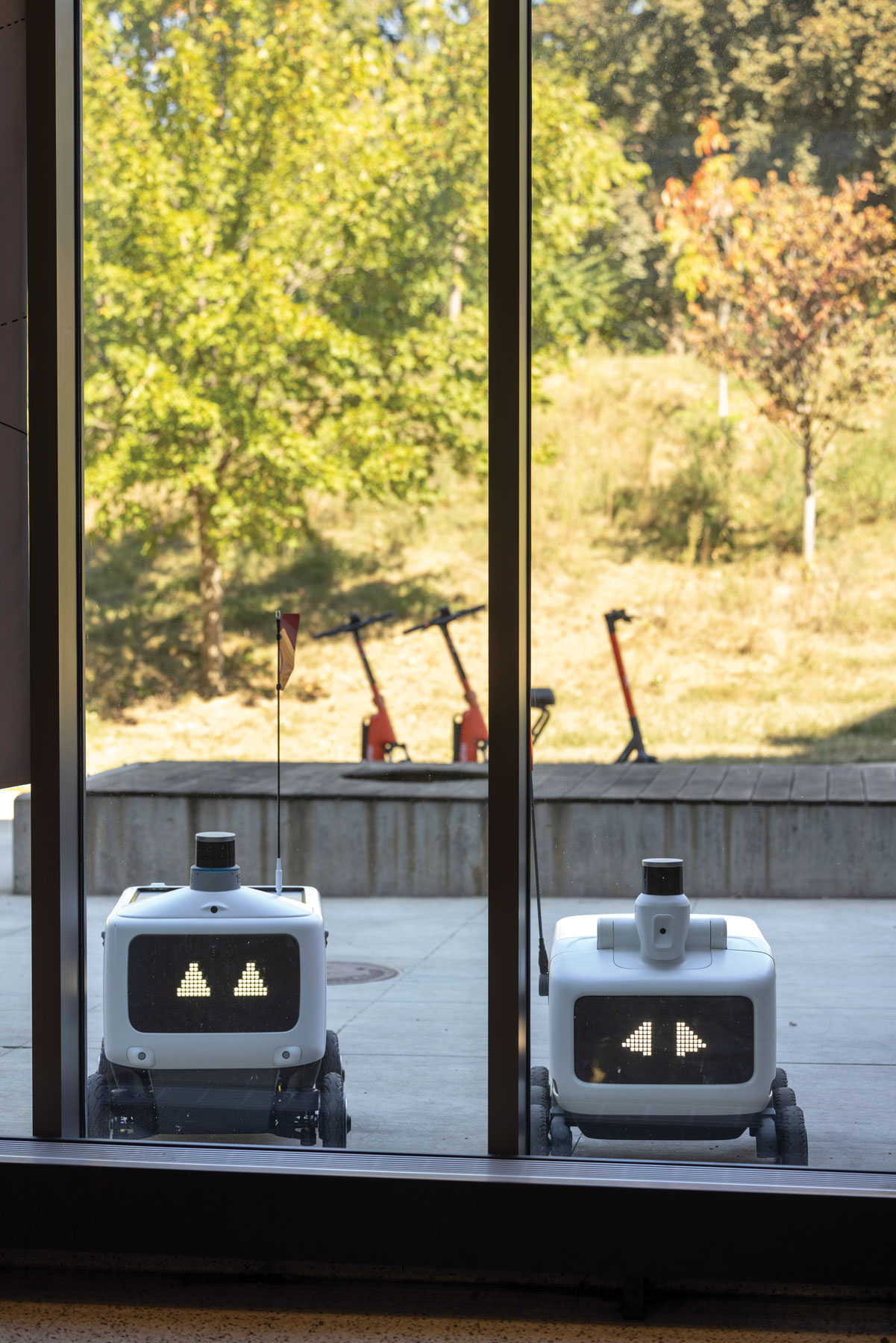
While the robots do communicate to share information—for example, if there’s an unexpected roadblock the others should avoid—proximity isn’t required. They just appear to be chatting.
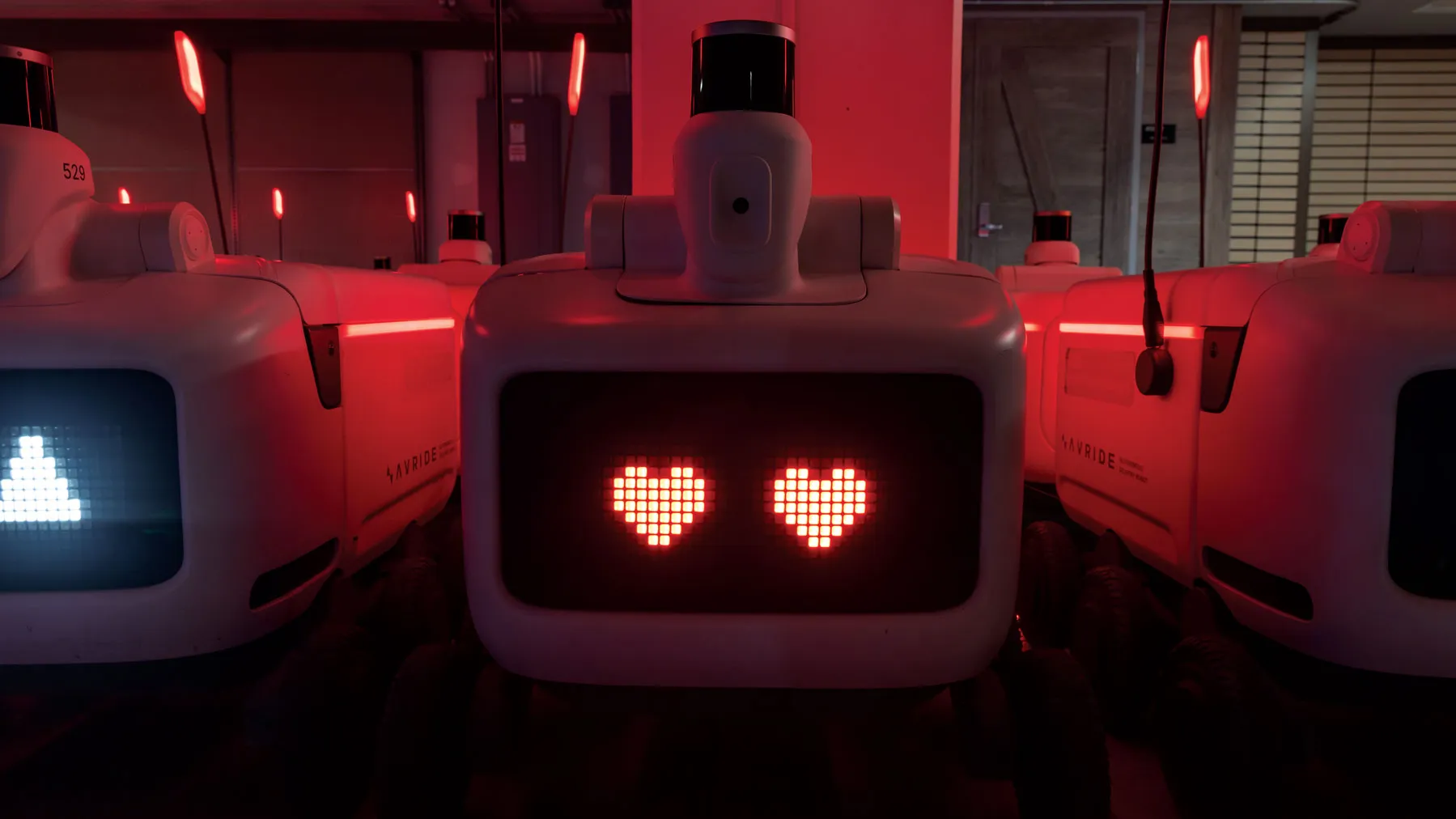
Regular hours of delivery are 7 a.m. to 11 p.m. At night, the rovers charge up in a garage near Ohio Stadium—but they do not make deliveries on Saturdays with home football games.
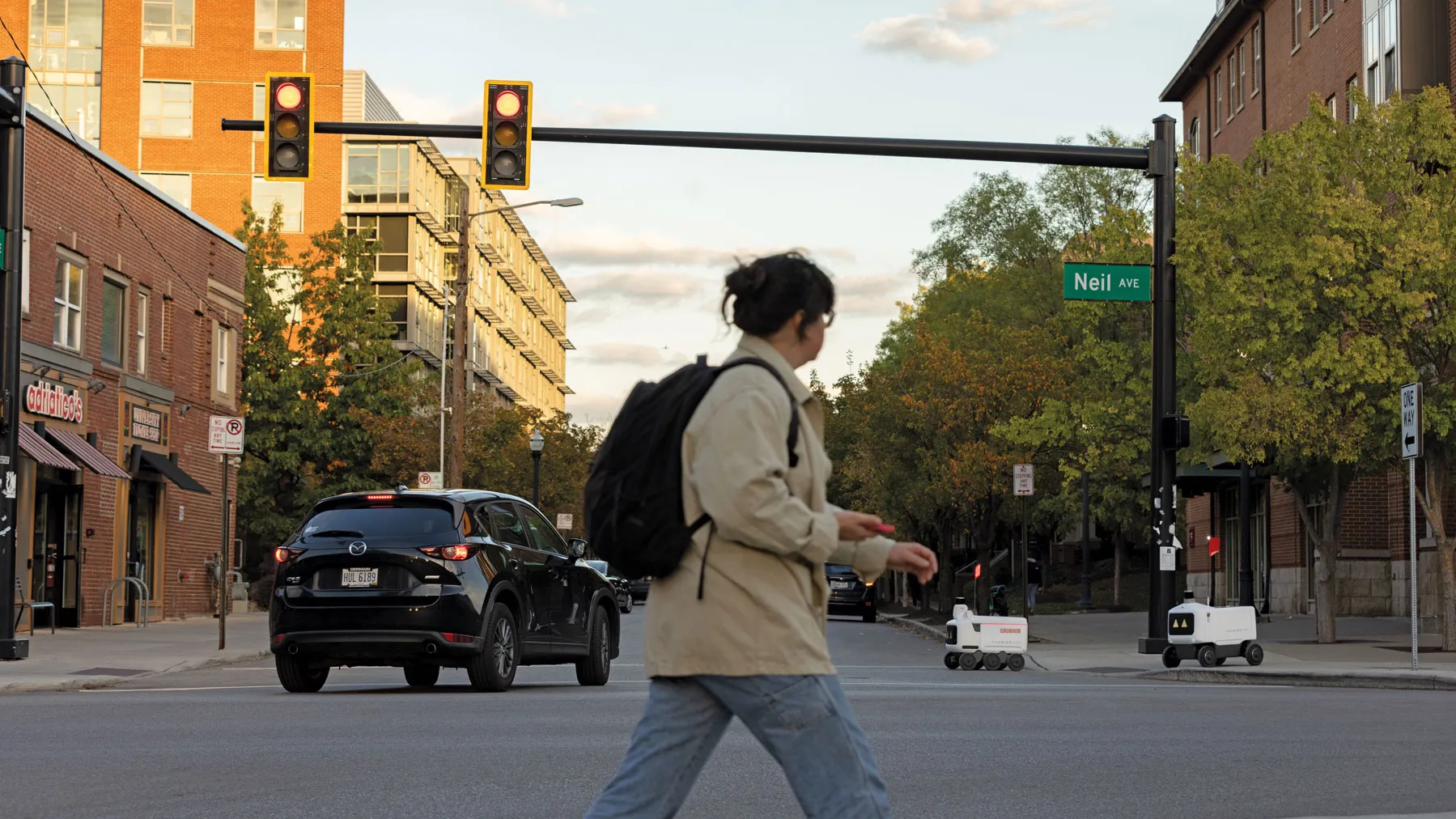
The robots don’t cross city streets—only campus streets—so far. (A separate crew is on West Campus.) They can cross autonomously and gauge the speed of oncoming cars, but they still occasionally request help from an Avride remote operator (a full-time employee or student intern) working on campus.
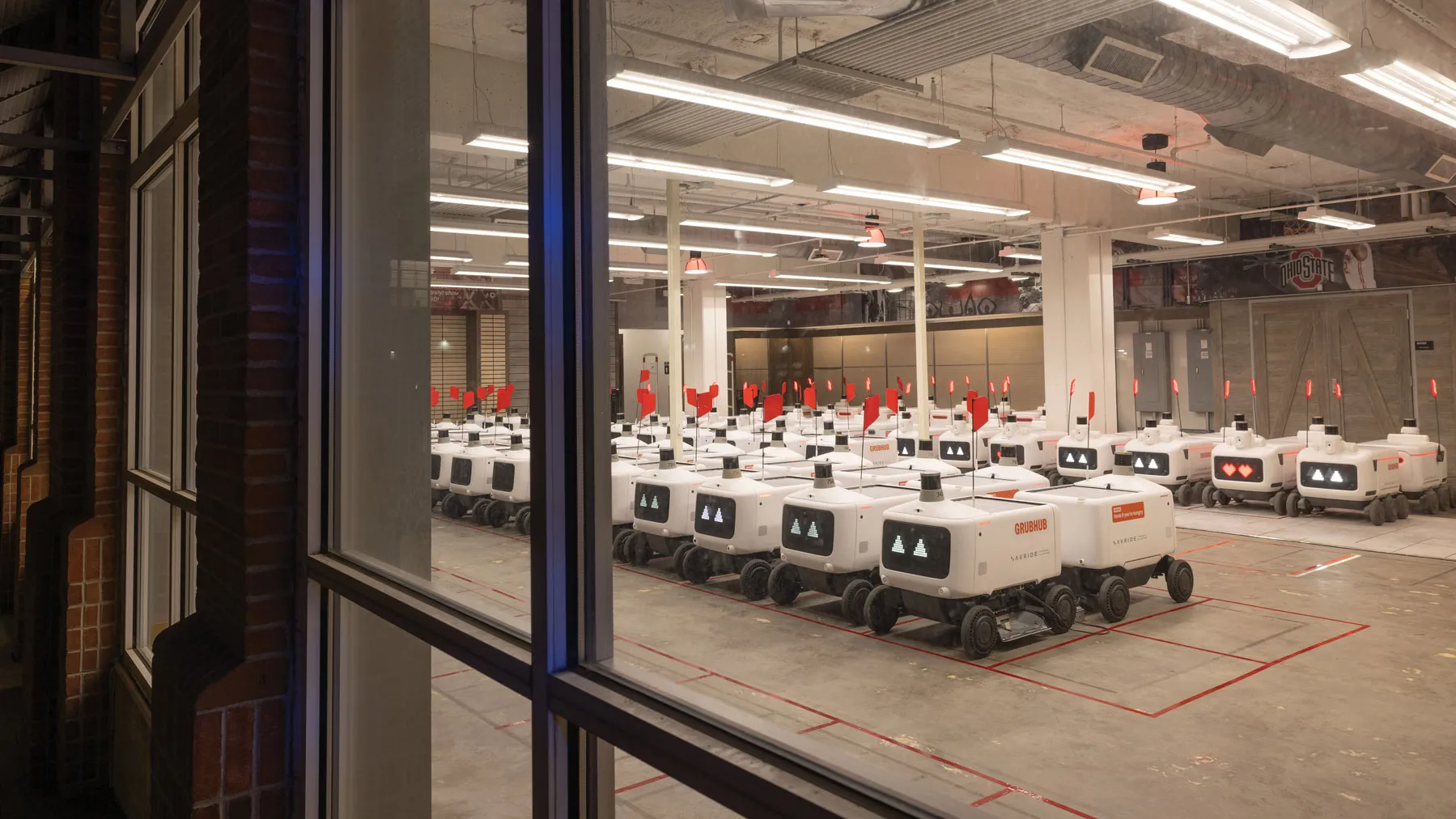
The 127 robots on campus make up the largest deployment in the country. Ohio State was one of the first big campuses to introduce delivery rovers, in 2021.
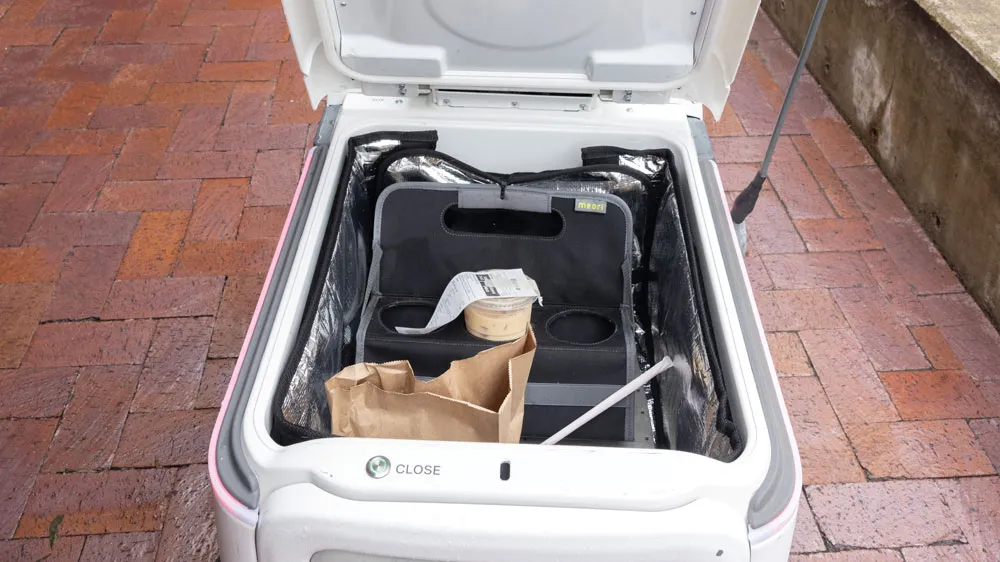
The open compartment can fit plenty of food and drinks—and once filled, can be opened only by the person who placed the order using their phone’s GrubHub app.
His boss, Abby Osborn Hertzfeld ’97, ’04 MS, senior director of Dining Services, has been working in the department for 28 years, starting when she was a student. “I have to say that never in my wildest dreams did I think we’d be delivering with robots,” she says. She salutes the whole university community for making it possible. “It’s amazing to work for an institution that embraces technology and innovation and really works with us to make this happen,” she says. “This is a community effort—students have to be accepting of them on sidewalks. We work with bus drivers, construction teams and public safety, to make sure we’re not interrupting events or services. If there’s an emergency, we can reroute the robots or shut them down.”
Terry Nagel ’70 recently made his first visit back to campus since graduating. “One came around the corner and scooted past me while I was walking down to Mirror Lake. I thought someone’s cooler had gotten away,” says the Massachusetts resident, a retired lawyer. “Almost immediately, another one came from the direction of the library, and they seemed to pause and talk to each other before heading off in opposite directions.
“I was still fumbling for my phone, trying to take a picture.”