
The Buckeye who’s kept Ohio State Airport thriving
Dale Gelter ’89 built decades of safety and service at Don Scott Field, mentoring crews and tending details few travelers ever see.

Visitors to Ohio State’s airport, AKA Don Scott Field and KOSU, likely don’t notice the crisply painted runway lines, carefully calibrated pavement depth or precisely mown grass—all expertly calculated to align with federal standards to promote safety. Aircraft usually grab guests’ attention. But before they can safely arrive or depart, a dedicated team works tirelessly to keep the airfield in top condition.
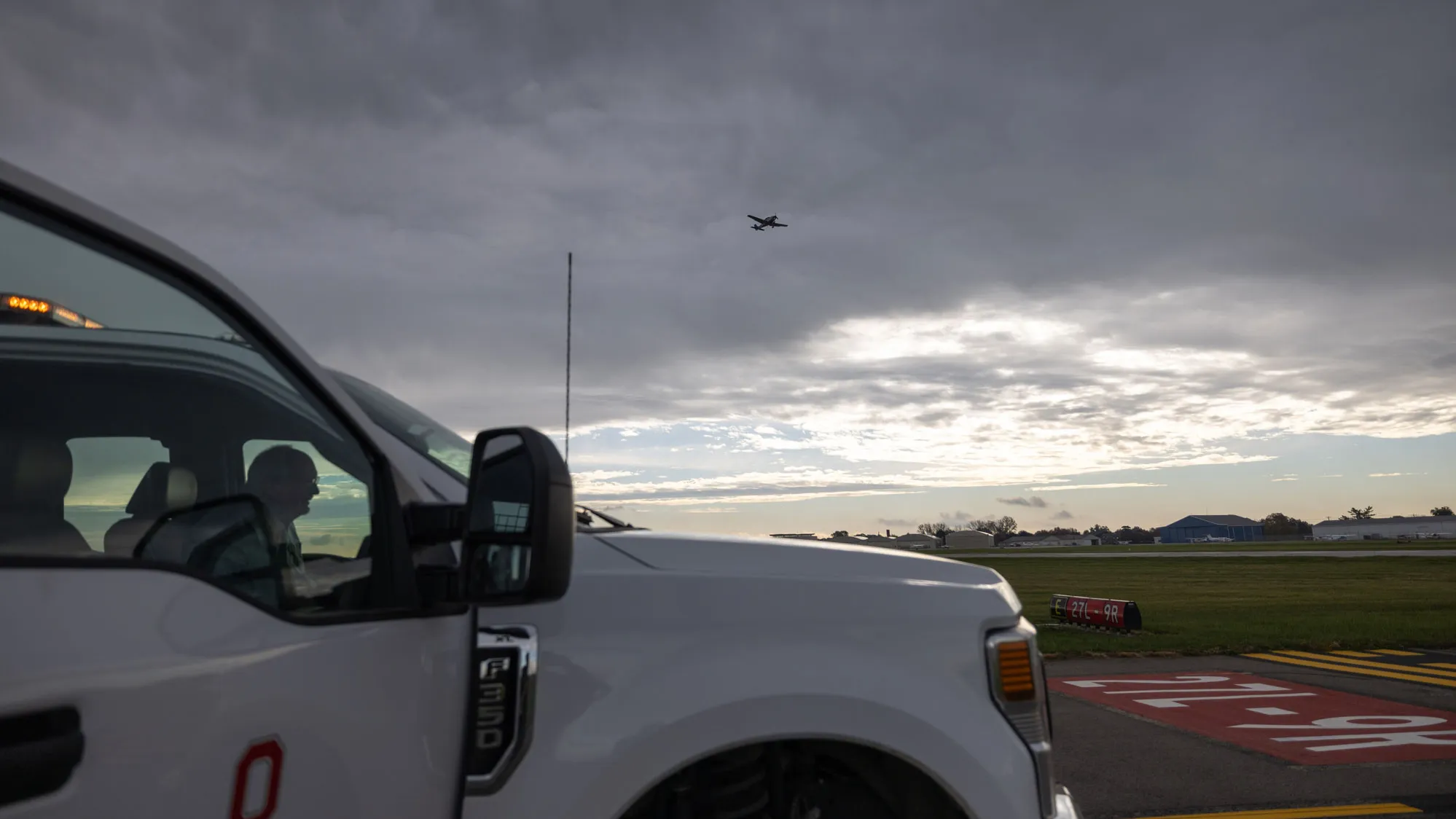
Leading them is aviation alumnus Dale Gelter ’89. For decades, Gelter has patrolled the airport’s runways, taxiways and ramp areas. His mission as the director of airfield maintenance is to facilitate safety for all airport users, including Buckeye student pilots.
“I subscribe to the philosophy of ‘fix it right the first time,’” says Gelter, who was first employed at the airport as a student assistant in the 1980s. He learned the importance of airfield safety long ago as a pilot on the Ohio State Flight Team.
Through summer’s heat and winter’s cold, Gelter and his crew work behind the scenes maintaining the airfield. For Gelter, that means managing everything from large-scale, multiyear hangar and runway construction projects to the industry-specified grade of tiny glass beads used to optimize runway marking reflectivity. There’s even a side job as the airport’s resident beekeeper. To balance the often-painstaking details, Gelter infuses his workday with humor. He’s always ready with a story or silly anecdote.

As he prepares to retire after 37 years, now more than ever, Gelter is focused on mentorship and knowledge sharing. “I’m finally stepping aside for the next generation to take the reins,” he says with a characteristic laugh. “May their oversight provide them with many great memories.”
In late autumn, we joined him for daily rounds at the airport. No day is the same for Gelter. But that’s what has kept the job interesting for so many years.
7 a.m. Our team arrives to the shop early in the day. This time of the year, it’s before sunrise, which allows us to complete a Federal Aviation Administration-mandated nighttime airfield inspection. The crew checks for FOD [foreign object debris], runway and taxiway reflectivity standards and wildlife activity, all for safety.
8 a.m. We finish our morning routines, then gather for an informal meeting. I share goals for the day and dispatch the team to work on projects, some planned months in advance and some last-minute urgent requests.
9:15 a.m. I make it a point to regularly check in with airport tenants, those who rent offices or hangars at KOSU. Relationships are a key part of the job. We need to know about tenants’ satisfaction with airport services and any physical problems that airfield maintenance can address.
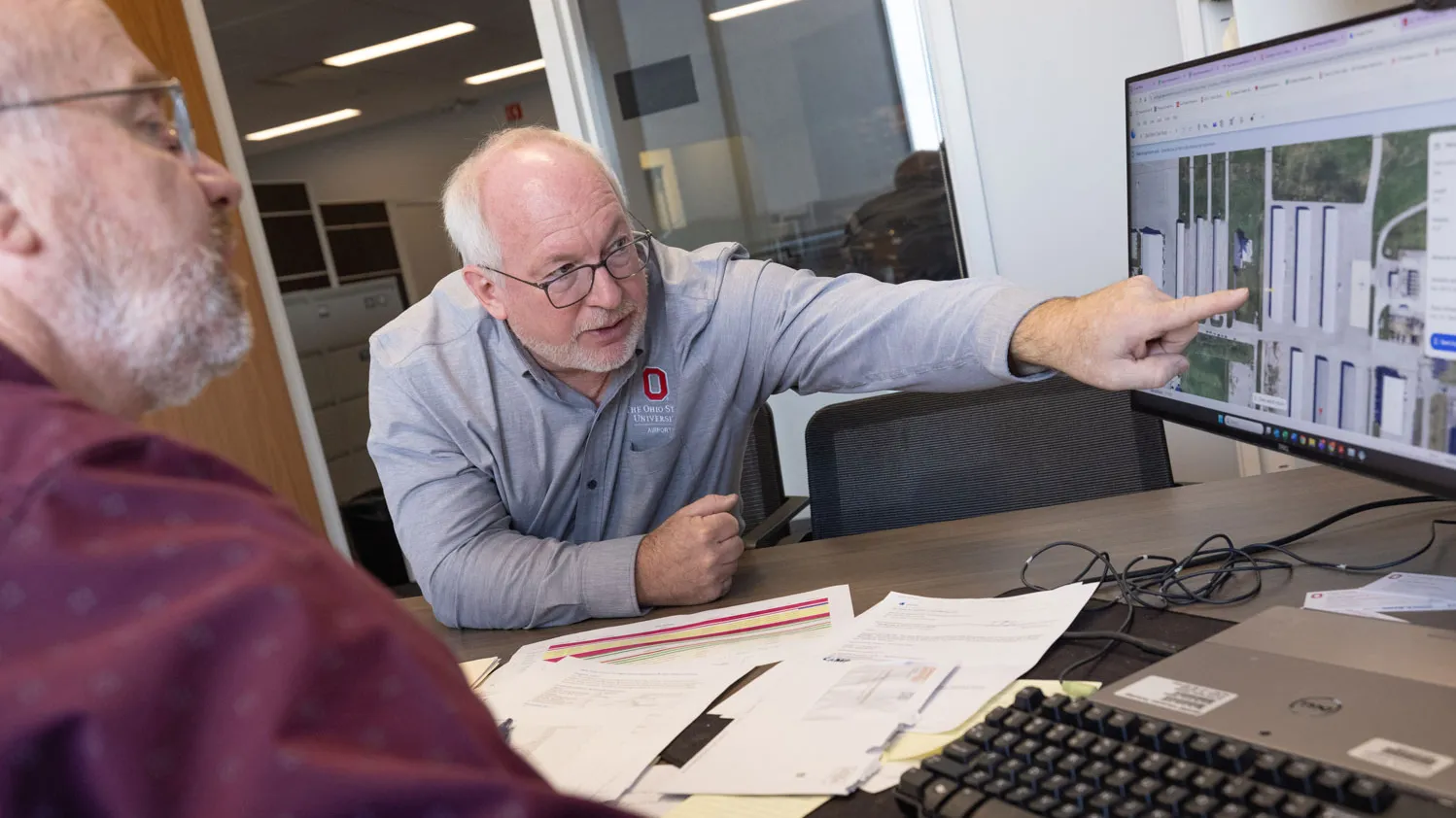
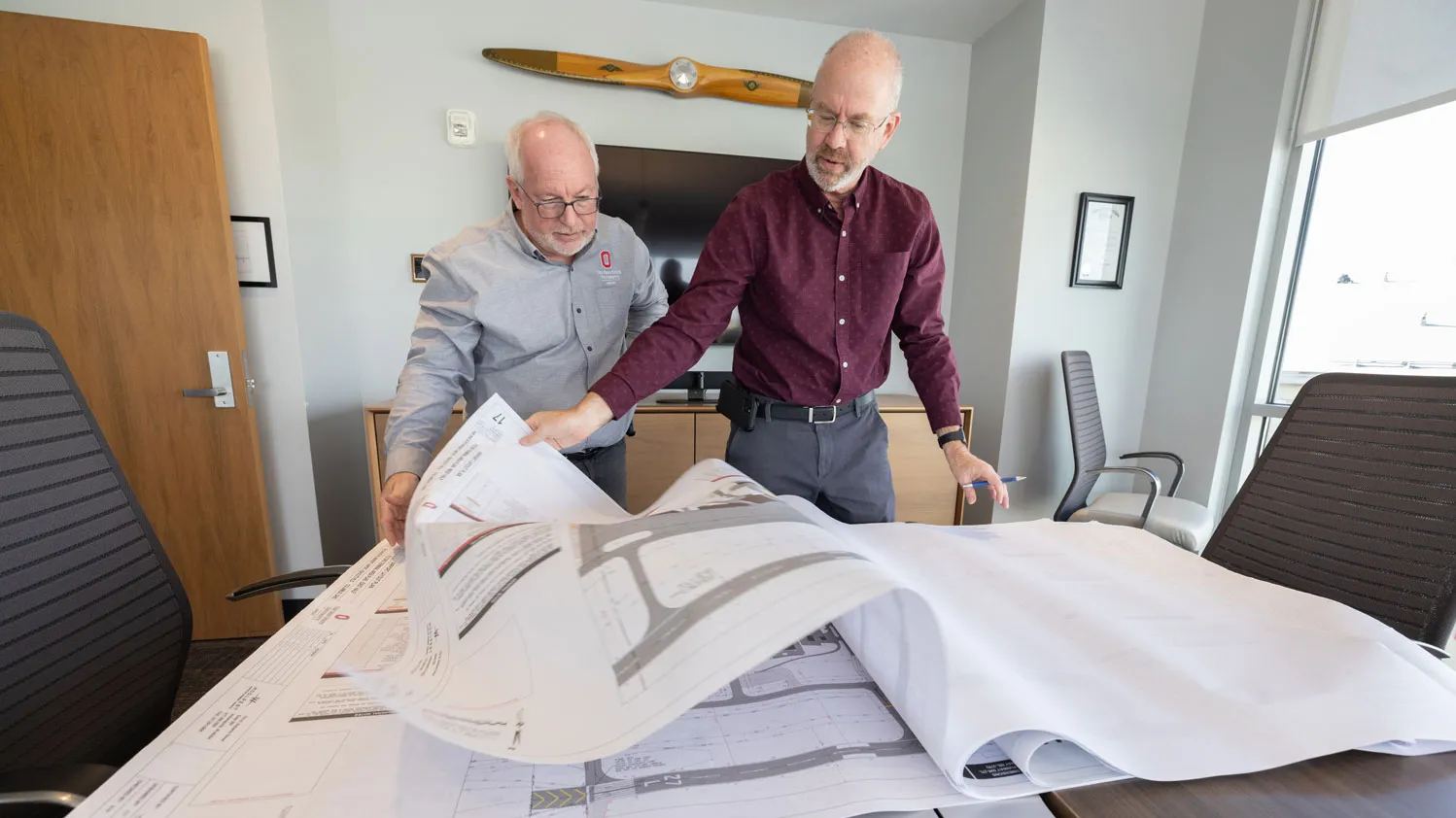
9:30 a.m. Airport Director Karl Von Hagel ’87 calls and asks me to stop by his office to discuss a utilities corridor near the air traffic control tower. We review utility diagrams while brainstorming options for future projects.

10 a.m. Back at the shop, I informally share knowledge, encouragement and project expectations with new Airfield Operations Manager Justin Porter. Mentoring is important to me.
11 a.m. Our daily team ritual: lunch and laughs. Every day at the same time, we gather around the table. Today’s conversation ranges from breadmaking to generating project solutions.

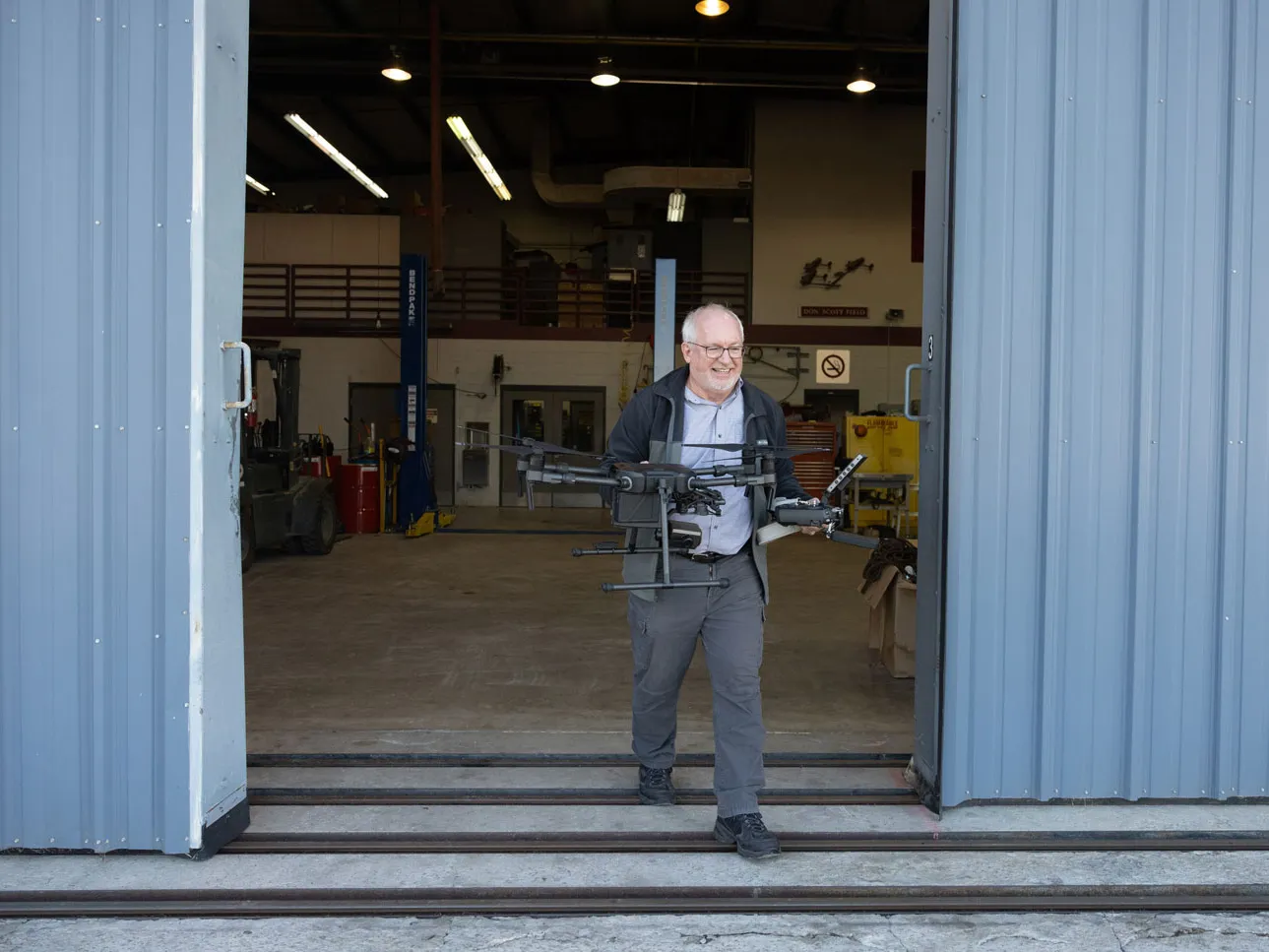
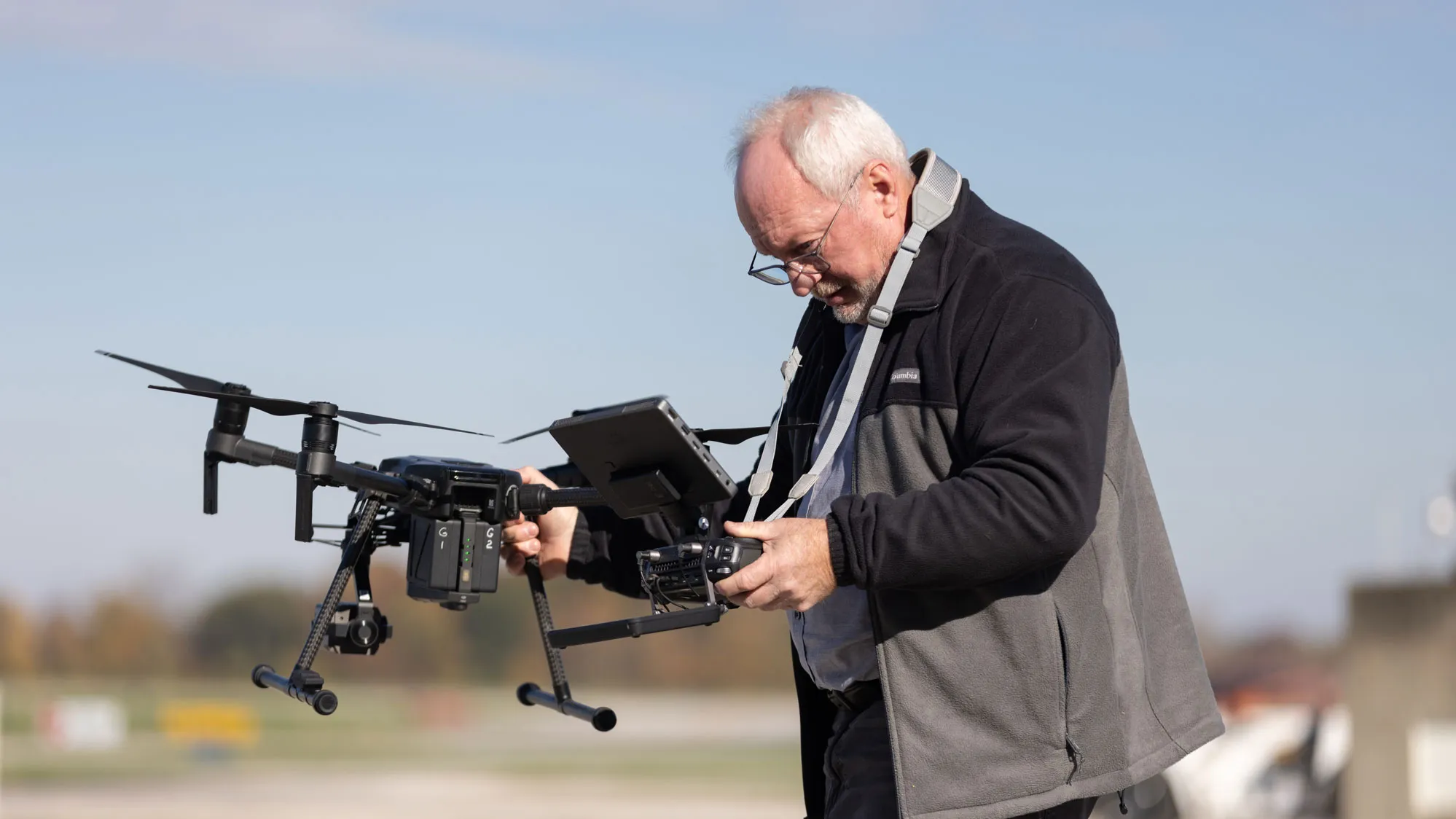
1 p.m. Drones and airports usually don’t mix, but KOSU was the first in Ohio to use drones for airfield and buildings inspections. Equipped with cameras, they provide useful data, even for things like wildlife habitat changes.
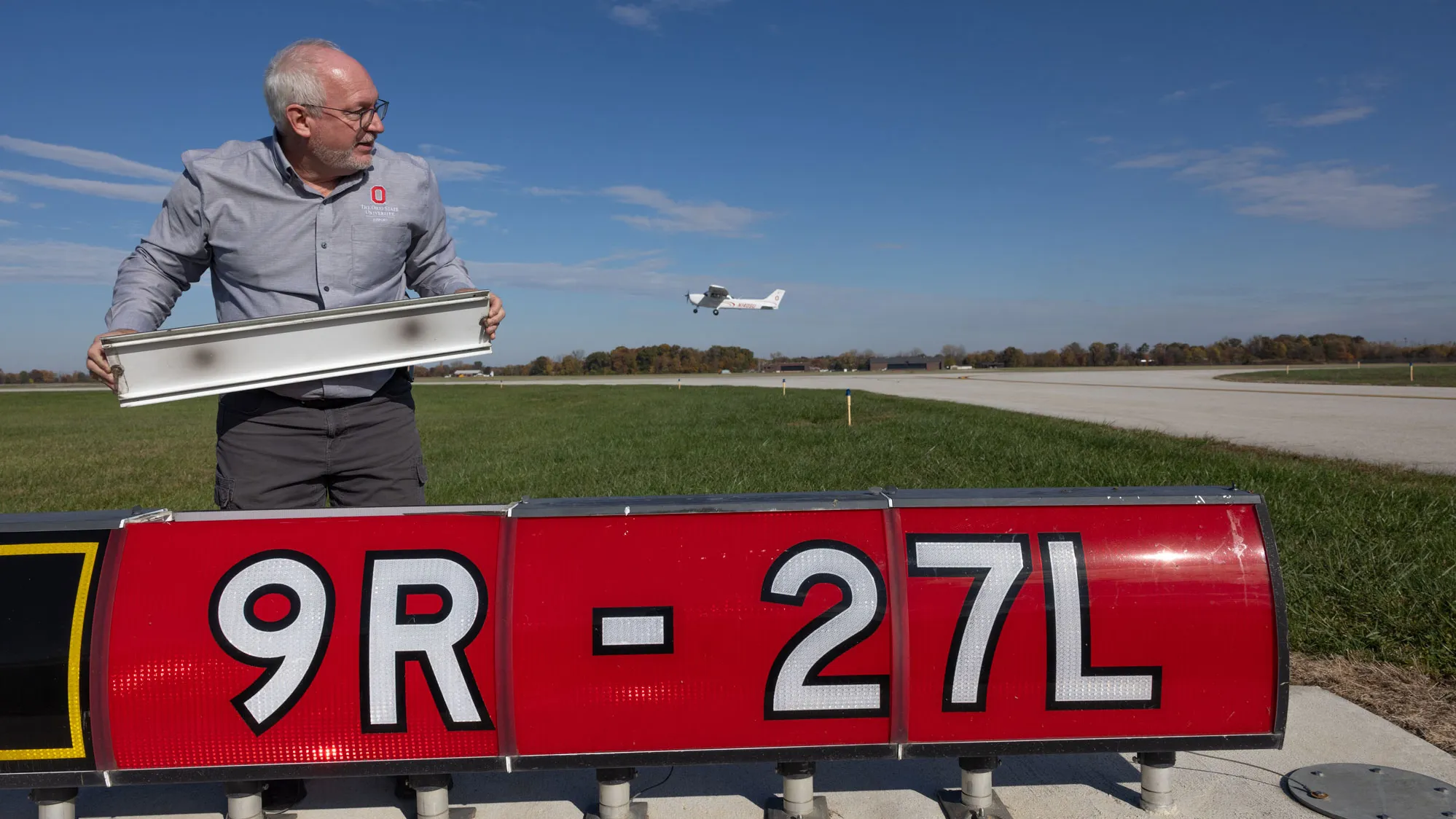
2 p.m. My team is responsible for maintaining airfield signage—and lots of it. Each one is critical. It’s satisfying knowing that we are providing a safe environment for Buckeye aviators.

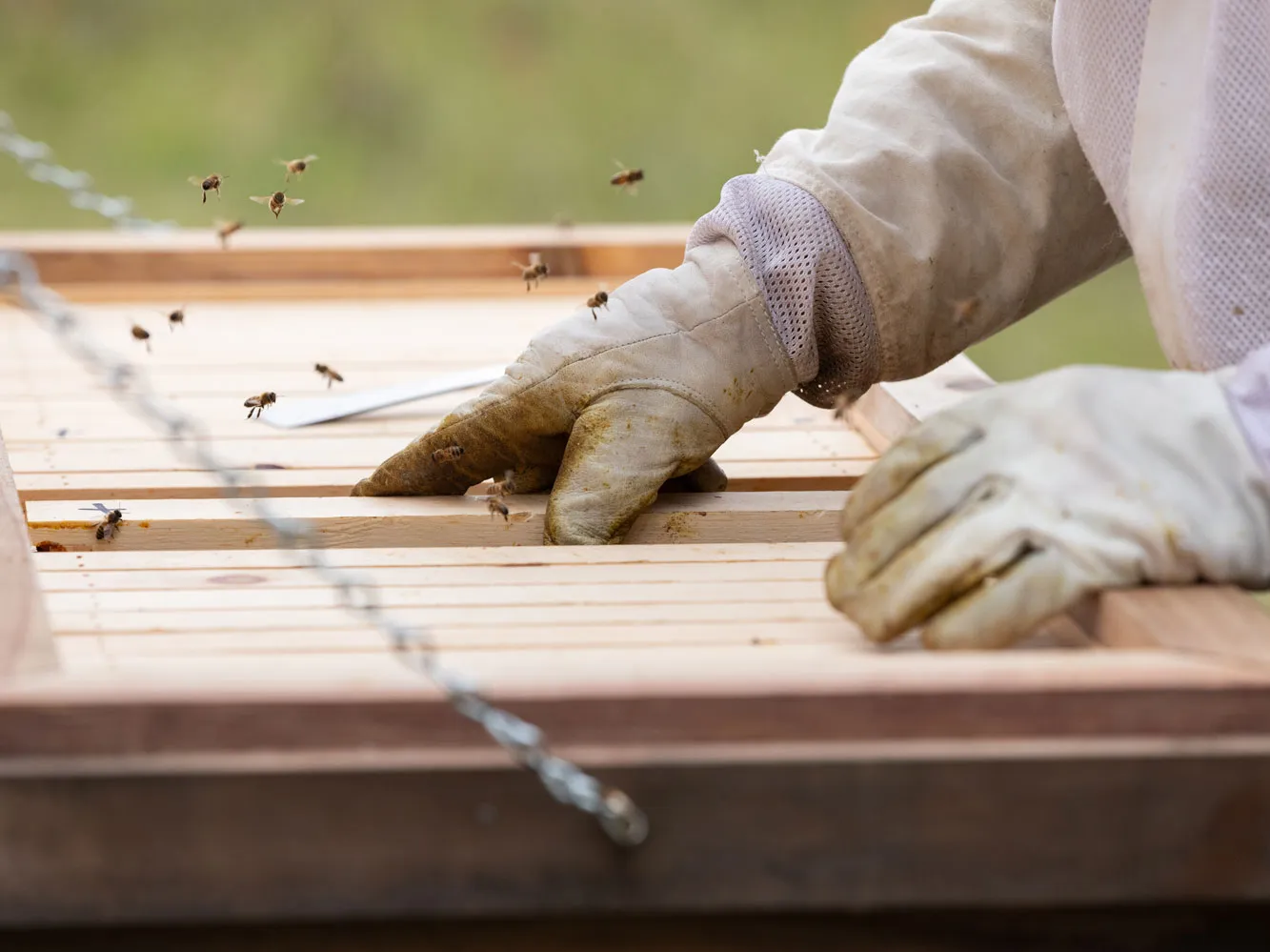
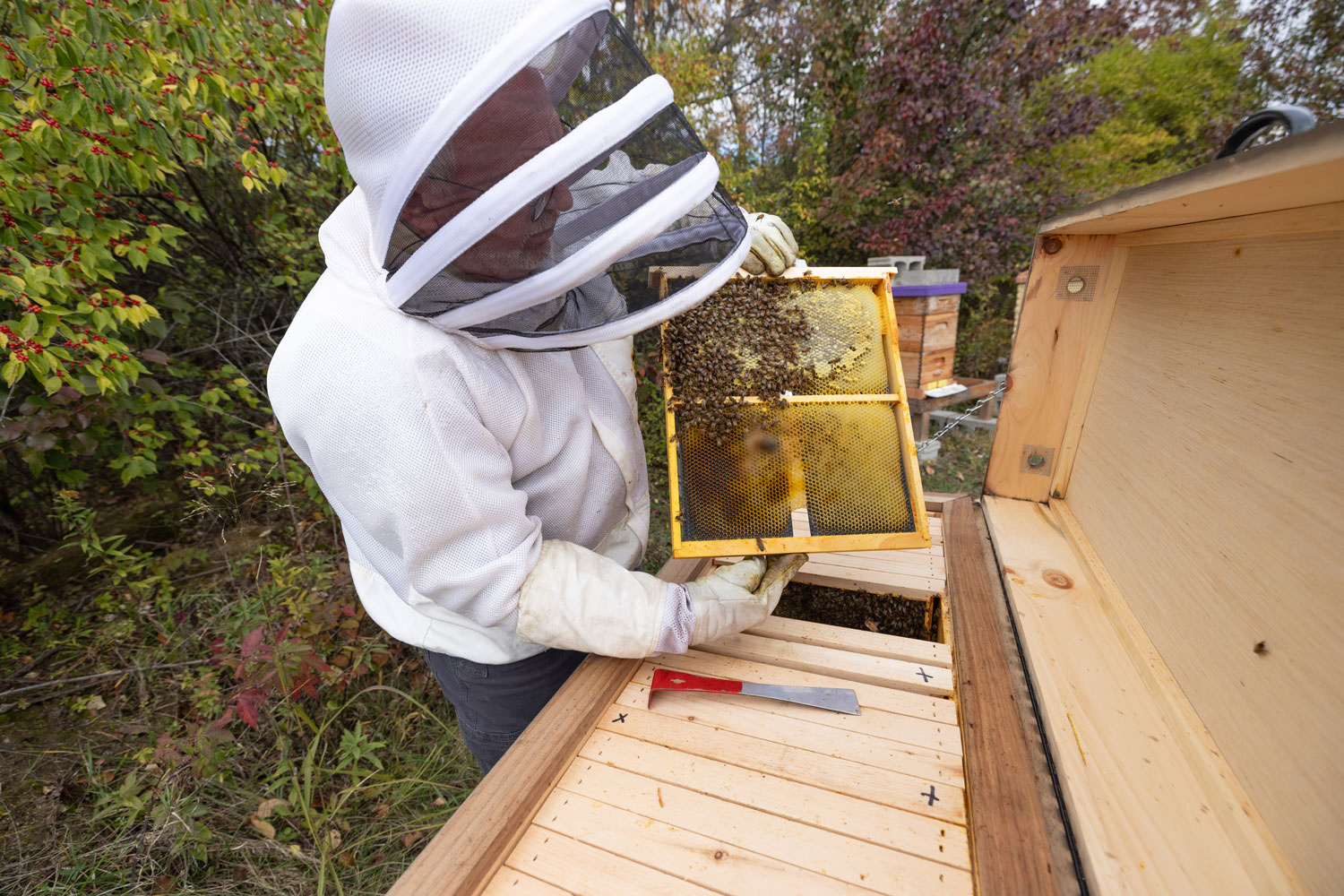
3 p.m. I make a pre-winter hive inspection at the apiary, checking whether preventive care is needed ahead of lower temperatures. A few years ago, KOSU launched Buckeye Honey, produced on the airfield and sold in the terminal Pilot Shop. It’s a labor of love that combines my beekeeping hobby and a partnership with Ohio State’s Rothenbuhler Honey Bee Research Laboratory.
3:30 p.m. We close up the shop and head out. Our hours vary based on seasonal need, such as to encompass early morning mowing in summer or around-the-clock snow removal in winter. But, for us, it’s all in a day’s work. We’re prepared for anything.