Ohio State Marion makes nature a living textbook
From birding to beekeeping, these Buckeye learners gain practical insight while helping care for a landscape they share.

Associate Professor Emeritus Robert Klips ’95 PhD talks with students on the Larry R. Yoder Prairie, a resource-rich setting for classes, researchers, hobbyists and those just wanting quality time with nature. Next year, the campus will celebrate the prairie’s 50th anniversary. (Photo by Logan Wallace)
The prairie shimmers with the first hints of sunlight. Students wander the winding paths—some chatting, some quiet, some stopping to watch the tree swallows swoop in and out of the bluebird boxes. The Ohio State Marion campus feels alive, as if the land itself were leaning in to teach.
For Professor Anna Willow, this is exactly the point. “It’s important for people to understand that they’re part of something larger than themselves,” says Willow, the inaugural faculty director of Marion’s Environmental Learning Labs. “No matter what field of study students are going into, having a basic ecological literacy and place-based literacy will help them make decisions that are good for sustainability—not just for the world, but for their company, healthcare facility, wherever the future takes them.”
Ohio State Marion Dean and Director Jennifer Schlueter ’03 MA, ’07 PhD says the concept of campus environmental learning labs was born out of the intersection of a longstanding commitment to preservation and Gen Z students’ strong sense of environmental stewardship. At the same time, she says, she was eager to ensure campus resources and opportunities in this space had clear leadership and accountability.
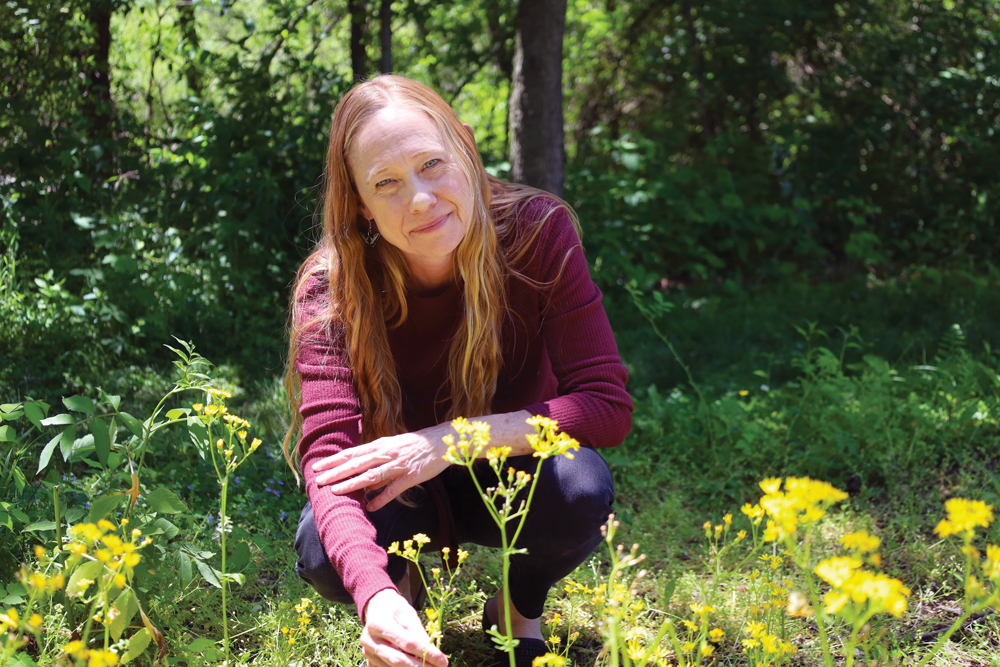
“This isn’t a one-time initiative. It’s an investment in capacity: in our students, in our land and in the leadership needed to steward both over time,” Schlueter says. “Anchoring it in Willow’s expertise is how we make sure this commitment becomes a durable strength for Ohio State Marion.”
Willow is a professor of anthropology who studies how people and communities are affected by major environmental changes. Her research focuses on how communities, including Indigenous peoples, respond to human-driven environmental threats and advocate for their land, resources and way of life. She is the author or editor of three books that explore environmental conflicts, community activism and Indigenous resistance to resource extraction.
Marion’s environmental laboratories consist of the 12-acre Larry R. Yoder Prairie Learning Laboratory, the Veteran’s Garden and the campus apiary. But Willow takes a broader view of the program. “Honestly, I prefer the conceptual approach: The entire campus, every inch of it, is an environmental learning lab,” she says. “Every building gets electricity from somewhere. Every choice we make affects the environment. And we can make positive choices in classroom teaching that support positive environmental futures.”
Students and the broader Ohio State Marion community engage with the campus land in countless ways. Some walk the prairie for relaxation. Others have taken up birding. “It seemed like an old-fashioned hobby, but it’s getting cool again,” Willow says with a laugh. Prairie workers remove invasive species, plant natives, gather seeds and monitor birdhouses. Courses use the prairie as a living textbook; senior geography lecturer Dave Schul’s class once spent weeks removing honeysuckle as part of a lesson in human geography and environmental responsibility.
Youth programming has expanded thanks to staff like Tiffiny Rye-McCurdy ’14 PhD, director of youth and community learning. And the student veterans who run the bee apiary have added new energy and purpose. “They jumped in, thought it was a great idea, and got a lot of support,” Willow says.
The campus recently received funding from Ohio State Energy Partners (OSEP) to support a 2027 celebration of 50 years of the Larry R. Yoder Prairie. Willow says this will facilitate a yearlong celebration. Programming includes a spring exhibit on the prairie at the Kuhn Fine Arts Gallery and an immersive exhibit in summer called “It Sounds Like Love.” The festivities will culminate with an Aug. 26–27 celebration with the prairie’s founder, Larry R. Yoder, as keynote speaker.
Willow’s only lament is continuity: “Students leave. That’s the hardest part.” Still, new ones arrive every year, step into the prairie and begin learning from the land. And every inch of campus waits—quiet, patient and ready to teach.