A new way to help tuba students find their pitch
Doctoral student Will Roesch has creatively blended engineering and AI to reveal the airflow patterns that make each note.
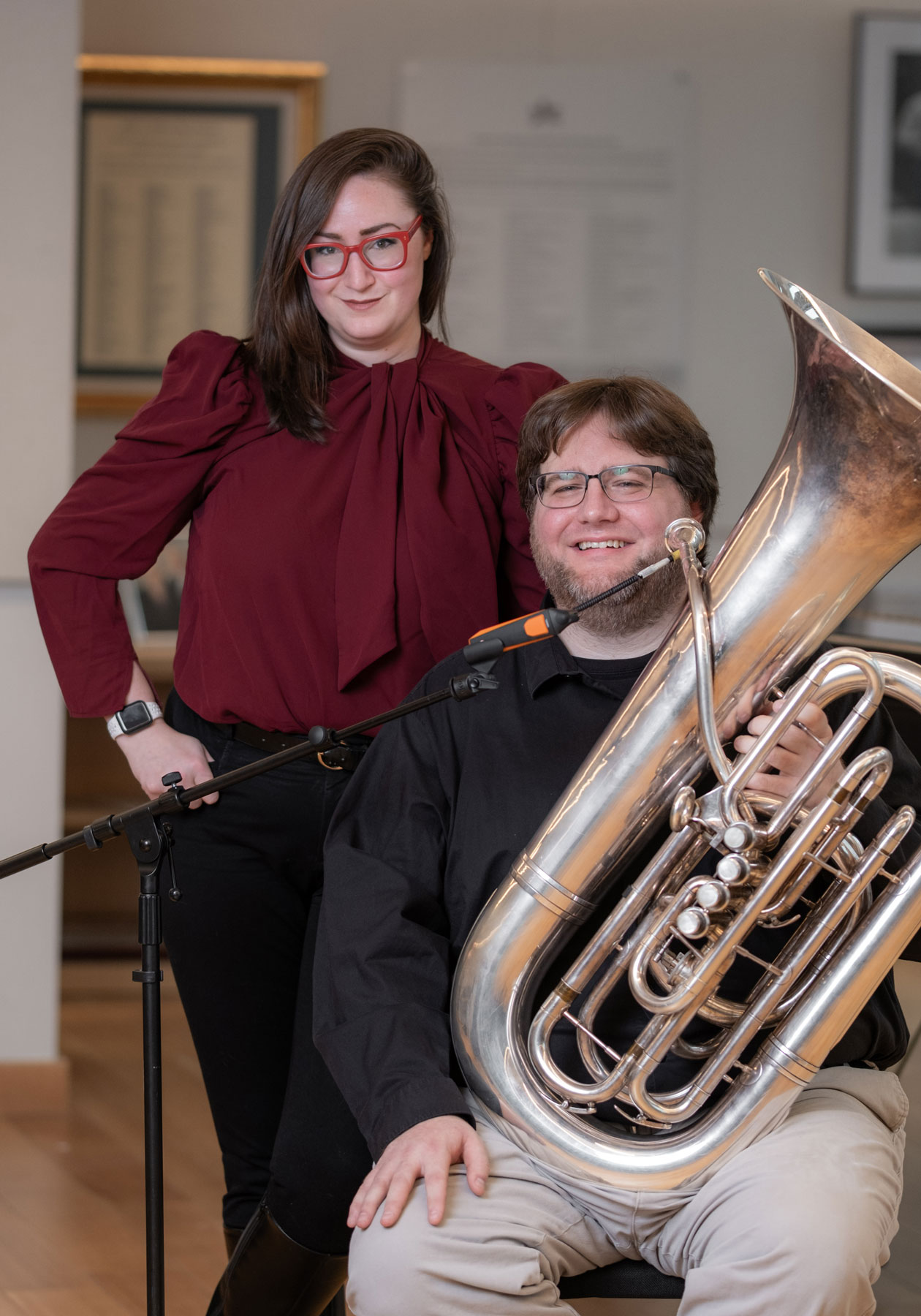
By his own admission, Will Roesch was a terrible trumpet player in middle school. “Like many students who were really, really bad at an instrument, I was moved to the back row and put on the tuba,” he says.
It turned out the band director gave him a gift: He was a natural. The tuba’s larger mouthpiece and richer timbre suited him perfectly. “I was diagnosed with autism at age 28, which helps explain my sensitivity to high-pitched instruments,” Roesch says. “The tuba is soothing in a maternal way. I adore the way it sounds.”
Roesch’s love affair with the tuba has lasted more than 30 years. The Central Ohio native earned bachelor’s and master’s degrees in tuba performance, followed by a master’s degree in music composition, before enrolling in Ohio State’s Doctor of Musical Arts program.
One of the greatest challenges of teaching undergraduate students, Roesch has found, is helping them learn by observing. When they watch him play, they only see him blowing into a large tube. They can’t see the precise combination of breath, pressure and vibration at work.
Inspired by a Music and AI seminar he took with Tina Tallon, assistant professor at the School of Music, Roesch began to wonder whether that invisible process could be measured. “I realized there must be a specific air speed that generates each note,” he says. “We often tell students to blow hotter or colder when what we really mean is faster or slower.”
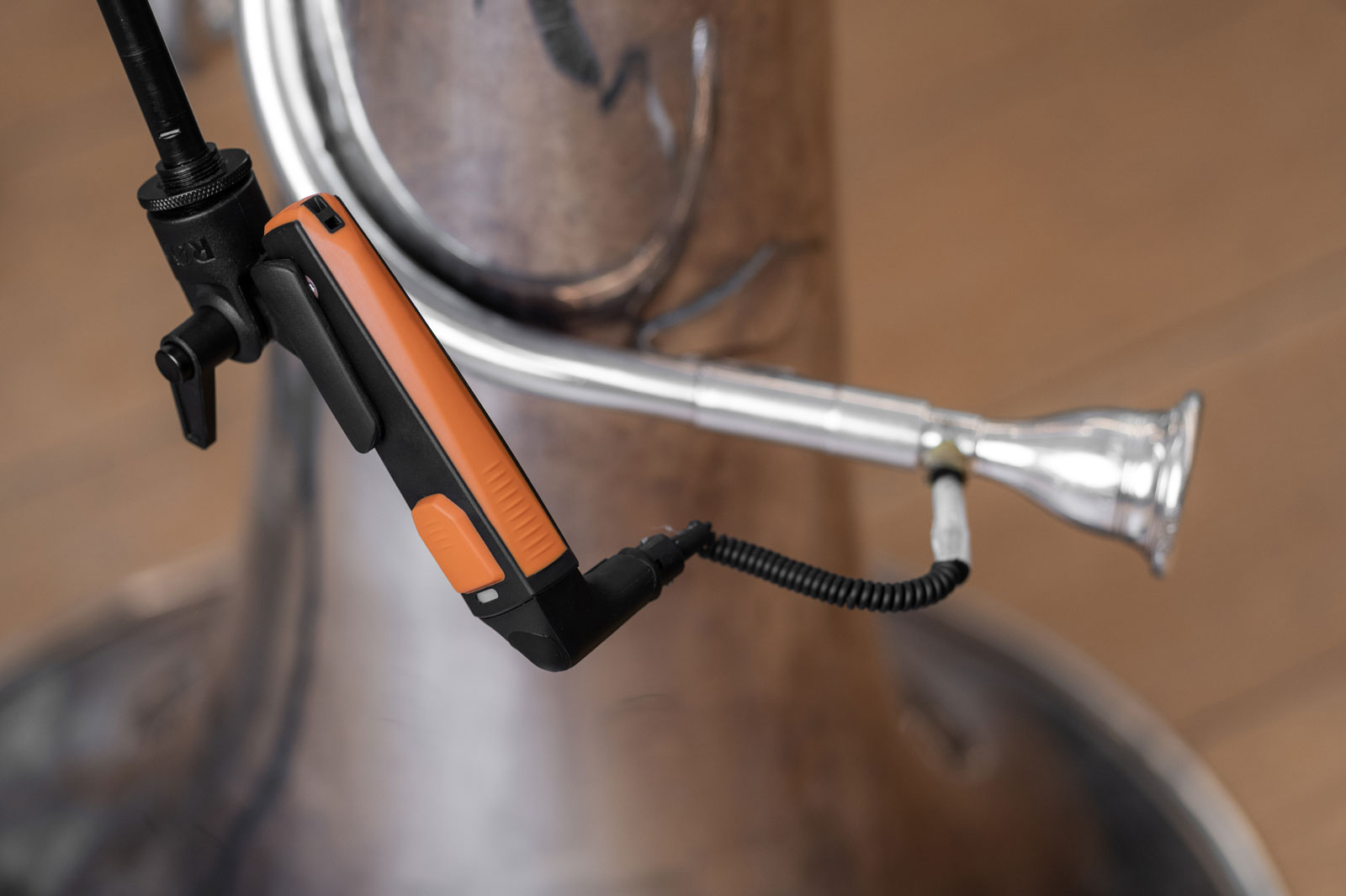
To test the idea, he went to his garage, drilled a hole in the shank of the mouthpiece of one of his tubas and inserted an anemometer to measure airflow. Paired with an app that records data in Excel, the setup allowed him to collect thousands of measurements in a single practice session—data he then asked ChatGPT to analyze.
The results confirmed his hunch: Each note corresponded to a specific air speed.
A broader vision began to take shape. If he could recruit more tuba players to use this device and record data, he could determine an average air speed for each note played. Then, he could develop an app that pairs with the device to take measurements in real time. Rather than relying on instructions to blow hotter or colder, faster or slower, students would be able to observe the speed of their breath as they play and adjust it accordingly to produce the desired pitch.
When he presented the idea to Tallon, Roesch remembers, she “lit up.”
“So much of teaching wind and brass has to do with things we can’t see, making adjustments a real challenge,” Tallon says. “I’m excited to see how Will’s creative, data-driven approach increases access for students with different learning styles.”
Backed by Tallon, Roesch developed a basic prototype of the device in May 2025. With Ohio State’s AI Fluency initiative now in full swing, he is surrounded by collaborators who can help him produce a more sophisticated prototype, protect his intellectual property and gather data. “Wherever I turn, there is help,” he says.
Down the road, Roesch envisions a device that can help students playing any brass instrument learn to hone their skills. But for now, he will focus on the tuba.
“The tuba gave me a voice from the back row when I didn’t have one,” he says. “With the help of AI, I want to do the same for my students.”