Preventing dementia starts with daily decisions
Ohio State neuropsychologist Jeremy Grant explains how activity, diet and sleep can slow decline and boost resilience.

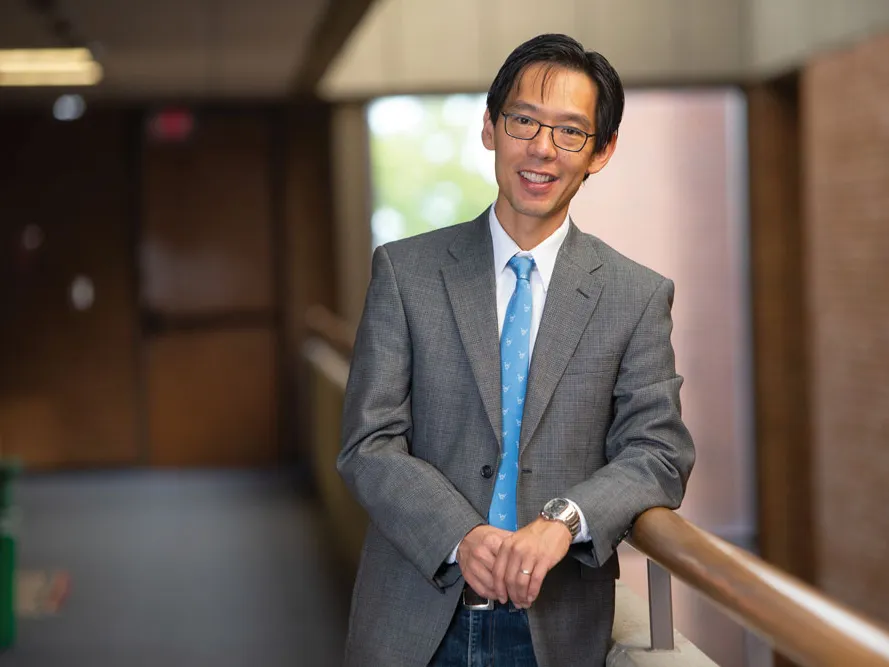
Jeremy Grant, who leads the Cognitive Health In Late Life (CHILL) Lab, is a clinical neuropsychologist and instructor at Ohio State. (Photo by Logan Wallace)
When it comes to aging and brain health, misconceptions exist.
For instance, research shows conditions like dementia and Alzheimer’s disease aren’t just “part of aging” or determined 100 percent by genetics. In fact, everyday lifestyle choices play a powerful role in brain health.
As a neuropsychologist, Jeremy Grant specializes in understanding the link between the brain and behavior. “Our work involves assessing a person’s cognitive abilities to pinpoint changes caused by a medical condition affecting the brain,” says the director of Ohio State’s Cognitive Health In Late Life (CHILL) Lab.
In answers to alumni questions, Grant discusses what we can do to prevent, or at least slow down symptoms of, neurodegenerative diseases.
-
What are the best ways to prevent dementia and Alzheimer’s? — Leslie Ruth ’93
Be physically active, mentally active, socially active, eat well and sleep well. Getting more physical activity directly addresses cardiovascular risk factors and improves blood flow to the brain. Second, being mentally active by continuously engaging in new and complex tasks, such as learning a new skill or language, can help protect the brain against the effects of disease. Third, actively seeking social engagement helps prevent isolation and depression. Eating well means adopting a heart-healthy diet rich in fresh produce, whole grains, legumes and healthy fats, while limiting red meat and unhealthy fats. Finally, when we are asleep, our brains are actively organizing memories and clearing out biological waste; therefore, sleeping well is essential for remembering things clearly. Importantly, these lifestyle strategies aren’t cures. They can reduce—but not totally eliminate—your risk for dementia.
-
What are the best ways to identify or test for cognitive issues as you age? — Melissa Carroll ’98
I think about getting your memory checked in a similar fashion to taking your car to the mechanic. You may need to check your car’s fluids, look under the hood and take it for a test drive. Similarly, it’s important to check your body’s fluids for reversible causes of cognitive decline, like vitamin deficiencies or thyroid issues. A primary care physician can order blood tests and also refer you to a neurologist, who may recommend a brain scan (such as an MRI or PET scan) to “take a look under the hood” and see what’s happening inside the brain. The role of a neuropsychologist is to take your brain for a “test drive” by administering paper-and-pencil or computerized tests. The goal is to identify a person’s pattern of cognitive strengths and weaknesses and determine whether that pattern corresponds with any medical conditions known to affect the brain.
A good first step is to complete brief cognitive screening, like the Self-Administered Gerocognitive Exam (SAGE), a tool that was developed by Dr. Douglas Scharre, a leading neurologist here at Ohio State. You can download it, print it out and take it at home in about 10–15 minutes, and bring it to your doctor for interpretation.
-
How much does heredity affect dementia? — Donald Gifford ’69
Heredity plays a complex role in Alzheimer’s disease and related disorders. There are two broad categories of genes that relate to Alzheimer’s disease. The first category are risk genes, ones that increase your likelihood of developing the disease, but do not guarantee it will happen. Then there are deterministic genes, which almost guarantee that the person will develop Alzheimer’s, and usually the early-onset version of Alzheimer’s (before the age of 65). However, deterministic genes account for less than 1% of Alzheimer’s cases. We know that an individual’s total risk is far more heavily influenced by their lifestyle and environment.
Recent research has identified 14 modifiable risk factors that may account for up to 45% of dementia cases globally. These risk factors include things related to cardiovascular health, such as high blood pressure, high cholesterol, diabetes, obesity, smoking and physical inactivity; brain injuries and excessive alcohol use; mental health issues like depression and social isolation; sensory changes like vision loss and hearing loss; low education early on in life; and environmental factors like air pollution. These findings highlight how dementia is not an inevitable part of aging. Instead, it’s a condition that is heavily influenced by public health policies and lifestyle changes.
-
If I am genetically linked to Alzheimer’s or dementia, when should I start screening? — Lars Schmidt ’90
You should request a cognitive screening only if you or your loved ones notice persistent, concerning changes in memory, thinking or behavior. If you have a family history of Alzheimer’s or another neurodegenerative disorder, focus on management of modifiable risk factors—such as high blood pressure, diabetes, obesity—which are far more impactful than the genes alone.
-
What are researchers at Ohio State currently doing to help people with Alzheimer’s disease and dementia? — Matthew Williams ’97
We are fortunate to have a wealth of dementia experts at Ohio State who study a wide range of topics. The Ohio State Memory Disorders Research Center has multiple clinical trials underway, testing medications to slow disease progression in the early stages of Alzheimer’s and other neurodegenerative diseases. Researchers in the Department of Neuroscience are studying how Alzheimer’s works on a molecular and cellular level in order to find new ways to treat it. In the College of Nursing, a big focus is optimizing dementia care, helping care partners manage their physical and mental stressors and pairing them with former care partners for support and advice. We also have the Golden Buckeye Center for Dementia Caregiving, a local center that offers free educational seminars and training opportunities for the community. There are neuropsychologists and other health care professionals in the Departments of Psychiatry, Neurology, as well as Physical Medicine and Rehabilitation, who provide clinical care to older adults with neurological disorders.
In the Department of Psychology, we are leading various studies on the theme of promoting brain health and preventing dementia by addressing modifiable risk factors. We have the Center for Cognitive and Behavioral Brain Imaging (CCBBI), where researchers are using brain imaging to understand how non-pharmacological interventions such as mindfulness or stimulating the brain with magnetic fields may help cognition and emotional health. My colleagues are also studying how individual differences in physical fitness may influence brain health across the lifespan, particularly in people with prior brain injuries or PTSD. Finally, my research lab focuses on interventions to promote brain health among people with cardiovascular disease and studying how to help people in the earliest stages of Alzheimer’s disease compensate for memory loss.